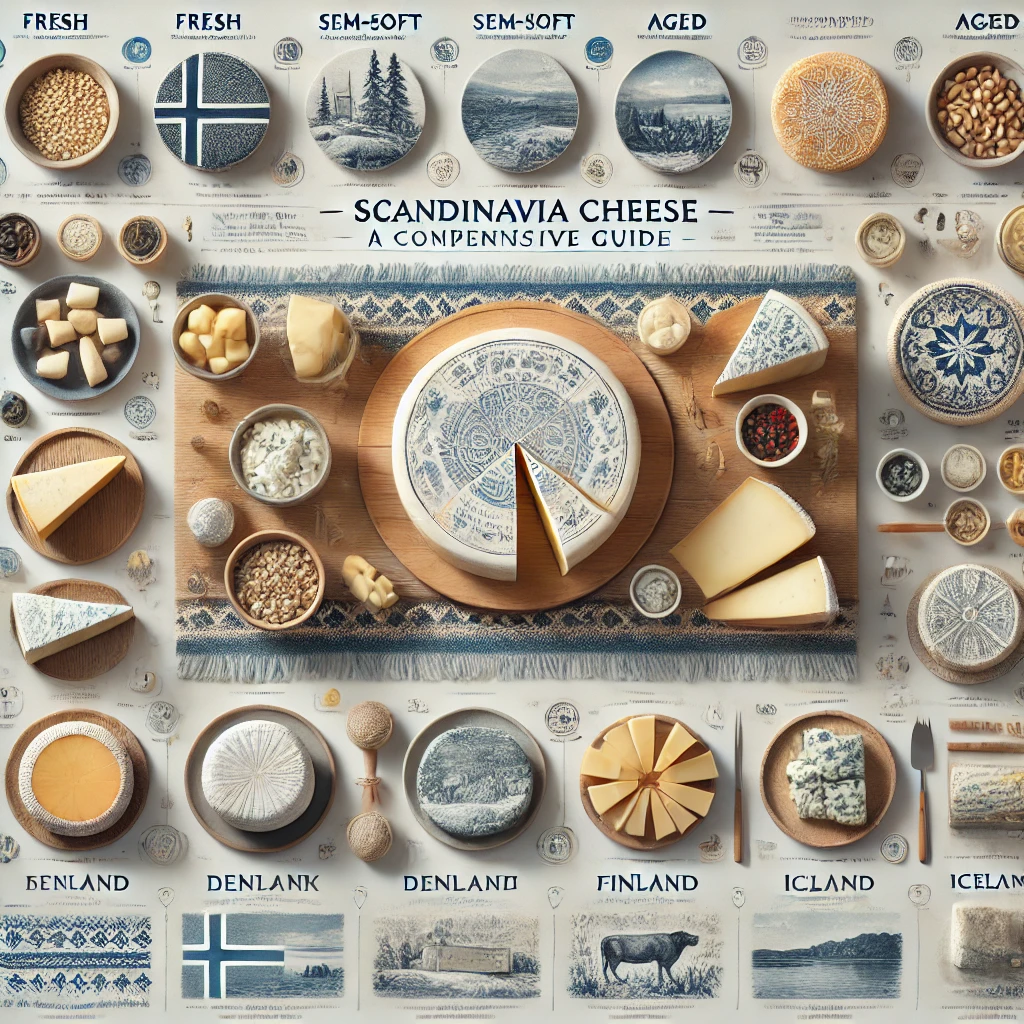
Scandinavia is known for fjords, forests, Vikings, and impeccable design—but its cheese culture deserves equal admiration. Although overshadowed by Swiss Alpine wheels and French farmhouse specialties, Scandinavian cheeses carry deep regional character: cool-climate craftsmanship, coastal salting traditions, and centuries of dairy innovation blended with modern sustainability.
From caramel-sweet Norwegian Gjetost to crumbly Danish Havarti and Swedish Prästost, Nordic cheese is rustic, savoury, and tied to farm life and long winters. This guide explores the major cheese traditions of Norway, Sweden, Denmark, Finland, and Iceland, revealing flavours, textures, and dishes that form the backbone of everyday Scandinavian meals.
🌍 Cheese in Scandinavia: A Cultural Overview
Cheese was essential to early Nordic communities. Long winters meant food preservation was crucial, and dairy herds became a symbol of wealth. Before refrigeration, salting, brining, smoking, and caramelising milk became core techniques still celebrated today.
Key Features of Scandinavian Cheese:
-
Slow-ripened for flavour depth
-
Salted and brined for winter survival
-
Smoked using birch, oak, and pine
-
Creamy textures balanced with tang
While each Nordic nation has refined its own cheese identity, they share a commitment to clean flavour, craftsmanship, and farm-based dairy.
🇳🇴 Norway – Tradition Meets Caramelised Dairy
Norwegian cheese culture stands apart thanks to its most iconic creation: Gjetost (Brunost).
🧀 Gjetost / Brunost
-
Made from whey cooked until caramelised
-
Dense, sweet, fudge-like, with hints of butterscotch
-
Served thinly shaved, never thickly sliced
Flavour:
-
Burnt caramel
-
Brown sugar
-
Slight tang
Typical Pairings:
-
Crispbread (knekkebrød)
-
Coffee
-
Cloudberry jam
Norwegians also love Jarlsberg, a Swiss-style semi-hard cheese with sweet nuttiness and well-defined eye holes.
Jarlsberg Highlights:
-
Mild, nutty, elastic texture
-
Excellent melting cheese
-
Ideal for sandwiches and gratin
Farm Cheeses:
-
Pultost: sour, spreadable, cumin-spiced
-
Nøkkelost: firm, aromatic, herbal
Norway’s dramatic landscapes, goat farming, and whey-caramelisation techniques make it the most distinct cheese producer in Scandinavia.
🇸🇪 Sweden – Aromatic & Historic Dairy Craft
Sweden’s cheeses are famous for clean milk flavour and subtle tang.
🧀 Prästost (“Priest’s Cheese”)
Historically given to priests as a tithing offering.
-
Semi-hard
-
Mild to sharp depending on age
-
Creamy, salty, slightly tangy
🧀 Västerbottensost
Sweden’s answer to Parmesan.
-
Sharp, umami-rich
-
Granular texture
-
Aged for over a year
A favourite in Västerbotten pie, a Swedish classic served at midsummer feasts.
🧀 Hushållsost
-
Mild, everyday slicer
-
Perfect on rye bread
-
Common in family breakfasts
Swedish cheese culture balances tradition with comfort, especially at seasonal celebrations like Christmas smörgåsbord and midsummer tables.
🇩🇰 Denmark – Smooth, Buttery & Internationally Loved
Denmark is Scandinavia’s cheese export powerhouse. Its dairy cooperatives perfected mass-production without losing quality.
🧀 Havarti
-
Semi-soft, buttery
-
Small irregular holes
-
Mild with herbal variants (dill, caraway)
🧀 Danbo
-
Signature Danish table cheese
-
Light scent, tangy finish
🧀 Blue Denmark (Danish Blue)
-
Creamy, salty, pungent blue veins
-
Ideal for salads, steaks, and dark bread
Danish cheese culture is creamy, approachable, and ideal for melting, making it popular worldwide.
🇫🇮 Finland – Clean, Fresh & Birch-Smoked Dairy
Finland’s cheeses reflect purity: pristine air, pasture-fed cows, and a long wood-smoking tradition.
🧀 Leipäjuusto (Finnish Squeaky Cheese)
Also known as juustoleipä.
-
Made from cow’s, goat’s, or reindeer milk
-
Baked until golden spots appear
-
Served warm with cloudberry sauce
When grilled, it squeaks, giving it its nickname.
🧀 Aura
-
Finland’s blue cheese
-
Milder than Danish blue
-
Creamy, tangy, crowd-friendly
🇮🇸 Iceland – Dairy from Harsh Landscapes
Cheese in Iceland is tied to survival. Harsh winters shaped dairy into nutrient-dense, preserved forms.
🧀 Skyr Cheese (Skyrfi)
Often misclassified as yogurt, it is technically strained cheese.
-
High protein
-
Silky, tart, Icelandic staple
🧀 Búri
-
Goat or cow milk
-
Slightly sharp, farm-aged
Icelandic cheese is clean, lean, and subtly acidic due to pasture feeding on mineral-rich volcanic soil.
🧂 Signature Scandinavian Cheese Styles
| Style | Examples | Distinct Features |
|---|---|---|
| Caramelised whey | Brunost | Sweet, brown, fudge-like |
| Semi-hard aged | Västerbottensost, Danbo | Nutty, umami, long-aged |
| Buttery mild | Havarti, Hushållsost | Creamy, melty, family-friendly |
| Blue cheeses | Danish Blue, Aura | Bold, creamy, salty |
| Squeaky-fresh | Leipäjuusto | Grilled, squeaks when eaten |
🍽️ How Cheese Is Used in Scandinavian Cuisine
Cheese appears in rustic dishes, winter meals, and celebration tables.
Popular Pairings:
-
Dark rye bread
-
Lingonberry jam
-
Cured fish (gravlax, pickled herring)
-
Cloudberries
-
Brown butter potatoes
Classic Dishes:
-
Västerbotten Pie (Sweden)
-
Grilled Leipäjuusto with honey (Finland)
-
Brunost on crispbread (Norway)
Nordic flavour balance is built on fat + sweet + acid + smoke.
🍷 Wine & Beverage Pairings
Best Matches:
-
Riesling (acidity enhances richness)
-
Dry cider (Nordic tradition)
-
Cloudberry liqueur
-
Aquavit
-
Scandinavian craft beers
Dill, juniper, lingonberry, and rye bread all make exceptional partners.
⭐ Final Summary
Scandinavian cheese is shaped by glacier winds, forest smoke, and farmhouse simplicity. Its rich heritage and innovation create an identity both ancient and modern.
Key Takeaways:
-
Brunost defines Norway with caramel whey sweetness
-
Sweden champions aged flavour depth with Västerbottensost
-
Denmark excels in mild, buttery cheeses like Havarti
-
Finland offers squeaky Leipäjuusto and clean dairy craftsmanship
-
Iceland focuses on pure, high-protein cheeses like Skyr
Minimalist yet flavourful, Scandinavian cheeses echo the land itself: wild, clean, and enduring.
FAQs — Scandinavia Cheese
1. What is the most famous Scandinavian cheese?
Norwegian Brunost (Gjetost) is the most globally recognised due to its caramel sweetness.
2. Which Scandinavian cheese melts best?
Havarti and Jarlsberg melt exceptionally well for grilled dishes.
3. Why are Scandinavian cheeses often brined or smoked?
To preserve cheese through long winters before refrigeration existed.
4. What is Finland’s squeaky cheese?
Leipäjuusto, a baked cheese that squeaks when chewed and is often served with cloudberry jam.
5. Is Skyr considered cheese?
Yes, although marketed like yogurt, Skyr is technically a strained cheese.