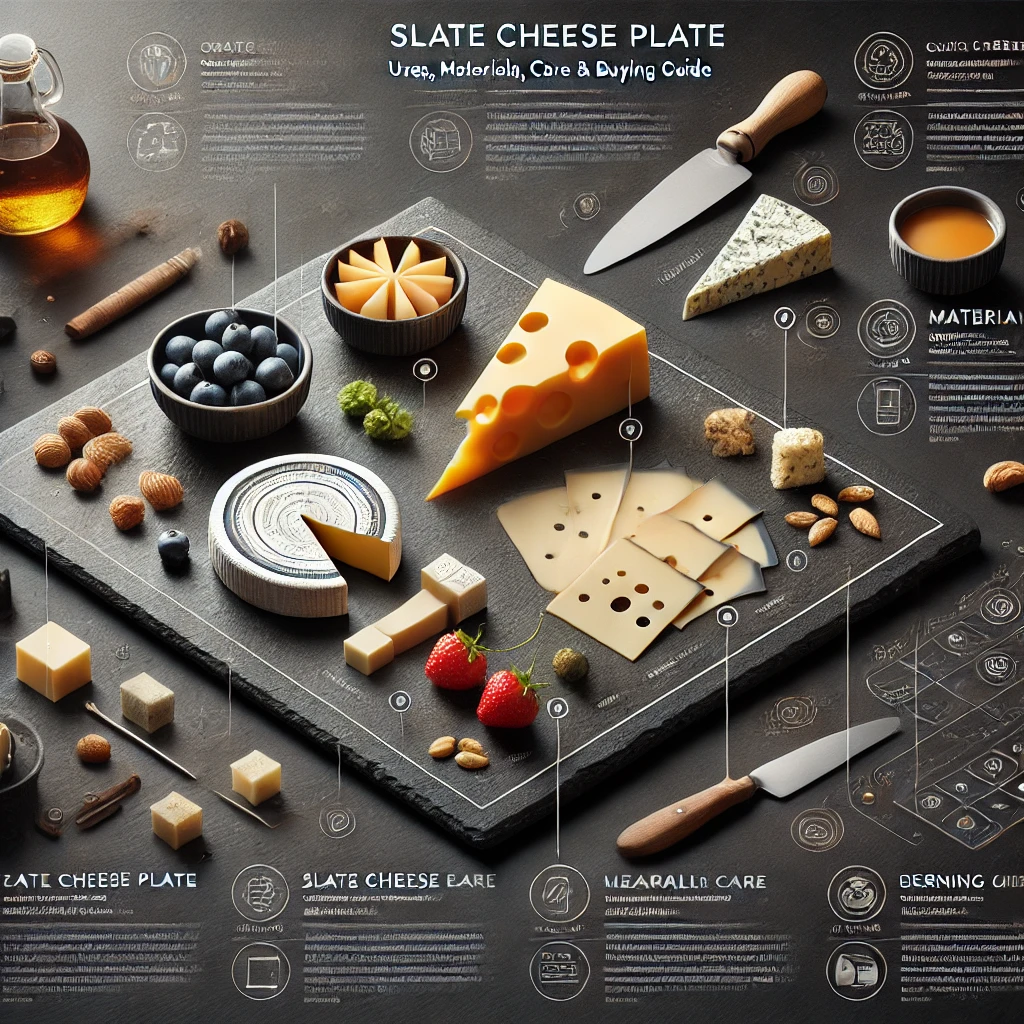
A cheese board can set the tone of an entire gathering, and among all serving materials—wood, marble, ceramic, glass—slate stands out for elegance, functionality, and natural style. With its matte black finish, textured surface, and ability to stay cool, a slate cheese plate transforms cheese presentation into a visually stunning culinary display. Across restaurants, wine bars, and modern home hosting, slate has become a must-have tool for cheese lovers and entertainers.
But slate is more than aesthetic appeal. It is durable, temperature-responsive, naturally food-safe, and deeply tied to artisanal dining culture. Whether for creamy brie, aged manchego, nutty gouda, or truffle-studded chèvre, slate elevates every tasting experience.
🧀 Why Choose a Slate Cheese Plate?
1. It Keeps Cheese Cool Longer
Slate retains temperature naturally. If chilled briefly before serving, it keeps soft cheeses stable and crumbly cheeses neat.
2. Non-Absorbent Surface
Unlike porous wood boards, slate doesn’t absorb:
-
oils
-
liquids
-
odours
This protects delicate cheese profiles from cross-flavour contamination.
3. Neutral Flavour Platform
Slate will not influence flavour or aroma, making it perfect for:
-
washed-rind funk
-
bold blue veins
-
delicate fresh goat cheese
4. Aesthetic Impact
Its dark stone contrasts beautifully with:
-
pale cheese rinds
-
honeycomb
-
figs
-
grapes
-
walnuts
-
charcuterie
A slate board instantly adds restaurant-level visual appeal.
🪨 What Slate Cheese Boards Are Made Of
Slate used for serving is typically quarried natural stone. Key characteristics include:
| Feature | Benefit |
|---|---|
| Hard mineral surface | Scratch-resistant and durable |
| Matte finish | Visually elevates cheese presentation |
| Dense stone structure | Keeps cool longer |
| Food-grade sealant (optional) | Adds protection against stains |
While raw slate is naturally food-safe, many premium boards include a light mineral seal for extra stain resistance.
🍽️ How to Use a Slate Cheese Plate Like a Pro
1. Chill Before Serving
Place the slate in the fridge for 30–45 minutes to enhance cheese texture control.
2. Arrange Cheeses by Intensity
Start mild and move to bold:
-
Fresh cheese (mozzarella, chèvre)
-
Semi-soft (fontina, havarti)
-
Semi-hard (cheddar, manchego)
-
Blue or washed-rind (stilton, taleggio)
3. Add Accents
Complement cheeses with:
-
honey
-
almonds
-
seeded crackers
-
cured meats
-
olives
-
fig jam
-
grapes
4. Use Chalk for Labeling
Slate can be written on:
-
cheese names
-
wine pairing notes
-
region markers
Wipe clean after use—easy and elegant.
🧼 How to Care for a Slate Cheese Plate
Slate is sturdy but needs proper maintenance.
Cleaning Guide
-
Hand wash only
-
Use mild soap & soft cloth
-
Dry thoroughly to prevent mineral marks
-
Never use harsh abrasives
Seasonal Conditioning
Some boards benefit from occasional mineral oil conditioning to enhance finish and prevent dryness.
Avoid Extreme Heat
Slate can crack under harsh temperature changes:
-
no microwave
-
no oven
-
no dishwasher
🛍️ Buying Guide: What to Look For
When browsing slate cheese plates, consider:
✔ Thickness
Aim for 0.5–1 cm for ideal strength without heaviness.
✔ Food-Safe Certification
Natural stone only—no heavy sealants or industrial dyes.
✔ Finished Edges
Smooth, beveled edges add safety and presentation polish.
✔ Non-Slip Feet
Rubber feet or cork pads protect your table and prevent sliding.
✔ Surface Treatment
If you plan to use chalk, ensure it is natural slate, not resin-coated imitation.
🧊 Slate vs Other Cheese Board Materials
| Material | Pros | Cons |
|---|---|---|
| Slate | Chic, cool-retaining, writeable surface | Must avoid extreme heat |
| Wood | Rustic aesthetic, classic cutting surface | Absorbs odours/oils |
| Marble | Premium look, stays cool | Can chip, heavy |
| Ceramic | Easy clean, non-porous | Less temperature control |
| Glass | Hygienic, smooth | Not ideal for slicing pressure |
Slate strikes the balance between presentation, temperature stability, and modern serving style.
🍷 Perfect Pairings: Wine + Slate + Cheese
Slate brings out rustic tasting charm, ideal for:
✨ Whites
-
Sauvignon Blanc
-
Chardonnay (unoaked)
-
Pinot Gris
✨ Reds
-
Malbec
-
Tempranillo
-
Merlot
✨ Extras
-
craft beer flights
-
cider with brie
-
herbal tea with goat cheese
The cool slate surface complements beverage-cheese synergy.
⭐ Final Summary
A slate cheese plate is more than a serving tray—it is a culinary stage. With cool stone texture, contrast aesthetics, and natural food neutrality, slate enhances cheese presentation in a way wood or ceramic rarely can.
Key Highlights:
-
naturally cool surface keeps cheese fresh
-
beautiful contrast for food styling
-
easy to label with chalk
-
simple care and long lifespan
-
versatile for charcuterie, brunch, wine nights, and holiday spreads
For entertainers, cheese lovers, and café stylists, slate is not just tableware—it is an experience.
FAQs — Slate Cheese Plate
1. Can I put hot food on a slate cheese board?
Avoid extreme heat; slate can crack under high temperature.
2. Is slate safe for food?
Yes—natural, untreated slate is food-safe and ideal for cheese presentation.
3. Can slate go in the dishwasher?
No. Always hand wash to protect the stone surface.
4. Does slate absorb flavours?
No, it is non-porous and resists odour absorption.
5. Can I write on slate with chalk?
Yes, most slate cheese plates are designed for chalk-labeling.