Italy is home to countless iconic cheeses—from Parmigiano Reggiano to Gorgonzola—but few carry the rustic tenderness and pastoral softness of Stracchino. Known for its buttery texture, extremely mild acidity, and spreadable creaminess, Stracchino sits at the heart of northern Italian dairy life. It is not a show-off cheese with rind, cave aging, or mold cultures; rather, it embodies simplicity—fresh milk, gentle fermentation, and mountain history.
In modern times, Stracchino has crossed borders, entering bakeries, pizzerias, wine bars, and gourmet sandwich cultures worldwide. What was once a Lombard family table staple is now celebrated as a refined soft cheese for focaccia, Aperitivo platters, and cheese boards.
🧀 What Is Stracchino?
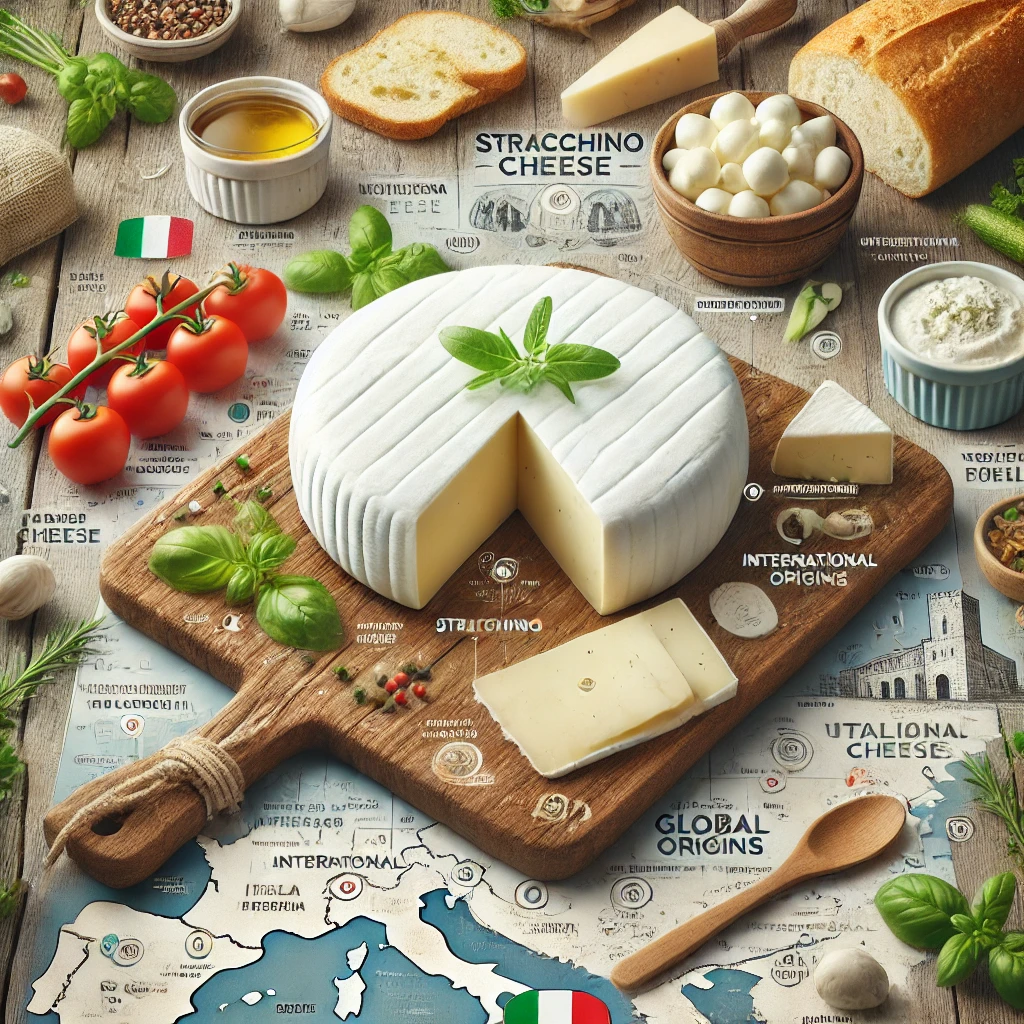
Stracchino (also called Crescenza in many regions) is a fresh, rindless cow’s milk cheese.
Key Characteristics
| Attribute | Description |
|---|---|
| Texture | Soft, creamy, almost spreadable |
| Milk | Cow’s milk (whole, fresh) |
| Flavour | Mild, buttery, slightly tangy |
| Aroma | Fresh dairy, delicate |
| Salt Level | Low |
| Aging | 2–20 days (never aged long) |
| Colour | Porcelain white |
Because it is not aged, Stracchino retains the sweetness of fresh milk and the delicate tang of natural fermentation.
🌄 Origins: From Alpine Cattle to Lowland Kitchens
The word Stracchino comes from the Italian term “stracche,” meaning tired. According to legend, the cheese was first made using milk from cows returning weary from seasonal alpine pastures.
These exhausted cows produced richer, more flavourful milk, which farmers turned into:
-
fresh cheese for household use
-
barter goods for village markets
-
dairy staples for winter months
Regions linked to Stracchino include:
-
Lombardy (birthplace)
-
Liguria
-
Piedmont
-
Emilia-Romagna
Across these regions, Stracchino evolved into soft bricks or tubs of pale, velvety curd eaten fresh rather than preserved.
🥛 How Stracchino Is Made
Stracchino production balances tradition with dairy science:
1. Fresh Morning Milk
Collected directly from local cattle.
2. Fermentation
Starter cultures and mild rennet encourage slow curd setting.
3. Curds Cut Softly
Unlike firm cheeses, curds remain moist and tender.
4. Molding
Curds are transferred to rectangular molds to drain naturally.
5. Light Brining
Salt is used sparingly, preserving the sweet creaminess.
6. Minimal Resting
Cheese rests briefly, gaining mild acidity without rind formation.
The result is a lush, spoonable cheese that spreads easily and melts beautifully into warm breads.
🌍 Stracchino Goes Global
Although firmly rooted in northern Italy, Stracchino has made its way into international dining culture.
In America
Found in:
-
gourmet pizzerias
-
Italian delis
-
artisan sandwich shops
Frequently used as a replacement for:
-
cream cheese
-
burrata (lighter alternative)
In Brazil
Introduced by Italian immigrants and used in:
-
pão italiano fillings
-
fresh cheese salads
In Australia & UK
Appears in:
-
focaccia di Recco imports
-
cheese boards with honey & figs
Stracchino is part of the new wave of soft cheeses replacing processed spreads on café menus and charcuterie plates.
🍽️ Culinary Uses
Stracchino is incredibly versatile due to its mildness and cream texture.
Classic Pairings
-
Ligurian focaccia (Focaccia di Recco)
-
toasted ciabatta
-
flatbreads
-
fresh basil and tomato
As a Spread
-
with olive tapenade
-
with pistachio pesto
-
with caramelized onions
As a Melt
-
inside piadina romagnola
-
over roasted vegetables
-
in soft scrambled eggs
As a Cheese Board Highlight
Pairs naturally with:
-
honey drizzle
-
truffle paste
-
grapes & almonds
-
balsamic reduction
Stracchino does not overpower; it supports, lifts, and balances.
🍷 Wine & Beverage Pairing
Because its personality is gentle, Stracchino pairs best with:
Wines
-
Vermentino
-
Pinot Bianco
-
Franciacorta
-
Gavi
Beer
-
light pilsners
-
wheat beers
Non-Alcoholic
-
sparkling water with lemon
-
iced herbal tisane
These beverages enhance creaminess rather than mask it.
🌱 Nutritional Profile
Per 100g (approximate):
| Nutrient | Value |
|---|---|
| Calories | 250–290 |
| Protein | 15–18g |
| Fat | 20–24g |
| Sodium | Low-moderate |
| Lactose | Present (fresh dairy) |
Stracchino is:
-
high in calcium
-
moderate in fat
-
lighter than burrata and mascarpone
Its fresh fermentation also means mild probiotic benefits.
🎯 Stracchino vs Crescenza: Are They the Same?
Many Italians use the terms interchangeably.
| Term | Region | Notes |
|---|---|---|
| Stracchino | Lombardy, Piedmont | Emphasis on pastoral origin |
| Crescenza | Liguria, Emilia-Romagna | Emphasis on creamy rising curd |
Technically the same cheese with minor regional nuance.
⭐ Final Summary
Stracchino is more than a cheese—it’s an expression of Italian mountain dairy heritage transformed into modern culinary simplicity.
Key Takeaways:
-
Fresh, rindless, and extremely mild
-
Traditionally made from milk of “tired” alpine cows
-
Spreadable texture and soft tang
-
Perfect for focaccia, piadina, cheese boards, and melts
-
Gaining global presence without losing authenticity
In an era of complex aging and heavy cheese styles, Stracchino remains the gentle, creamy heart of Italian dairy tradition.
FAQs — Stracchino Cheese
1. Is Stracchino the same as Crescenza?
Yes, they are essentially the same cheese with regional naming differences.
2. Does Stracchino melt well?
It softens beautifully but does not stretch like mozzarella.
3. How should Stracchino be stored?
Keep refrigerated and consume within 3–5 days after opening.
4. What does Stracchino taste like?
Mild, buttery, milky, with a fresh yogurt-like tang.
5. What dishes traditionally use Stracchino?
Focaccia di Recco, piadina sandwiches, and soft antipasto platters.