
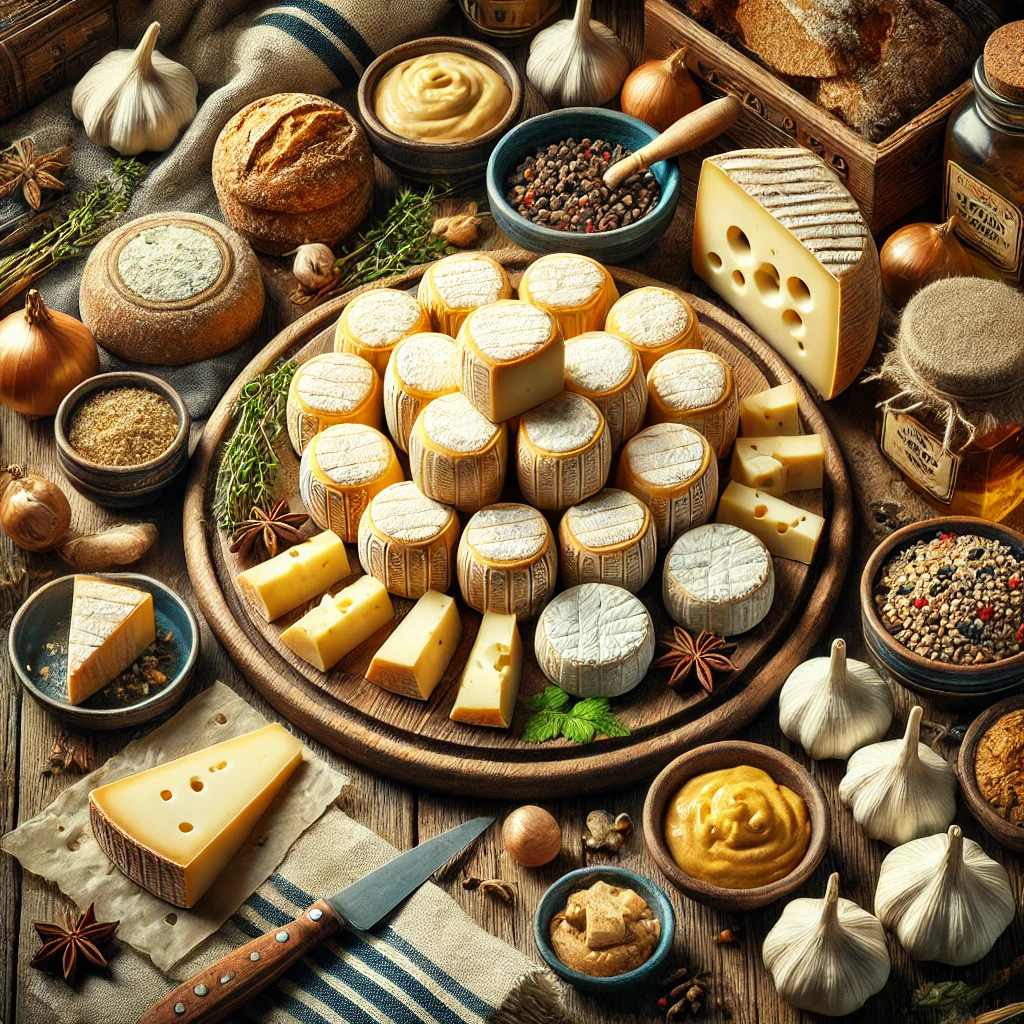
Belgium is globally known for beer, chocolate, and waffles—but tucked within its countryside tradition lies an equally compelling culinary treasure: Boulette de Romedenne. This small, tangy, herb-rubbed cheese from the village of Romedenne in Wallonia embodies the charm of Belgian farmhouse dairy culture. It is a cheese that carries centuries of rural identity—freshly formed, lightly matured, and rolled lovingly in spices or herbs to sharpen its character.
Unlike the grand wheels of alpine cheeses or the perfectly formed French mould-ripened varieties, Boulette de Romedenne is humble, handmade, and beautifully rustic. It belongs to Belgium’s historic tradition of “boulettes”—small, round, soft cheeses that were once traded between farms, taverns, and weekend markets.
🧀 What Exactly Is Boulette de Romedenne?
Boulette de Romedenne is a soft, tangy, semi-fresh cow’s milk cheese originating from the village of Romedenne in the Namur province of Belgium.
Key Characteristics
| Feature | Description |
|---|---|
| Milk Source | Cow’s milk |
| Texture | Soft, dense, spreadable yet compact |
| Aroma | Spicy, earthy, sometimes onion-like |
| Taste | Tangy, slightly salted, aromatic |
| Shape | Small round “boule” style |
| Additions | Often rolled in herbs, chives, pepper or salt |
| Aging | 1–3 weeks |
More than a cheese, it is a regional specialty with cultural roots, often enjoyed in local taverns with bread and beer.
🧂 Traditional Flavor Enhancements
One defining trait of Boulette de Romedenne is its aromatic coating. Farmers historically rolled the cheese in seasonings both for preservation and taste.
Common Coatings
-
Salt crystals
-
Cracked black pepper
-
Fresh chives
-
Shallots
-
Paprika
-
Herb blends
-
Parsley or wild garlic in spring
These ingredients transform a simple dairy base into a bold, countryside cheese spread.
🥛 How Boulette de Romedenne Is Made
Like most Belgian farmhouse cheeses, production remains largely artisanal.
1. Fresh Cow’s Milk Collection
Local pastures produce high-fat milk with grassy undertones.
2. Curdling & Coagulation
Rennet is added gently, and the curds are allowed to form slowly.
3. Whey Separation
Curds are drained in cloth or perforated molds to achieve a semi-firm mass.
4. Light Salting
Salt seasons and protects the curd.
5. Shaping
Curds are hand-rolled into small balls—“boulettes.”
6. Aging
Cheese rests 1–3 weeks, developing tang and aromatic profile.
7. Herb Dressing
Before sale, the cheese may be:
-
dusted in pepper
-
rolled in herbs
-
topped with chives
-
smeared with shallots
This gives Boulette de Romedenne a rural yet gourmet signature.
🍽️ Culinary Uses: How to Enjoy Boulette de Romedenne
Boulette de Romedenne is typically enjoyed fresh and cool, spread on rustic bread or crisp Belgian toast.
Classic Pairings
-
buttered bread
-
crispy baguette
-
seeded crackers
-
radishes and spring vegetables
With Belgian Beer (Iconic Pairing)
The cheese was historically consumed with farmhouse ales and abbey brews:
-
Saison
-
Trappist beers
-
Blonde ales
-
Dubbel
The creamy dairy texture balances Belgian beer carbonation and hop bitterness.
Modern Serving Ideas
-
added to charcuterie boards
-
mixed into herb butters
-
crumbled onto warm potatoes
-
dolloped on endive salads
Because of its strong aromatic coatings, it shines as a flavor accent cheese, not an all-purpose melt.
🌍 Regional Identity: What Makes It “Belgian”?
Boulette de Romedenne belongs to a family of regional cheeses including:
| Belgian Boulette | Region |
|---|---|
| Boulette de Romedenne | Namur |
| Boulette de Huy | Huy |
| Boulette de Spa | Liège |
| Boulette de Durbuy | Durbuy |
Each comes shaped by:
-
local pasture flora
-
farmhouse tradition
-
herb availability
Boulette cheeses trace back to rural barter cheese culture, where cheeses were exchanged at village markets and taverns instead of coin on Sundays.
🧀 Texture & Taste Profile
Boulette de Romedenne is bold yet balanced.
Flavour Notes
-
tangy dairy acidity
-
herbaceous finish
-
pepper warmth (if coated)
-
subtle barnyard earthiness
Texture
-
soft and fine-grained
-
easily spreadable
-
slightly crumbly when older
Its taste unfolds gradually: butter → tang → spice → herb finish.
🍷 Beverage Pairing Guide
While Belgian beer is the classic companion, wine lovers can find excellent harmony.
Best Wines
-
Sauvignon Blanc
-
Pinot Gris
-
Dry Riesling
-
Chablis
Ciders & Spirits
-
Dry cider
-
Juniper-based spirits (gin)
-
Pear brandy
These pairings brighten the cheese’s tang and cut through herbal intensity.
🌱 Nutritional Overview
Per 100g (approximate):
| Nutrient | Value |
|---|---|
| Calories | 250–290 |
| Protein | 16–20g |
| Fat | 18–24g |
| Sodium | Moderate (herb variants vary) |
| Calcium | High |
Natural fermentation benefits digestion while avoiding heavy creaminess.
⭐ Final Summary
Boulette de Romedenne is not a commercial blockbuster cheese—it is a cheese of quiet Belgian countryside life, crafted by hand, shared in markets, and paired with local ale in rustic taverns.
Key Takeaways
-
small, round, semi-fresh cow’s cheese from Namur, Belgium
-
tangy, creamy, herb-coated, and deeply aromatic
-
artisanal production and short aging define its character
-
best enjoyed as a spread with bread and Belgian beer
-
a symbol of rural dairy craftsmanship and regional pride
Boulette de Romedenne is Belgium’s pastoral cheese voice—subtle, artisanal, and culturally rooted.
FAQs — Boulette de Romedenne
1. What milk is used in Boulette de Romedenne?
Cow’s milk from Wallonian pastures.
2. How is Boulette de Romedenne typically eaten?
Spread on bread or crackers, often paired with Belgian beer.
3. Does it age long?
No, it is lightly aged between 1 and 3 weeks.
4. Why is it rolled in herbs or pepper?
For preservation, aroma, and traditional flavour enhancement.
5. What drinks pair best with it?
Saison, Trappist ale, dry cider, or crisp white wines like Chablis.