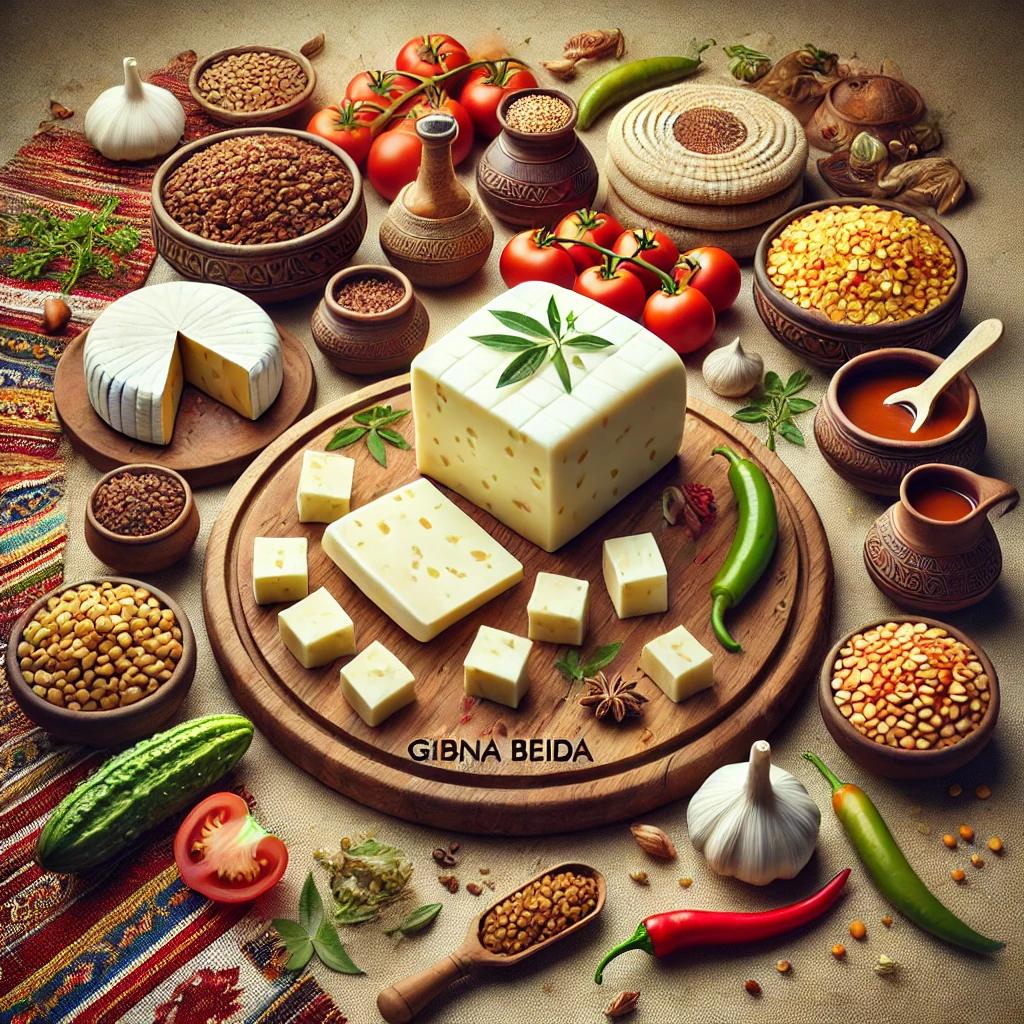
Cheese in East Africa is not always the aged, cave-ripened wheel familiar in European gastronomy. Instead, it is fresh, bright, and dairy-forward—designed for everyday cooking, quick consumption, and hot-climate practicality. Gibna Beida, Eritrea’s signature white cheese, stands at the center of this tradition. Mild, crumbly, lightly salted, and culturally rooted, Gibna Beida is as common as bread in Eritrean households, appearing in breakfast platters, stews, mezze plates, and celebratory tables.
Though its name translates to “white cheese,” Gibna Beida is much more than a description—it is a culinary identity. It forms part of Eritrea’s long dairy history shaped by pastoral communities, highland grazing, spice trade influences, and shared culinary heritage with Ethiopia, Sudan, and the broader Horn of Africa.
🇪🇷 What Is Gibna Beida?
Gibna Beida is a fresh, soft-to-semi-firm white cheese, traditionally made from cow’s or goat’s milk.
Defining Qualities
| Feature | Description |
|---|---|
| Texture | crumbly yet moist, sliceable |
| Flavour | mild, clean, slightly tangy |
| Salting | light to medium |
| Color | pure white |
| Aging | none or very brief |
| Aroma | fresh, milky, neutral |
It does not carry the sharp tang of feta or the gluey melt of mozzarella. Instead, it sits perfectly between freshness and firmness, designed for small bites, light frying, and accompaniment rather than center stage theatricality.
🌍 The Cultural Place of Cheese in Eritrea
Dairy has existed for centuries in Eritrean pastoral and highland societies. Goats, camels, and cattle provided milk long before refrigeration, and cheese became a way to preserve surplus without extensive aging.
Why Fresh Cheese Works in Eritrea
-
Hot climate discourages prolonged aging
-
Salt and light brining extend shelf life safely
-
Daily market cycles allow fresh production
-
Pairing with injera & flatbreads feels culturally natural
Gibna Beida fits into Eritrean food structure like olive oil in Italy or rice in Japan—everyday, essential, and versatile.
🥛 How Gibna Beida Is Made
Traditional production remains simple and rural, though urban dairies replicate the same style.
Core Steps
-
Milk Heating
Cow or goat milk is warmed slowly. -
Curdling
Lemon juice, vinegar, or animal rennet separates curds from whey. -
Draining
Curds are collected in cloth and hung to remove excess liquid. -
Light Pressing
Pressure forms a solid, white mass. -
Salting / Light Brining
Cheese is salted or placed briefly in mild brine. -
Immediate Consumption
It is eaten fresh, rarely aged beyond a few days.
No rind. No mold cultures. No long maturation.
Just milk, salt, heat, and careful handling.
🍽 How Eritreans Eat Gibna Beida
Gibna Beida is not a cheese of extravagance—it is a cheese of daily comfort, hospitality, and sharing.
Everyday Service
-
with fresh bread or injera
-
part of morning tea spreads
-
sliced with tomatoes and olives
-
crumbled on vegetable platters
Classic Eritrean Pairings
| Dish | Role of Gibna Beida |
|—|—|—|
| Injera platters | dairy cooling to balance spice |
| Shiro (chickpea stew) | mild cheese cuts richness |
| Foul (fava breakfast) | salt + dairy, perfect contrast |
| Salata (fresh salad) | crumble for texture + cream |
Festival & Guest Setting
Eritrean hospitality demands abundance. Cheese complements:
-
suhoor & iftar meals (during fasting periods)
-
weddings & religious celebrations
-
family gatherings
It is gentle enough to sit beside spices, berbere, and slow-cooked stews.
🌶 Flavor & Texture Profile
Flavor Notes
-
fresh milk
-
mild tang
-
soft saltiness
Texture Notes
-
crumbly but not dry
-
holds shape when sliced
-
softens when lightly grilled
This balance makes Gibna Beida ideal for frying without melting into oil.
🔥 Cooking Uses Beyond Basics
Gibna Beida adapts beautifully to modern recipes, while retaining Eritrean soul.
Popular Modern Uses
-
grilled cheese slices with herbs
-
baked vegetable trays topped with crumbled cheese
-
stuffed in flatbreads
-
blended with labneh or yoghurt for dips
Light Frying
When lightly pan-fried:
-
edges crisp
-
center stays soft
-
salt becomes more pronounced
A perfect appetizer or mezze board addition.
🌍 Global Comparisons
| Cheese | Similarity | Difference |
|---|---|---|
| Feta | white, brined | Gibna Beida is milder, less tangy |
| Queso Fresco | crumbly, fresh | Eritrean version is less salty & more delicate |
| Halloumi | firm for frying | Gibna Beida is softer, less squeaky |
| Paneer | fresh curd | paneer is denser & non-salty |
Gibna Beida is gentler than Greek feta, fresher than halloumi, and softer than paneer—defining its own East African category.
🍷 Beverage & Serving Pairings
Traditional Eritrean dining avoids alcohol in many settings, so pairings lean toward non-alcoholic options.
Traditional Drinks
| Beverage | Why It Works |
|---|---|
| Black tea with cinnamon | mild sweetness complements cheese |
| Himbasha (sweet bread) | cheese cuts the sweetness |
| Fresh lime drink | acidity refreshes palate |
International Pairings
| Beverage | Why It Works |
|---|---|
| Light lager | mild carbonation balances cheese |
| Dry rosé | lifts dairy richness |
| Sparkling water | palate reset between bites |
🌱 Nutrition Snapshot
Per 100g (approx.):
| Nutrient | Value |
|---|---|
| Calories | 230–280 |
| Protein | moderate-high |
| Fat | moderate |
| Sodium | low–mid depending on brine |
| Calcium | solid dairy source |
Fresh cheese = easy digestibility & low additive presence.
⭐ Final Summary
Gibna Beida is a cheese born of:
-
Eritrean pastoral heritage
-
salt-light brining
-
fresh milk simplicity
-
swift rural production
It is not aged into spectacle or sharpened through complex fermentation. Instead, it remains humble, daily, and deeply cultural, pairing naturally with injera, tea, stews, and bread.
Gibna Beida is Eritrea’s answer to comfort food—mild, crumbly, nourishing, and ever-present at the table.
FAQs — Gibna Beida
1. What milk is used in Gibna Beida?
Mostly cow’s milk, sometimes goat milk depending on region.
2. Is it similar to feta?
Yes in appearance, but milder and less tangy.
3. Is it aged?
No—Gibna Beida is eaten fresh within days.
4. How is it served traditionally?
With injera, fresh bread, tea platters, salads, and mild stews.
5. Does it melt?
It softens but does not stretch like mozzarella—ideal for light frying.