Egyptian cuisine is known for ful medames, taameya, koshari, and honey-drenched pastries, but behind every breakfast platter and countryside spread sits a dairy treasure: Karish cheese. Fresh, crumbly, lightly tangy, and mild, Karish (also spelled Kareish) is one of Egypt’s oldest cheeses and a staple across Nile farming communities. Made traditionally from skimmed milk and fermented naturally without heavy salt, Karish embodies the Egyptian rural kitchen—resourceful, nutritious, and clean.
This cheese isn’t flashy or intensely aged. Instead, Karish is celebrated for purity of milk flavour, soft texture, and digestive ease. Whether enjoyed with flatbread, olives, or tomato salads, Karish remains Egypt’s quiet dairy star.
🇪🇬 What Is Karish Cheese?
Karish is a fresh, soft, low-fat, crumbly white cheese, traditionally made from:
-
skimmed buffalo milk
-
skimmed cow milk
-
occasionally goat milk in desert regions
Key Characteristics
| Feature | Description |
|---|---|
| Texture | soft, crumbly, moist |
| Flavor | mild, tangy, milky |
| Salt Level | minimal |
| Aroma | clean, fresh |
| Color | white |
| Fat Content | very low (skimmed milk) |
| Aging | none (fresh) |
Karish is intentionally low-fat because skimmed milk is used, making it a favourite in both dietary lifestyles and village households.
🌾 Rural Egyptian Origins
Karish is historically linked to the Nile Delta and Upper Egypt, where dairy farming has been practiced for millennia.
Why Karish Thrived for Centuries
-
Egypt’s abundant buffalo population
-
regular milk supply from small farms
-
climate that encourages fresh cheese over prolonged aging
-
limited refrigeration in past eras
Instead of storing cheese for months, Egyptians made Karish fresh weekly, often wrapped in wicker baskets lined with salt to drain whey naturally.
🥛 How Karish Cheese Is Made
While modern dairies produce it cleanly and industrially, traditional methods remain loved.
Steps of Traditional Production
-
Skimming Milk
Fat is removed after resting to produce skimmed milk. -
Curdling
Natural souring, vinegar, or yogurt culture creates curds. -
Draining
Cheese is poured into palm-leaf or reed baskets (karish baskets), which give the cheese its name. -
Pressing
Gravity removes excess whey over several days. -
Light Salting
Usually minimal, just enough for safety.
Result?
A fresh dairy block: tangy, tender, moist, and nutritious.
No heavy brine.
No long fermentation.
No mold culture.
Just milk + time + air.
🍽 How Egyptians Eat Karish
Karish is not reserved for hotels or upscale dining. It is a breakfast cornerstone and a countryside essential.
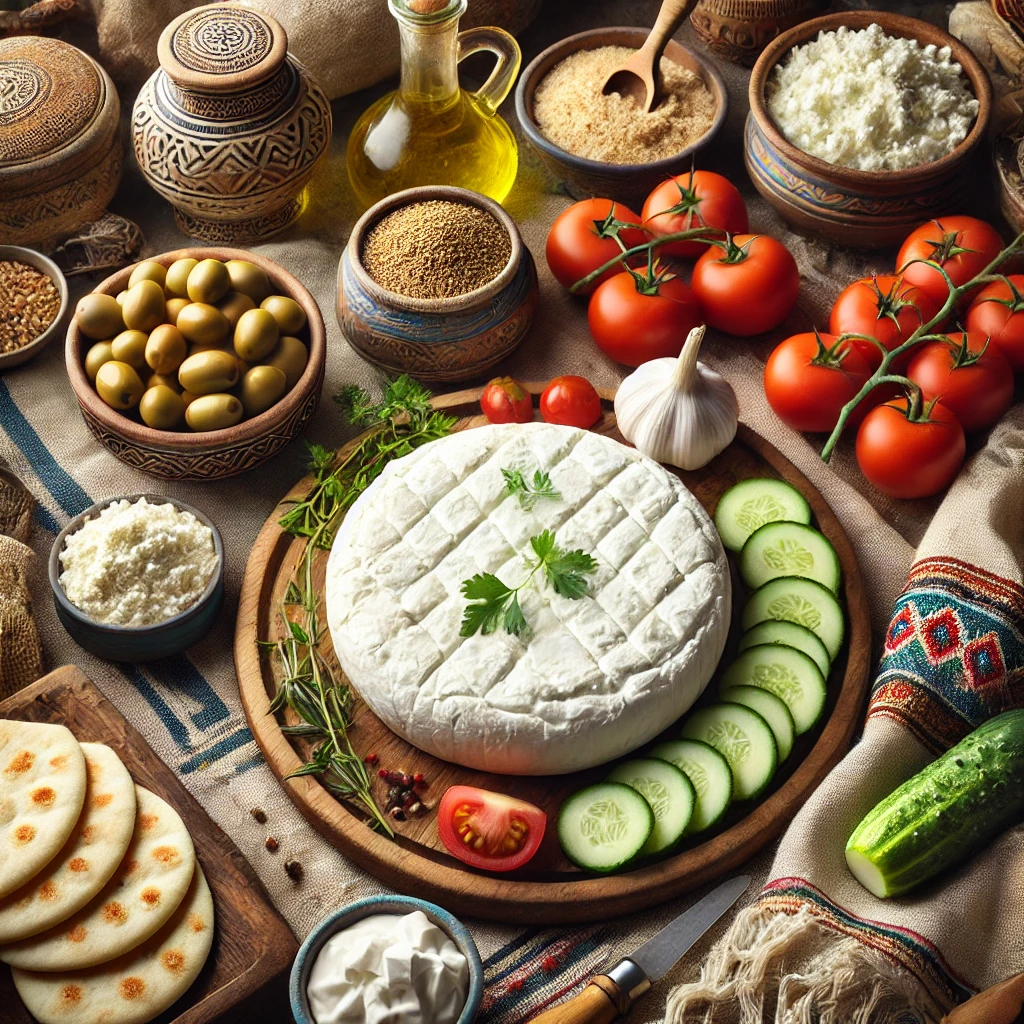
Common Pairings
-
baladi bread
-
fresh tomato & cucumber salad
-
black olives
-
honey or date molasses (dibs)
Popular Serving Ideas
| Dish | How Karish Fits |
|---|---|
| Ful medames breakfast | balances earthy fava richness |
| Taameya platters | dairy counter to herbs & fried chickpeas |
| Salata baladi | crumbled over veggies |
| Egyptian mezza | mild cheese addition |
Its crumbly gentleness makes it perfect for spreading, slicing, or crumbling.
🧂 Taste & Texture Profile
Taste: clean, faintly tangy, light salt
Texture: crumbly but soft, moisture-rich, slightly springy
Karish avoids:
-
feta’s brininess
-
halloumi’s firmness
-
paneer’s dense chew
It is a fresh cheese meant to refresh the palate, not dominate it.
🌍 Karish vs Other Fresh Cheeses
| Cheese | Similarity | Difference |
|---|---|---|
| Cottage cheese | mild & fresh | Karish is firmer & sliceable |
| Queso fresco | crumbly | Karish is lower fat |
| Paneer | fresh curd | paneer is denser & unsalted |
| Feta | white & crumbly | Karish is not brined & less salty |
| Ricotta salata | crumbly | Karish is more tangy & softer |
Karish uniquely balances low fat + full flavour + clean dairy aroma.
🍷 Pairing Guide
While Egypt is not a wine-pairing culinary culture, Karish pairs beautifully with light beverages.
Traditional Drinks
-
mint tea
-
sahlab (milk custard drink)
-
fresh sugarcane juice
-
karkadeh (hibiscus)
Modern Pairing Ideas
| Drink | Why It Works |
|---|---|
| sparkling water | resets palate |
| dry rosé | acidity lifts mild cheese notes |
| wheat beer | smooth, balanced pairing |
🌱 Nutrition Profile
Per 100g:
| Nutrient | Value |
|---|---|
| Fat | very low |
| Protein | moderate-high |
| Sodium | low |
| Calcium | rich |
| Calories | low |
Karish is health-forward:
-
ideal for low-fat diets
-
high in calcium
-
digestion-friendly because of fresh milk culture
🧀 Cultural Meaning
Karish is more than food; it is a symbol of Egyptian rural life. Before refrigeration, basket cheese served both as nourishment and preservation. Today, it connects city consumers to their countryside heritage.
Eating Karish with baladi bread and tea is not just breakfast—it is Egypt’s timeless daily ritual.
⭐ Final Summary
Karish cheese represents:
-
purity of milk
-
minimal processing
-
rural Egyptian identity
-
fresh, light dairy flavour
It belongs to morning spreads, modest tables, and countryside markets—not aging cellars or gourmet exhibitions. In every crumb lies the Nile’s pastoral rhythm, buffalo milk craft, and generations of home-driven dairy knowledge.
Karish isn’t just a cheese—it is Egypt’s creamy, humble comfort.
FAQs — Karish Cheese
1. Is Karish cheese salty?
Lightly salted or sometimes unsalted; milder than feta.
2. What milk is used?
Primarily skimmed buffalo or cow milk.
3. Does Karish melt?
No, it softens but does not melt or stretch like mozzarella.
4. How is it eaten traditionally?
With baladi bread, olives, tomatoes, and breakfast teas.
5. Is it healthy?
Yes—low fat, high calcium, and easily digestible.