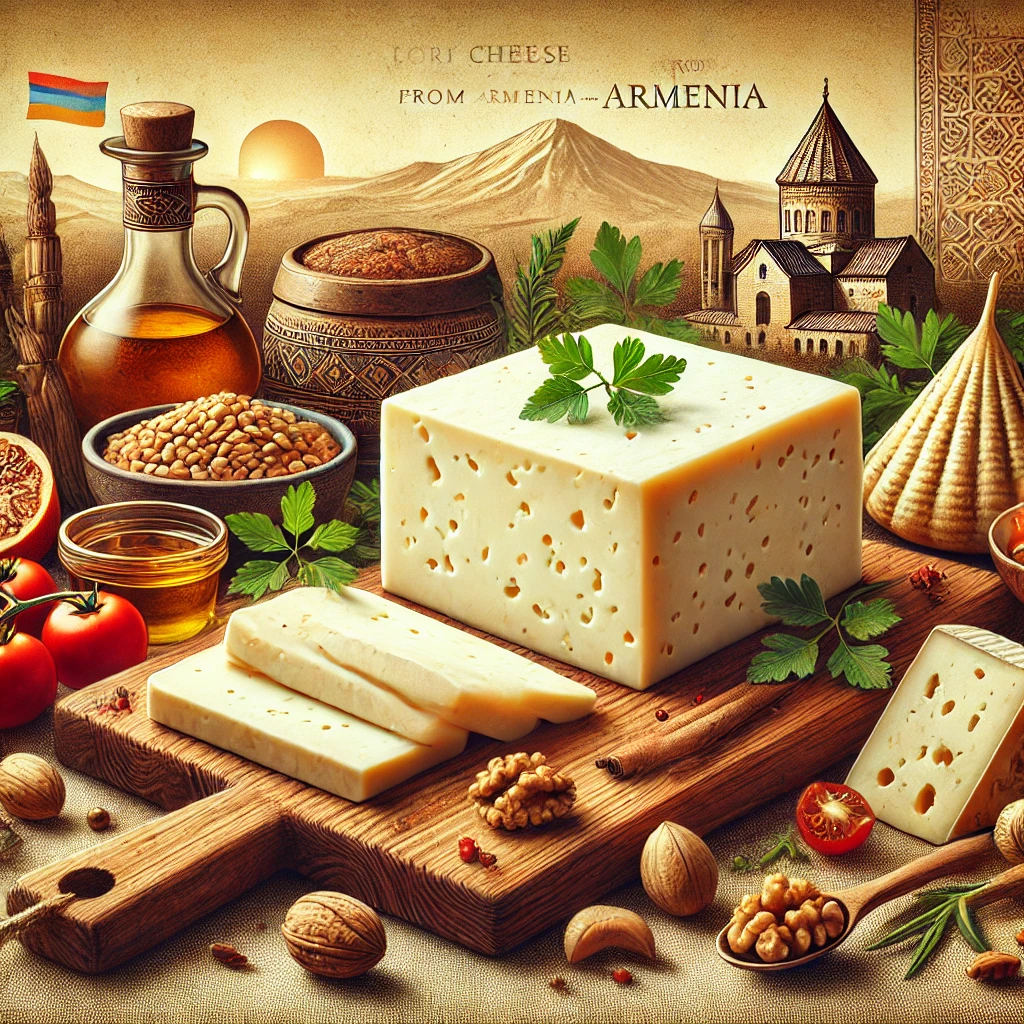
Armenia is a country where cheese is not just food—it is heritage. In the shadow of mountains, in villages shaped by shepherding and ancient dairy craft, one cheese stands out as a symbol of everyday nourishment: Lori cheese. Named after the Lori Province of northern Armenia, this semi-hard, lightly brined cheese represents balance—between salt and sweetness, firmness and tenderness, simplicity and depth.
Lori is a cheese designed not for showy cheese boards but for village breakfasts, hearty stews, bread-and-herb spreads, and nourishing diets shaped by highland winters. It is an Armenian staple that reflects geography, pastoral rhythms, and the enduring intimacy of rural kitchens.
🇦🇲 What Is Lori Cheese?
Lori cheese is a semi-hard, slightly salted Armenian cheese made predominantly from cow’s milk, though blended sheep’s milk versions exist in some dairies.
Key Characteristics
| Feature | Description |
|---|---|
| Texture | semi-hard, sliceable, slightly elastic |
| Flavor | mild, milky, faint tang, light salt |
| Aroma | dairy-fresh, subtle, grassy |
| Color | pale cream to soft yellow |
| Aging | 30–90 days |
| Salting | moderate |
Unlike tangier cheeses of the Caucasus, Lori is intentionally restrained—clean-tasting, smooth, and adaptable.
🌄 Where Lori Cheese Comes From
The Lori region sits in the lush, temperate north of Armenia:
-
cool mountain pastures
-
plentiful freshwater streams
-
grass-fed cattle
Why This Matters
These natural conditions influence:
-
fat richness in milk
-
gentle acidity
-
creamy mouthfeel
Pasture diversity (wild herbs, clover, alpine grasses) gives Lori its clean dairy profile with soft meadow undertones.
🥛 How Lori Cheese Is Made
Lori is crafted through traditional farming yet refined by modern dairy standards.
Production Steps
-
Milk Heating
Fresh cow’s or mixed milk is warmed to activate cultures. -
Curd Formation
Rennet (sometimes natural forms) separates curd from whey. -
Cutting & Pressing
Curds are cut, drained, and pressed lightly to form a tight body. -
Salting
Brine or dry salt preserves and seasons the cheese. -
Aging
Cheeses rest in cool cellars for 1–3 months, developing elasticity and flavour.
This balanced process yields structured texture without brittleness.
🍽 How Armenians Enjoy Lori Cheese
Cheese in Armenia is central to everyday meals, not reserved for special occasions.
Typical Serving
-
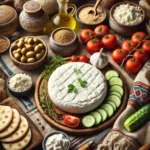
sliced with lavash (flatbread)
-
paired with fresh herbs (tarhun, dill, parsley)
-
alongside olives, tomatoes, cucumber, walnut spreads
Culinary Uses
| Dish | Role of Lori |
|---|---|
| Jingalov hats | diced or crumbled into herb-filled flatbread |
| Cheese omelets | softens and enriches egg texture |
| Summer salads | mild salt lifts vegetable sweetness |
| Cheese platters with lavash | foundational savoury element |
Everyday Armenian Breakfast
Lori cheese + lavash + tomato + tea
= Armenia’s timeless morning ritual.
🌶 Texture & Flavour Profile
Taste Highlights
-
natural milk sweetness
-
controlled saltiness
-
subtle tang
-
hints of pasture herbs
Texture
-
neither crumbly nor rubbery
-
cuttable, steady, cohesive
-
softens gently when heated but does not stretch
Lori avoids the intensity of blue cheeses and the dryness of aged wheels—it sits in perfect balance.
🌍 Lori Cheese Compared to Other Regional Cheeses
| Cheese | Similarity | Difference |
|---|---|---|
| Sulguni (Georgia) | semi-firm | Lori is less elastic and less salty |
| Feta (Greece) | white, brined | Lori is milder and semi-hard |
| Tulum (Turkey) | pastoral origin | Tulum is sharper and cave-aged |
| Halloumi (Cyprus) | sliceable | Lori is less squeaky, more tender |
| Armenian Chanakh | both Armenian staples | Chanakh is saltier & more crumbly |
Lori stands on the soft-honest-everyday end of Armenia’s cheese spectrum.
🍷 Beverage Pairing Guide
Armenian cuisine is Mediterranean-influenced but uniquely highland in temperament.
Best Pairings
| Beverage | Why It Works |
|---|---|
| Armenian herbal tea | balances dairy mildness |
| Areni red wine | subtle fruit lifts creamy texture |
| light lager | carbonation refreshes palate |
| tan (yogurt drink) | dairy-to-dairy natural pairing |
With Lavash & Herbs
A slice of Lori, folded in lavash, with fresh tarragon = true Armenian simplicity.
🌱 Nutrition Snapshot
Per 100g (approx.)
| Nutrient | Value |
|---|---|
| Calories | 260–320 |
| Protein | moderate-high |
| Fat | moderate |
| Sodium | balanced |
| Calcium | high |
Its nutrition reflects highland dairy needs:
-
energy retention
-
bone strength
-
cold-season sustenance
🧀 Why Lori Cheese Matters
Lori is not just cheese—it is Armenian cultural continuity:
-
breakfasts with family
-
road food for shepherds
-
monastery fasting menus
-
feast tables with wine and lavash
It embodies:
-
mountain calm
-
kitchen practicality
-
agricultural lineage
Every bite tastes of grassland climate and patient dairy craft.
⭐ Final Reflection
Lori cheese endures because it does not chase complexity. It honours:
-
the natural flavour of milk
-
subtle salt
-
gentle texture
-
pastoral rhythm
From farm to table, Lori remains a cheese of sincerity, nourishment, and peaceful Armenian landscapes. Its charm lies not in gourmet display but in daily plates shared with bread, herbs, and quiet morning tea.
FAQs — Lori Cheese
1. Is Lori cheese similar to feta?
It shares a brine base but is milder, less salty, and semi-hard.
2. What milk is used?
Primarily cow’s milk, though sheep blends exist in rural regions.
3. Does Lori cheese melt?
It softens gently but does not stretch—ideal for slicing and light heating.
4. How is it eaten traditionally?
With lavash, herbs, tomatoes, tea, and daily breakfast spreads.
5. How long is Lori cheese aged?
Generally 30–90 days for balanced firmness and flavour.