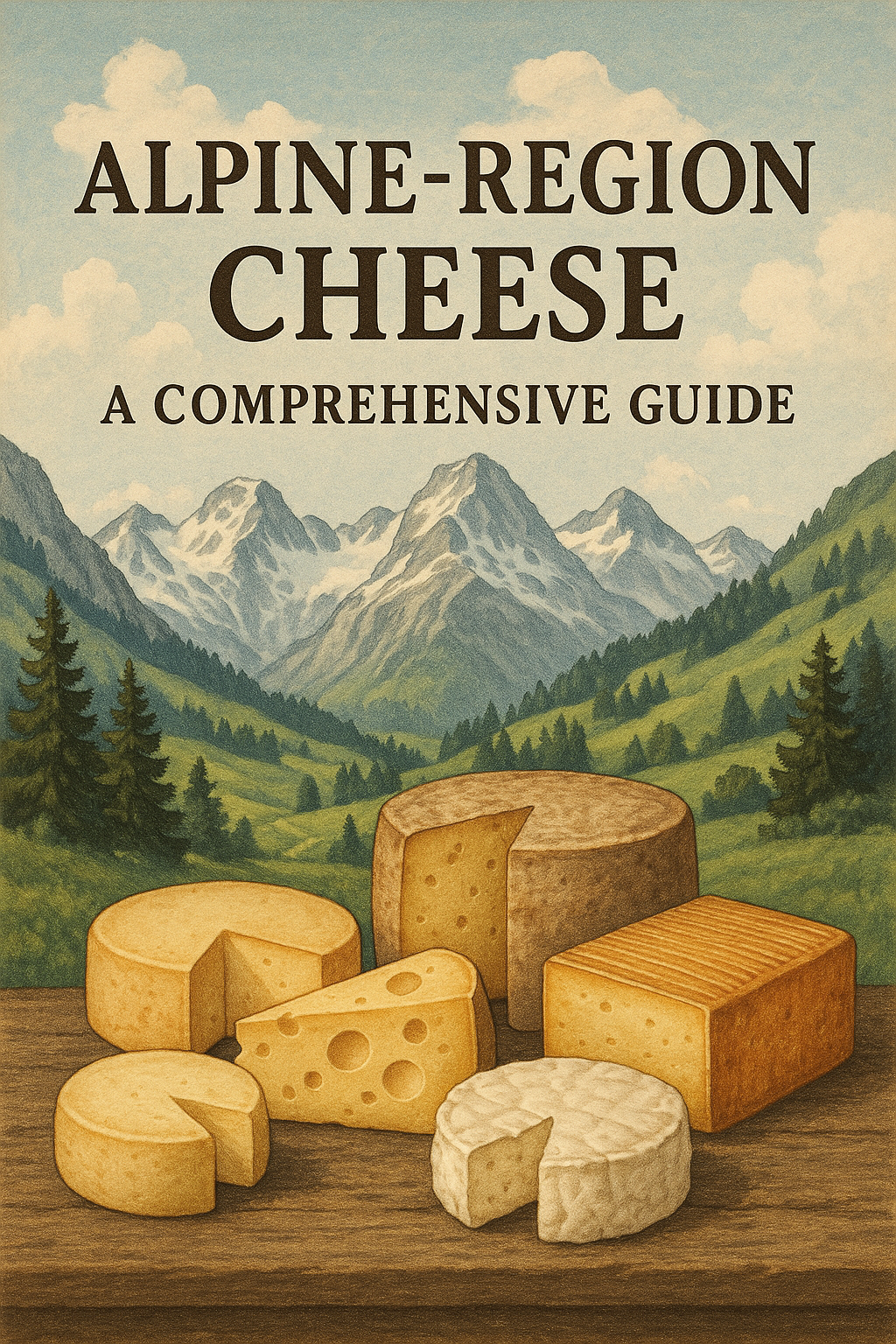
The Alpine region, stretching across Switzerland, France, Italy, Germany, Liechtenstein, and Austria, is renowned for its majestic mountains, lush valleys, and centuries-old dairy culture. Alpine cheeses are globally celebrated for their nutty flavor, dense texture, and slow aging process that develops complex aromas. Whether served as melted Raclette, sliced Gruyère, or creamy Fontina, Alpine cheese represents heritage, craftsmanship, and high-quality pasture milk.
In this comprehensive guide, we dive into the origins, production style, classic varieties, tasting notes, and perfect food pairings to help you truly appreciate the world of Alpine dairy excellence.
1. The Origin & Tradition Behind Alpine Cheeses
Alpine cheese production is deeply rooted in tradition. Cows graze on high-altitude pastures, feeding on wild herbs, alpine flowers, and fresh grass, resulting in milk naturally rich in fat and aroma.
Why Alpine Cheese Tastes Unique
-
Summer grazing on mountain meadows
-
Minimal processing of raw or thermized milk
-
Artisanal hand-crafted methods
-
Aging in cool underground cellars or caves
-
Washed rinds to enhance savory depth
Every wheel of Alpine cheese reflects local climate, grass varieties, and cheesemaker technique, making each batch slightly distinctive yet consistently flavorful.
2. Most Popular Alpine Cheeses
1. Gruyère (Switzerland)
A world-famous cheese known for its nutty, slightly sweet flavor and firm yet creamy texture. Aged from 6 to 18 months, Gruyère is perfect for melting or slicing.
Best Used For: fondues, gratins, soups, sandwiches
Tasting Notes: roasted nuts, caramel hints, mild salt
2. Comté (France)
Comté is a celebrated French Alpine cheese aged up to 24 or 36 months. It offers a creamy, buttery taste with fruity undertones.
Best Used For: cheese boards, baking, wine pairings
Tasting Notes: brown butter, toasted hazelnuts, sweet milk
3. Emmental (Switzerland)
Famous for its iconic holes, Emmental has a mild, mellow, slightly sweet profile. It melts beautifully, making it a Swiss kitchen essential.
Best Used For: sandwiches, fondues, croque monsieur
Tasting Notes: honey, hay, soft acidity
4. Raclette (France/Switzerland)
One of the most iconic cheeses for melting over hot potatoes, cured meats, and vegetables. Its semi-soft body melts evenly and has a creamy, earthy aroma.
Best Used For: raclette dinners, charcuterie
Tasting Notes: earthy rind, melted butter, light smoky essence
5. Fontina (Italy – Valle d’Aosta)
A creamy yet elastic Alpine cheese known for its deep earthy flavor and sweet grassy finish.
Best Used For: fondues, pizza, cheese sauces
Tasting Notes: mushrooms, alpine herbs, creamy finish
6. Bergkäse (Austria/Germany)
The term translates to “mountain cheese.” Firm, robust, and aromatic, it’s often aged longer to achieve sharpness.
Best Used For: slicing, cheese platters, cooking
Tasting Notes: bold, savory, grassy, tangy
3. How Alpine Cheeses Are Made
True Alpine cheese follows an ancient milk-to-mountain process:
| Step | Description |
|---|---|
| 1. Summer Herding | Cattle grazes on mountain meadows. |
| 2. Milk Collection | Fresh, rich, raw milk is collected daily. |
| 3. Heating & Curdling | Milk is gently heated in copper vats and rennet added. |
| 4. Pressing | Curds are pressed to remove whey. |
| 5. Salting & Brining | Enhances flavor and aids preservation. |
| 6. Aging in Cool Cellars | Can range from 3 to 36 months. |
| 7. Washing the Rind | Develops savory depth and protects the cheese wheel. |
Soft Alpine cheeses age for a few months, while harder varieties mature longer, bringing out deeper flavor notes.
4. Flavor & Texture Profile of Alpine Cheeses
Alpine cheeses are known for:
-
Firm, sliceable texture
-
Aromatic, nutty, grassy notes
-
Light sweetness with a buttery finish
-
Excellent melting quality
They balance savory and sweet tones, with aging adding spice, caramel, and toasted nut complexity.
5. Perfect Pairings: Food & Wine Recommendations
Food Pairings
-
Crusty bread
-
Roasted potatoes
-
Smoked sausages
-
Pickled onions
-
Herbs & garlic butter
-
Fresh apples & grapes
Wine Pairings
| Cheese | Wine Match |
|---|---|
| Gruyère | Chardonnay, Riesling |
| Comté | Vin Jaune, Pinot Noir |
| Emmental | Sauvignon Blanc |
| Raclette | Dry White Wine |
| Fontina | Nebbiolo, Prosecco |
| Bergkäse | Austrian Grüner Veltliner |
Tip: Avoid overly sweet wines, as they overpower the natural Alpine flavor.
6. Serving & Storage Tips
Serving
-
Serve at room temperature for full flavor release.
-
Slice thin to enjoy texture and aroma layers.
Storage
-
Wrap in cheese paper or breathable wax paper.
-
Store at 3–7°C in the refrigerator.
-
Avoid freezing to maintain texture.
7. Why Alpine Cheeses Stand Out Globally
-
Mountain-fresh milk quality
-
Minimal industrial processing
-
Flavor shaped by natural herbs, flowers & climate
-
Heritage and protected origin certifications (PDO, AOP)
These cheeses embody generational craftsmanship, making them staples of gourmet menus worldwide.
FAQs
1. What makes Alpine cheese different from other cheese?
Alpine cheese is made from pasture-raised cows grazing at high altitudes, giving the milk superior richness and herbal flavor notes.
2. Which Alpine cheese melts best?
Raclette, Fontina, and Emmental are top choices due to their creamy melt quality and balanced moisture.
3. Can Alpine cheese be used for fondue?
Yes, classic fondue blends include Gruyère and Emmental for smooth, flavorful melting.
4. How long do Alpine cheeses age?
Aging ranges from 3 months to over 36 months, depending on texture and flavor strength desired.
5. Are Alpine cheeses lactose-friendly?
Most aged Alpine cheeses contain very low lactose because aging breaks down natural sugars.
Conclusion
Alpine cheeses are not just dairy products—they are culinary expressions of elevation, natural purity, and centuries-old cheese artistry. Known for their smooth melt, aromatic complexity, and nutty undertones, they continue to enrich fine dining and home cooking alike. Whether you prefer the elegance of Comté or the melted decadence of Raclette, the Alpine region offers a cheese experience unlike any other.