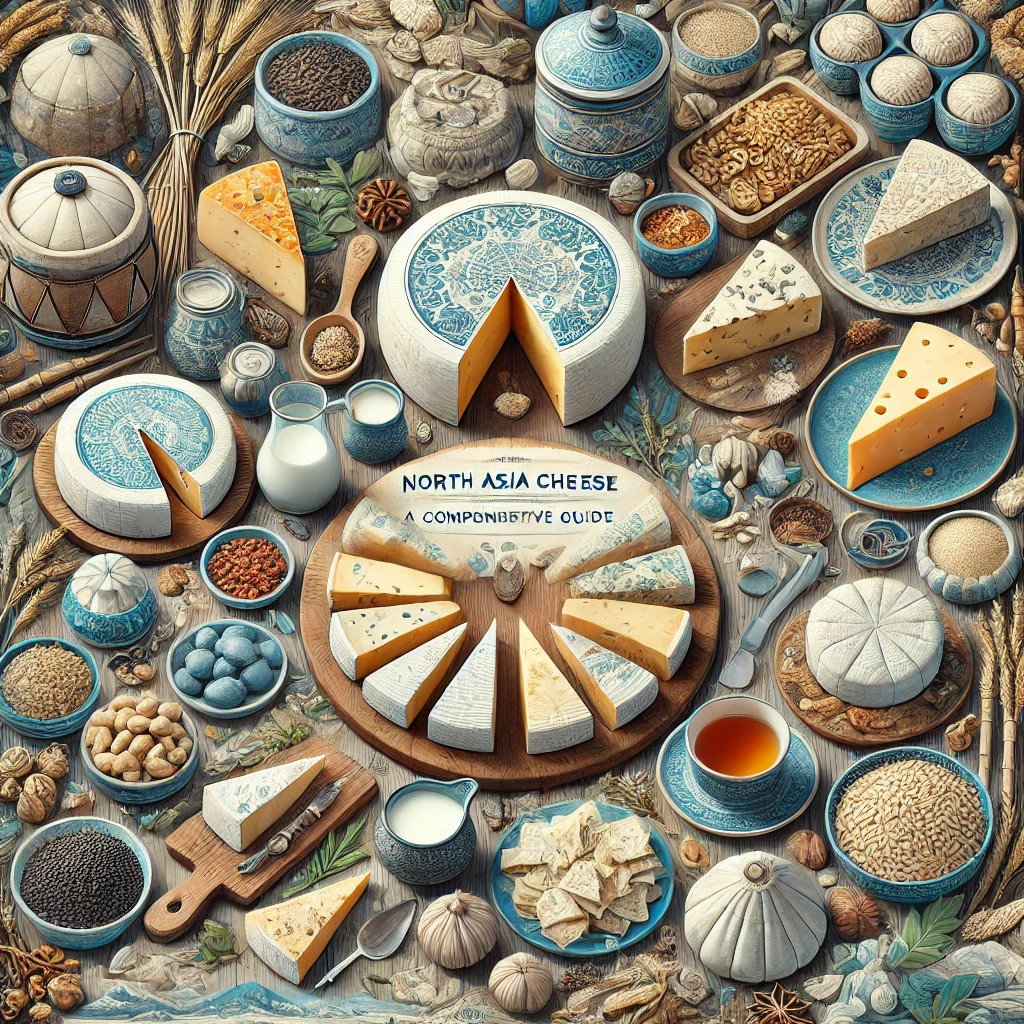
Cheese in North Asia is unlike anywhere else in the world. Shaped by frozen steppes, nomadic cultures, high-altitude pastures, and long winters, cheese is not merely food—it is preservation, survival, and identity. Across Mongolia, Siberia, Russia’s Far North, and the Korean peninsula, cheese developed under cold-climate necessity, often focusing on drying, curdling, smoking, and fermenting rather than delicate French-style affinage.
North Asia’s cheeses reveal a food history built on movement, horse herding, yak dairying, and winter storage, where dairy becomes a shelf-stable fuel for harsh climates. This guide explores the cheese traditions, techniques, tasting notes, and modern reinventions across the northern roof of Asia.
❄️ What Defines North Asian Cheese?
Unlike Western Europe’s buttery molds and French cave aging, North Asian cheese is:
-
hard or sun-dried
-
intensely fermented
-
lean rather than creamy
-
made from yak, mare, camel, and cow milk
-
built for long-term storage
Key Traits
| Feature | North Asian Trend |
|---|---|
| Texture | very firm, dried, sometimes crumbly |
| Flavor | tangy, fermented, smoky, sharp |
| Salt Level | moderate to high (preservation) |
| Dairy Source | mare, yak, cow, camel, goat |
| Aging | sun-drying, smoke aging, air curing |
| Climate Influence | freezing winters require dryness & longevity |
Cheese was historically more nutrient storage than fresh luxury.
🇲🇳 Mongolia: The Spiritual Heart of Steppe Dairy
Mongolia is the strongest dairy culture in North Asia. Here, cheese is tied to the nomadic soul, produced in tents (gers), stored above fire smoke, and shaped by raw pastoral life.
Key Cheeses
| Cheese | Style | Notes |
|---|---|---|
| Aaruul | dried curd | rock-hard, tangy, travel-friendly |
| Byaslag | fresh/hard | simple cow or yak milk curd |
| Qurut (common also in Central Asia) | sun-dried balls | strong acidity, shelf-stable |
| Chagaan Aaruul | sweetened dried curd | children’s snack |
Aaruul is the most iconic: intensely tangy, nearly stone-hard, meant for long journeys across cold grasslands.
Dairy Animals
-
yak
-
cow
-
mare
-
sheep
Mare’s milk is also fermented into airag, the national dairy drink.
🇷🇺 Siberia & Far North Russia: Smoke, Salt & Survival
Siberia’s cheese culture blends Slavic monastic dairying with Arctic preservation practices.
Popular Cheese Forms
| Type | Method |
|---|---|
| Smoked cheeses | hung over wood for weeks |
| Brined blocks | salt for ice-winter endurance |
| Fermented curds | long aging for tang & safety |
Hallmarks
-
smoke aroma
-
hard rind layers
-
low moisture
-
pungent sourness
Where France built cellars, Siberia built smoke rafters and used forests as curing chambers.
🇰🇷 Korea: Modern Cheese Meets Ancient Fermentation
Korea historically was not a cheese-producing nation due to rice agriculture, seafood focus, and low dairy consumption before the 19th century. But modern Korea now produces:
-
mozzarella
-
soft cow cheese
-
Dutch-style aged wheels
-
Korean cream cheese blends
Specialty Growth Areas
-
Gangwon-do green pastures
-
Jeju dairy herds
-
goat farms in remote highlands
Korean food historically leaned more toward fermented vegetables, soy curds, and rice cakes rather than dairy, but globalization has brought cheese into:
-
Korean pizza culture
-
tteok-bokki cheese fusion
-
street-food melt trends
🐪 Dairy Beyond Cows: Yak, Mare & Camel Milk
Yak milk is the hero dairy animal in cold mountain zones:
-
richer fat
-
denser minerals
-
ideal for drying
Mare’s milk is fermented into products more drink than cheese, but dried curds do exist in hybrids.
Camel cheese appears in desert-edge regions of North Asia, mostly dried and salted for endurance.
Distinct Flavor Profile
| Milk Type | Taste |
|---|---|
| Yak | rich, grassy, high-fat tang |
| Mare | acidic, lightly sweet |
| Camel | buttery, mineral, slightly sour |
| Cow | neutral, creamy |
🧂 Flavor & Texture Profile of North Asian Cheeses
Flavor Notes
-
strong tanginess
-
lactic sourness
-
grass & smoke
-
subtle earthiness
Texture Profile
-
very firm, dried
-
crumbly to rock-like
-
long-lasting chew
-
rarely creamy
These are travel cheeses, not table delicacies—made for saddlebags, nomadic camps, and winter months.
🍽 How North Asia Eats Cheese
Traditional Usage
| Context | Cheese Role |
|---|---|
| horse-riding journeys | dried curd energy |
| nomad camps | stored dairy protein |
| tea pairing | salty curd + milk tea |
| fermented dairy feasts | cheese among yogurt, kefir, airag |
Pairing Practices
Unlike wine-and-cheese boards of Europe, North Asia pairs cheese with:
-
salted milk tea
-
fermented mare’s milk
-
broth or dumpling meals
Snacks and ceremonial dairy spreads include cheese, yogurt, and dried curds side by side.
🌍 Comparing North Asian Cheese to Other Regions
| Region | Cheese Nature | Key Difference |
|---|---|---|
| Western Europe | creamy, cultured, mold-ripened | North Asia is dried & survival-focused |
| Middle East | brined, salty | North Asia is fermented & smoked |
| South Asia | paneer-style fresh | North Asia is hardened & tangy |
| Americas | buttery & meltable | North Asia is sharp, sour, and portable |
North Asia prioritizes endurance, transport, and climate proofing.
🌱 Modern Revival & Global Appeal
Younger Mongolian and Korean artisans are:
-
softening curds
-
adding cream
-
reviving heritage dairy without losing identity
Luxury cheese shops now showcase aaruul beside French chèvre—proof that ancient nomadic cheese belongs on global boards.
⭐ Final Summary
North Asian cheese culture is:
-
shaped by freezing winters
-
built on fermentation, drying, and mobility
-
tied to yak, mare, camel, and cow milk
-
driven by nomadism, not farm stasis
It is food as survival, identity, craftsmanship, and climate adaptation. From Mongolia’s aaruul to Siberian smoke-curds and Korean dairy evolution, North Asia demonstrates that cheese is not only European heritage—it is a universal response to land, weather, and tradition.
FAQs — North Asia Cheese
1. Is cheese traditional in North Asia?
Yes, especially in Mongolia and Siberia, where dried and fermented cheeses supported nomadic life.
2. What makes North Asian cheese unique?
Low moisture, fermented tang, smoke aging, and long-term preservation.
3. Which animals provide milk?
Yak, cow, mare, camel, sheep, and goats depending on region.
4. Does North Asian cheese melt?
Rarely—most are dried or fermented and do not melt like mozzarella.
5. What is the best-known cheese?
Mongolian aaruul, a dried sour curd eaten by riders and nomads.