Argentina is known for beef, Malbec, mate culture, and vast grazing plains—but its cheese heritage is equally remarkable. Among its most iconic dairy creations stands Queso Reggianito, a small-format hard cheese inspired by Italy’s Parmigiano Reggiano yet shaped unmistakably by Argentine land, climate, and dairy traditions.
Developed primarily by Italian immigrants who arrived in Argentina between the late 19th and early 20th centuries, Reggianito was born out of necessity: a hard, grating cheese similar to Parmigiano but sized for export, faster aging, and everyday use. Today, it remains one of the most widely used aged cheeses in South America, landing on pasta, milanesas, pizza, and even empanada fillings.
🧀 What Is Queso Reggianito?
Queso Reggianito is a semi-hard to hard, aged cow’s milk cheese produced in small cylinders rather than large wheels. It shares a lineage with Italian grana cheeses but adapts to Argentine dairy conditions.
Key Characteristics
| Attribute | Description |
|---|---|
| Texture | firm, compact, slightly crumbly |
| Flavor | nutty, savory, buttery, mild sharpness |
| Salt Level | moderate-high |
| Aroma | matured dairy, lightly fruity |
| Aging | 4–9 months (sometimes more) |
| Shape | small wheels (“little Reggiano”) |
The name Reggianito literally means “little Reggiano”—a nod to the iconic Parmigiano yet proudly distinct.
🇦🇷 Historical Roots: From Italian Alps to Pampas Grasslands
Italian immigration left lasting culinary fingerprints on Argentina:
-
pasta lunch traditions
-
provolone grilling culture
-
and the creation of Reggianito
Why Reggianito Originated in Argentina
-
Italian cheesemakers needed a faster-aged counterpart to Parmigiano
-
Argentine climate supports grazing cattle with rich, fat-dense milk
-
demand for grated hard cheese in local cuisine
Unlike Parmigiano wheels weighing 30–40 kg, Reggianito is small and compact, making it:
-
easier to transport
-
easier to age in varied climates
-
easier to cut and grate in home kitchens
🥛 How Queso Reggianito Is Made
Although industrial dairies now produce it at scale, traditional steps still matter.
Classic Production Steps
-
Fresh cow’s milk heating & bacterial culturing
-
Curd cutting into small grains to remove whey
-
Gentle pressing to compact texture
-
Salting (often brine + surface salt)
-
Aging in ventilated rooms for months
-
Brushing & turning to form firm rind
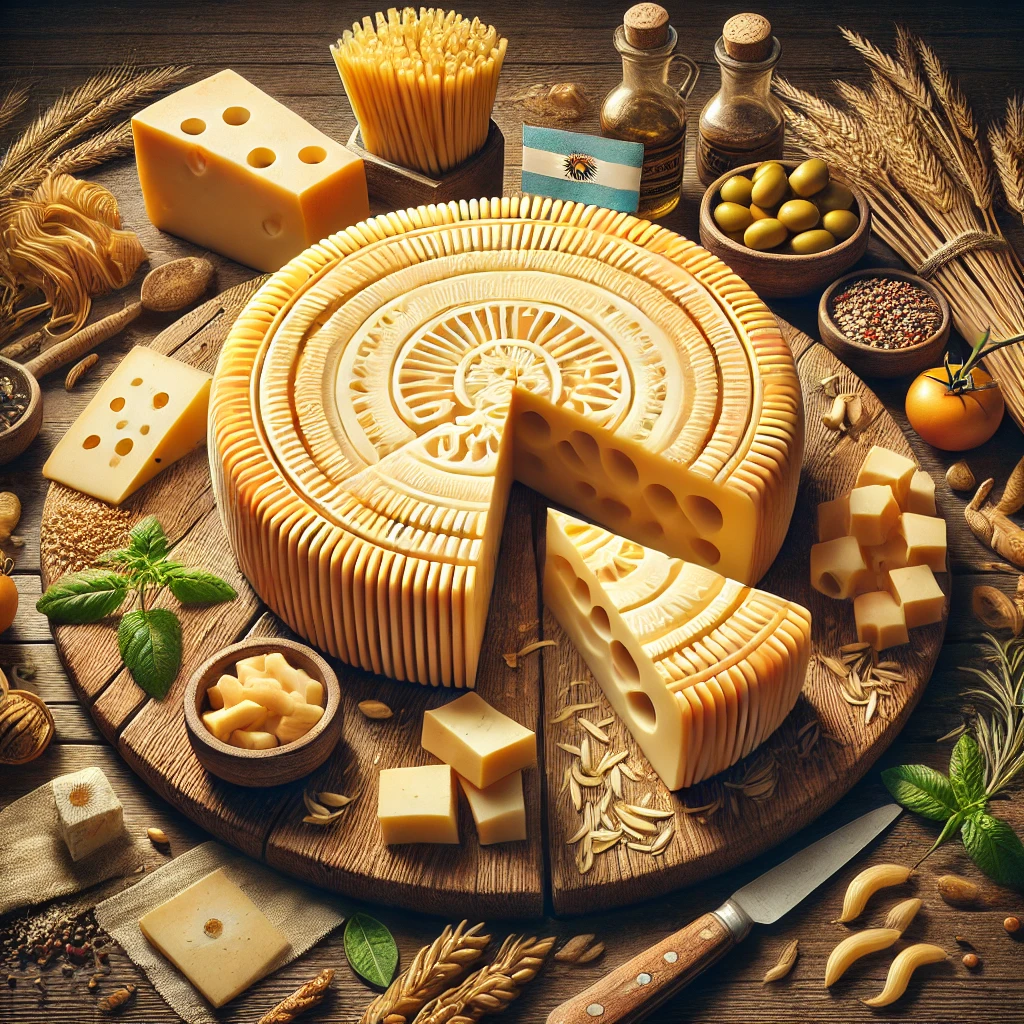
Texture & Appearance
-
compact interior
-
minimal holes
-
light straw to pale yellow color
-
waxed rind for export-grade products
The flavor grows sharper and nuttier with time.
🍽 How Argentines Use Reggianito
Reggianito is not garnishing royalty—it is everyday kitchen necessity.
Classic Culinary Uses
| Dish | Why It Fits |
|---|---|
| Pasta dishes | main Argentine use—grated generously |
| Milanesas | sharp topping for breaded cutlets |
| Pizza | blends well with mozzarella |
| Empanadas de jamón y queso | salt + tang for balance |
| Locro & stews | cheese depth without heavy melt |
| Ñoquis del 29 | grated, tossed, or melted lightly |
Modern Uses
-
cheese boards with Malbec
-
bruschetta grated over roasted veggies
-
artisanal burgers
-
risottos and polenta dishes
Reggianito acts as the bridge between Italian flavor and Argentine identity.
🌶 Flavor & Texture Breakdown
Flavor Notes
-
toasted nut and cream
-
subtle dairy sweetness
-
mild tang nearing Pecorino territory
-
savory salt crystals in aged versions
Texture Experience
-
grated easily
-
sliceable when fresh-aged
-
hardens and sharpens with time
-
slight crumble, not rubbery
🌍 Reggianito vs Parmigiano vs Grana Padano
| Cheese | Similarity | Key Difference |
|---|---|---|
| Parmigiano Reggiano | nutty, aged, grating | Reggianito ages faster, milder, smaller wheel |
| Grana Padano | everyday grated use | Reggianito is saltier, firmer |
| Pecorino Romano | sharp, salty | Pecorino is sheep’s milk; Reggianito cow’s milk |
| Sardo (Argentina) | aged flavor | Reggianito melts better, smoother texture |
Reggianito is Argentina’s Italian-inspired but culturally independent grana cheese.
🍷 Beverage Pairing Guide
Best Pairings
| Drink | Why It Works |
|---|---|
| Malbec | plum + tannin lift cheese saltiness |
| Bonarda | soft round fruit vs mature dairy tang |
| Dry sparkling wine | cleans palate of salt crystals |
| Fernet-cola | Argentine pairing ritual, bold vs bold |
Non-Alcoholic Pairings
-
cold mate cocido (light, herbal contrast)
-
grape must sodas
-
apple cider
🌱 Nutritional Overview
Per 100g (approx.):
| Nutrient | Value |
|---|---|
| Calories | medium-high |
| Protein | strong source |
| Fat | moderate to high |
| Calcium | excellent |
| Salt | moderate-high |
Reggianito is nutrient-dense due to aging and protein concentration.
🧊 Storage & Handling
To maintain aroma and texture:
-
refrigerate at 3–7°C
-
wrap in cheese paper or breathable wrapping
-
avoid direct plastic wrap (causes sweating)
-
grate fresh for maximum aroma
Aged pieces may show white crystalline specks—amino acid clusters, not spoilage.
⭐ Final Summary
Queso Reggianito is:
-
inspired by Italy
-
perfected by Argentina
-
versatile, bold, and kitchen-ready
From Sunday pasta lunches to restaurant fusion menus, it defines Argentina’s dairy craftsmanship. It melts smoothly when young, grates beautifully when mature, and embodies the culinary handshake between Europe and Latin America.
A cheese born from immigrant skill and Pampas terroir—firm, flavorful, and proudly Argentine.
FAQs — Queso Reggianito
1. Why is it called Reggianito?
Because it resembles Parmigiano Reggiano but in smaller wheels and shorter aging.
2. How is it best eaten?
Grated on pasta, milanesas, pizza, risotto, and empanadas.
3. Is it strong in taste?
Moderately sharp, nutty, and buttery—less intense than Parmigiano.
4. Does it melt well?
Young Reggianito melts; aged versions are best for grating.
5. What milk is used?
100% cow’s milk sourced from Argentine dairy herds.