
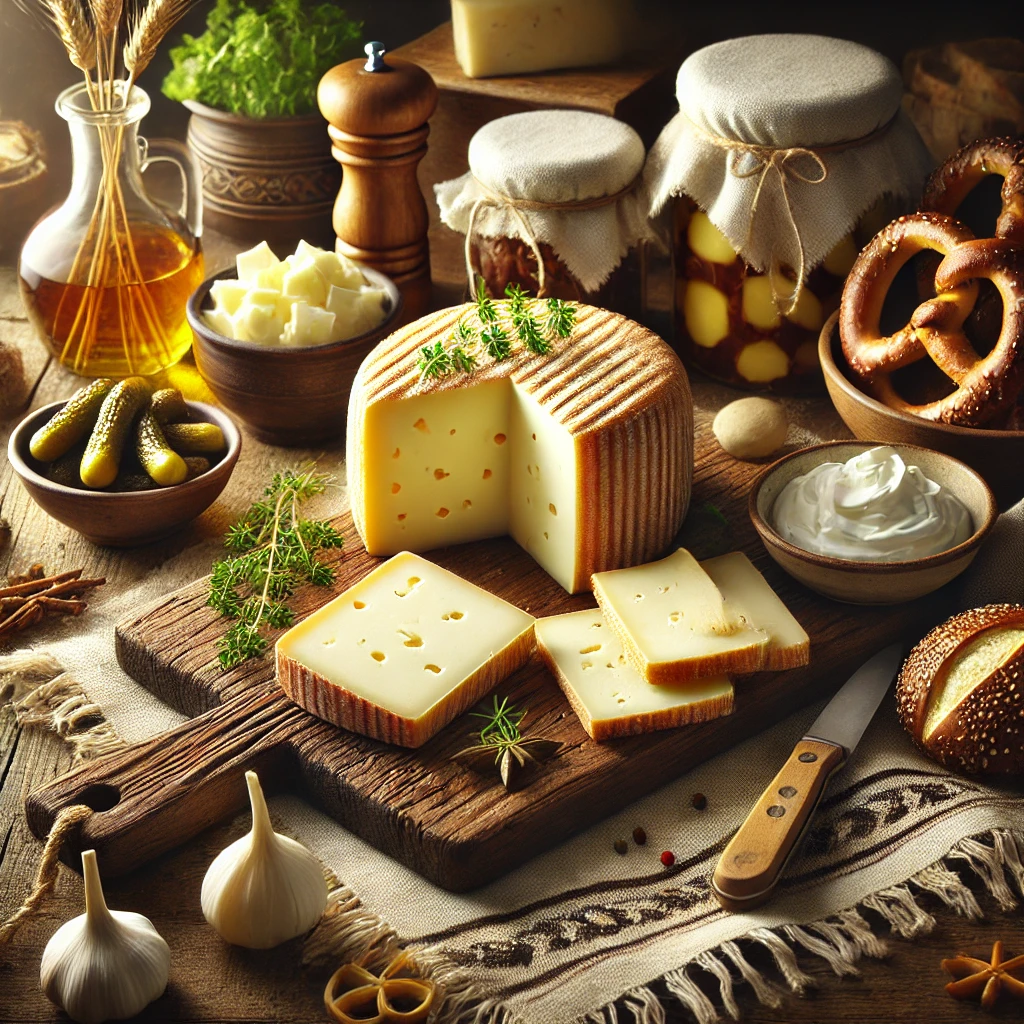
Czechia is not only known for beer culture, spa towns, and gothic architecture—it is also home to a surprisingly rich cheese tradition. Among its most distinctive dairy gems stands Romadur, a soft-ripened washed-rind cheese with a creamy interior and unmistakably pungent aroma. Often compared to Limburger yet milder, smoother, and more refined, Romadur holds a special place in Central European cheese identity.
This cheese is not for the timid. It is bold, aromatic, slightly sticky on the rind, and melts on the tongue with buttery intensity. For Czechs, Romadur is more than cheese—it is nostalgia. It’s the flavor of rural kitchens, rustic tavern snacks (pivní sýr), and hearty bread-and-beer pairings.
🧀 What Is Romadur Cheese?
Romadur is a soft, washed-rind cow’s milk cheese originally associated with Bohemia and produced today throughout Czechia and Slovakia.
Key Characteristics
| Feature | Description |
|---|---|
| Texture | creamy, spreadable, soft interior |
| Aroma | pungent, yeasty, barnlike but balanced |
| Flavor | tangy, buttery, slightly salty, earthy |
| Rind | sticky, orange-red, washed-culture |
| Aging | 3–6 weeks |
| Milk | cow’s milk (pasteurized or raw) |
Its high aroma + soft ripening make it a cousin of Limburger, Münster, and Époisses—but with a uniquely Czech personality.
🇨🇿 Historical Background
Romadur has been part of Central European dairy heritage since at least the 19th century, though washed-rind cheese methods arrived earlier via monastic cheesemaking routes and Bavarian Alpine influences.
Why It Gained Popularity in Czechia
-
aging suited to cooler climates
-
perfect accompaniment for beer taverns (hospody)
-
adaptable to bread-based cuisine
-
strong aroma beloved by Central European palates
It remains one of Czechia’s signature high-aroma cheeses, proudly displayed in delicatessens from Prague to Moravia.
🥛 How Romadur Is Made
Like other washed-rind cheeses, its personality comes from controlled microbial activity on the surface.
Production Steps
-
Milk heating & culturing – lactic bacteria develop starter flavor.
-
Curd cutting & molding – soft curds retain moisture.
-
Brine washing – salt wash encourages rind bloom.
-
Aging in humid cellars (3–6 weeks) – rind turns orange-gold.
-
Bacterial ripening – Brevibacterium linens produces aroma & creamy softening.
Rind as Flavor Driver
The rind is edible and essential—its mild “funk” is what gives Romadur depth and identity.
🍽 How Romadur Is Served in Czechia
Unlike delicate French cheese boards, Czech enjoyment is hearty and tavern-style.
Traditional Serving Combinations
| Pairing | Why It Works |
|—|—|—|
| Dark rye bread | neutral base for bold cheese |
| Pickled onions | acidity counters creamy fat |
| Beer (Pilsner, dark lager) | carbonation cuts aroma |
| Mustard & caraway | spice + tang balance funk |
| Butter | smooths salt and sharp notes |
One popular rustic dish is Pivní sýr (Beer Cheese Spread):
-
Romadur mashed with mustard, onion, butter, and caraway
-
smeared onto crusty bread
-
enjoyed with cold Czech beer
This dish is tavern culture in edible form.
🌶 Flavor & Texture Experience
Flavor Notes
-
barn-aged aroma (pleasantly bold)
-
buttery middle
-
slight pepper undertone
-
live-yeast rind tang
-
subtle earth and mushroom finish
Texture Notes
-
soft to semi-spreadable
-
creamy interior dissolving into near-liquid when very ripe
-
rind slightly tacky but not gritty
At peak ripeness, Romadur can become almost spoonable.
🧺 Romadur in Modern Cooking
Beyond tavern platters, chefs use Romadur creatively.
Contemporary Uses
| Dish | Why It Works |
|---|---|
| melted on potatoes | creamy tang + earthy tones |
| grilled cheese sandwiches | bold cheese against toasted crust |
| sauce base for meats | rind funk adds gourmet edge |
| flatbread topping | aromatic melt without oiliness |
| creamy risotto use | adds deep savory complexity |
Romadur melts smoothly though not as stringy as mozzarella or gouda—it liquefies and coats rather than stretches.
🌍 Comparison to Other Aroma Cheeses
| Cheese | Similarity | Difference |
|---|---|---|
| Limburger | washed-rind aroma | Romadur is smoother & more buttery |
| Époisses | soft & intense | Romadur is less salty & less runny |
| Munster | orange rind tang | Romadur milder & less elastic |
| Taleggio | creamy & aromatic | Romadur more pungent, smaller format |
It sits in the “bold but approachable” zone—not mild, not extreme.
🍺 Beverage Pairing Guide
Romadur and beer belong together.
Best Czech Pairings
| Beverage | Reason |
|---|---|
| Pilsner | crisp hop bite cuts creamy fat |
| Černé pivo (dark lager) | caramel notes complement umami |
| Wheat beer | citrus + yeast harmony |
| Unfiltered farmhouse ale | echoes aromatic rind cultures |
Non-Alcoholic Pairings
-
apple cider
-
mineral water with lemon
-
kombucha (fermented harmony)
Wine works, but choose:
-
off-dry Riesling
-
sparkling brut
-
neutral white Burgundy
🌱 Nutrition Profile
Per 100g (approx.)
| Nutrient | Value |
|---|---|
| Calories | moderate-high |
| Fat | high, creamy |
| Protein | strong dairy protein |
| Sodium | moderate |
| Calcium | excellent |
Like many washed-rind cheeses, Romadur is flavor-dense without needing large servings.
🧊 Storage & Serving Tips
Best Practices
-
wrap in breathable cheese paper
-
store at 4–7°C
-
avoid airtight plastic (intensifies smell)
-
serve at room temperature for true creaminess
Don’t worry if aroma intensifies—that’s expected for washed-rind cheeses.
⭐ Final Summary
Romadur cheese is Czechia in a bite:
-
bold tavern aroma
-
buttery cream interior
-
washed-rind craft
-
rustic bread, cold lager, and Central European soul
It represents a cheese culture that values strength of flavor and everyday heartiness, not refined delicacy. Whether mashed into beer spread, sliced on rye, or melted into modern cuisine, Romadur remains one of the region’s most beloved dairy treasures.
Soft yet strong, aromatic yet comforting—Romadur is a creamy delight with Czech character.
FAQs — Romadur Cheese
1. Is Romadur very strong in smell?
Yes, it has a pronounced washed-rind aroma, but the flavor is smoother and milder than Limburger.
2. Can you eat the rind?
Absolutely. The rind develops the cheese’s aroma and buttery depth.
3. What is the best pairing?
Dark Czech lager, rye bread, pickled onions, and mustard.
4. How does it melt?
Romadur becomes creamy and velvety, perfect for spreads and melts.
5. Is Romadur similar to French washed-rind cheeses?
Yes, but it is typically less salty and more tavern-style in taste and presentation.