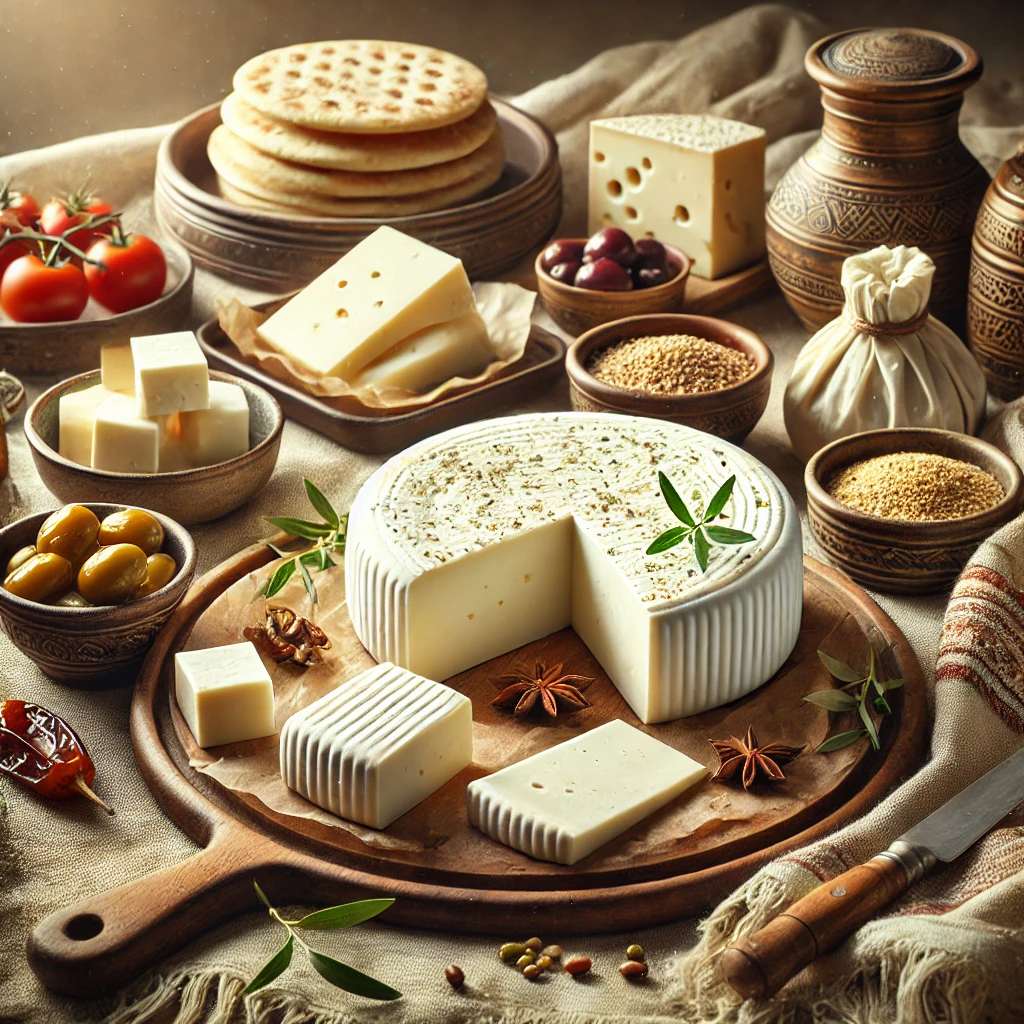
Bahrain’s culinary heritage is built on pearl trade history, spice routes, and Gulf Arab hospitality. At the center of Bahraini breakfast tables, mezze platters, and Ramadan spreads sits Jibneh Baida—a classic white cheese loved for its purity, mild saltiness, and fresh milk flavor. While many international cheeses rely on aging, brining complexity, or rind development, Jibneh Baida represents simplicity and refinement: soft salt brine, clean curds, and immediate enjoyment.
Found in homes, cafes, and souqs across Bahrain, this cheese reflects the region’s adaptation of Levantine and Ottoman dairy traditions, infusing them with Gulf flavors like mint, za’atar, olive oil, and date syrup. Mild yet character-rich, Jibneh Baida is not just a cheese—it is a symbol of local comfort food.
🧀 What Is Jibneh Baida?
Jibneh Baida translates simply to “white cheese” in Arabic. Though common across the Middle East, Bahrain’s version holds unique features shaped by climate, salt level, and culinary pairing style.
Key Characteristics
| Feature | Description |
|---|---|
| Texture | soft, sliceable, semi-firm |
| Flavor | mild, slightly tangy, lightly salty |
| Aroma | fresh milk, clean brine |
| Color | pure white |
| Salt | moderate |
| Aging | fresh to lightly aged in brine |
| Milk | usually cow, sometimes sheep & goat blends |
Unlike feta, which tends to crumble, Jibneh Baida stays smooth, moist, and cohesive.
🇧🇭 Bahraini Origins & Cultural Identity
Bahrain’s coastal humidity and reliance on trade shaped how cheese traveled and evolved. Dairy historically arrived as:
-
preserved salted cheese wheels
-
brined curds from Levant traders
-
Gulf-adapted fresh white blocks
Over time, Bahrain developed regional preferences:
-
lower salt than Levantine feta
-
softer brine notes than Cypriot halloumi
-
mild dairy flavor ideal for mezze tables
Where Jibneh Baida Appears in Bahrain
-
Eid breakfasts
-
Ramadan suhoor and iftar spreads
-
Bahraini tea houses
-
bakery sandwiches
-
seaside café mezze boards
It pairs comfort, routine, and celebration.
🧂 How Jibneh Baida Is Made
Bahraini cheesemakers maintain traditional Arab dairy techniques while using modern hygienic standards.
Basic Process
-
Fresh milk heating to encourage curd formation.
-
Natural or microbial rennet added.
-
Curds cut and strained carefully to keep soft body intact.
-
Light salting (less than feta).
-
Brine soaking for storage, mild firmness, and flavor.
Why Bahraini Style Stands Out
-
clean brine = less sharp bite
-
smoother mouthfeel
-
delicate lactic sweetness
Unlike Greek feta’s crumbly acidity, Jibneh Baida carries gentle tang without sour aggression.
🍽 How Bahrain Enjoys Jibneh Baida
Traditional Pairings
| Accompaniment | Why It Works |
|—|—|—|
| Fresh khubz (Arabic bread) | soft textures align |
| Zaatar & olive oil | earthy herb + creamy cheese |
| Black olives | salt-fat harmony |
| Bahraini chai haleeb | sweet milk tea contrast |
| Cucumber & tomato salad | crisp vs soft balance |
Modern Culinary Uses
-
cheese pastries and fatayer
-
flatbread toppings
-
shakshouka garnish
-
breakfast wraps
-
manakish blends with za’atar
Gulf Fusion Trends
| Dish | Cheese Role |
|---|---|
| grilled cheese with date syrup | sweet–salt Gulf classic |
| saffron & cheese saj bread | floral saffron scent + dairy |
| mint-infused mezze | herbal coolness meets mild cheese |
Bahrain’s cuisine loves sweet-savory contrasts, and Jibneh Baida embraces that harmony beautifully.
🌶 Flavor & Texture Profile
Flavor Notes
-
creamy dairy
-
light lactic tang
-
delicate brine salinity
-
soft herb pairing background
Texture Notes
-
smooth surface
-
sliceable yet tender
-
mild chewiness
-
never chalky or crumbly
Jibneh Baida belongs to the fresh comfort cheese family—inviting rather than challenging.
🌍 Jibneh Baida vs Other White Cheeses
| Cheese | Similarity | Key Difference |
|---|---|---|
| Feta | brined white cheese | Jibneh Baida is milder, less crumbly |
| Halloumi | Middle Eastern dairy tradition | Jibneh Baida does NOT grill without melting |
| Akkawi | smooth & semi-salty | Bahraini version is softer + more delicate |
| Nabulsi | salted brine | Jibneh Baida has less spice & firmer plain texture |
Jibneh Baida is closest to Akkawi in softness, but with Bahraini brine gentleness.
🍷 Beverage & Tea Pairings
Bahrain’s tea culture shapes cheese enjoyment deeply.
Traditional Pairings
-
Chai Zanjabeel (ginger tea)
-
Chai Haleeb (sweet milk tea)
-
Arabic gahwa (light cardamom coffee)
Modern Pairings
| Beverage | Why It Works |
|---|---|
| mint iced tea | refreshes salt |
| dry rosé | cuts cream without overpowering |
| sparkling water & lime | palate cleanser |
| hibiscus iced infusion | tart + floral lift |
🌱 Nutrition Overview
Per 100g (approx.)
| Nutrient | Value |
|---|---|
| Calories | moderate |
| Protein | high-quality milk protein |
| Fat | medium |
| Salt | moderate |
| Calcium | excellent |
This balance makes Jibneh Baida:
-
kid-friendly
-
breakfast-suitable
-
daily mezze compatible
🧊 Storage & Serving Tips
-
keep in original brine to prevent drying
-
refrigerate at 4–6°C
-
rinse lightly before use if salt concentration increases
-
serve at room temperature for full softness
Shelf Life
Fresh styles last 5–7 days; packaged brined versions last 2–3 weeks.
⭐ Final Summary
Jibneh Baida is Bahrain’s culinary quiet hero:
-
pure dairy flavor
-
soft brined texture
-
adaptable to heritage and fusion
-
breakfast staple and mezze pillar
It is cheese with Gulf identity—minimal processing, gentle salting, and honest milk taste. In a world of aged rinds and sharp tangs, Jibneh Baida reminds us that simplicity is sophistication.
FAQs — Jibneh Baida
1. Is Jibneh Baida similar to feta?
Yes in brine, but it is milder, softer, and less tangy.
2. Can you cook with Jibneh Baida?
Yes, especially in pastries, mezze, wraps, and breakfast dishes.
3. Does it melt?
It softens quickly but doesn’t grill or stretch like halloumi.
4. How salty is it?
Moderate salt—less briny than Nabulsi or traditional feta.
5. What is the best pairing?
Khubz, olive oil, za’atar, and Bahraini milk tea.