
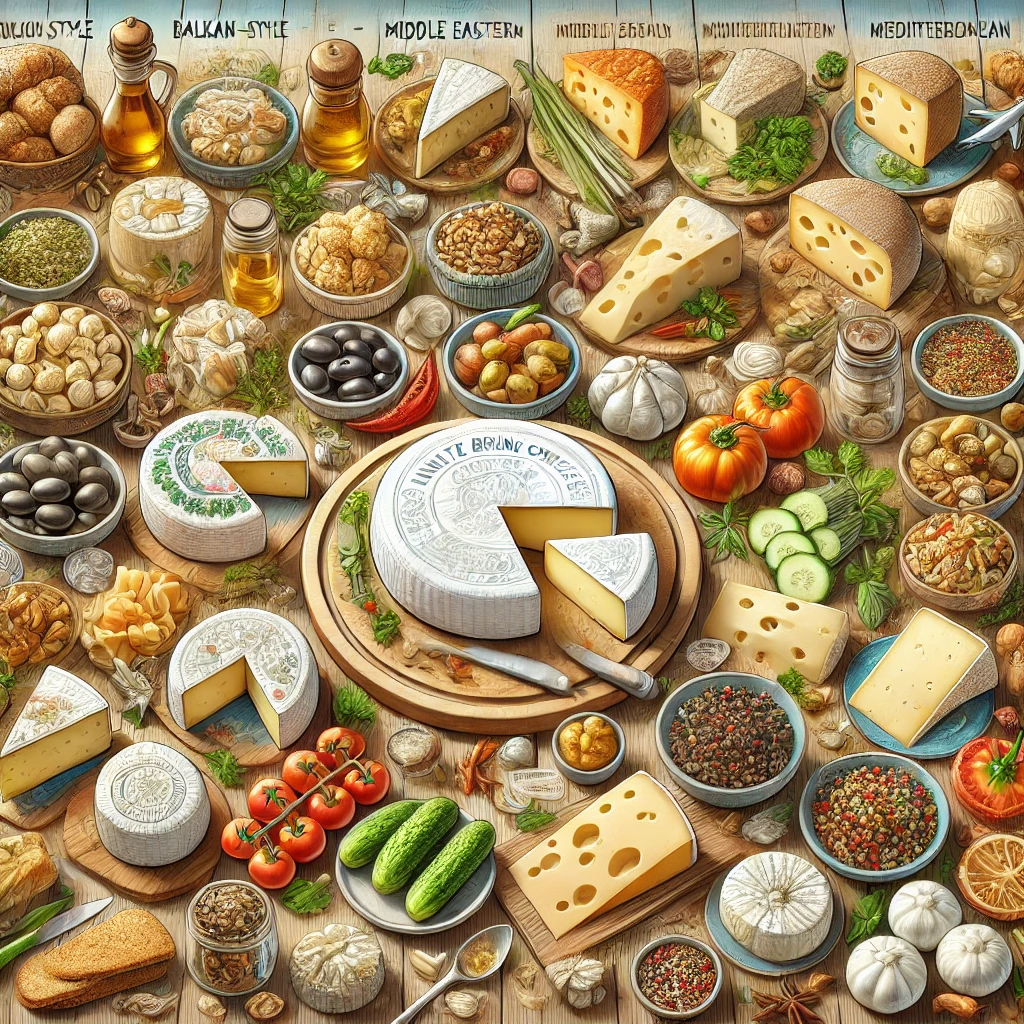
White brined cheese is a cornerstone of dairy culture across the Mediterranean, Balkans, Middle East, and Central Asia. Its salty, tangy personality and crumbly-to-creamy texture make it one of the most widely produced cheese families on earth. From Greek feta to Bulgarian sirene, Arab Jibneh Baida to Turkish beyaz peynir, white brined cheese is less about aging caves and more about salt, brine, heat endurance, and simplicity.
This global cheese category thrives in hot climates where dairy must remain edible without long-term refrigeration. That is why brining—saltwater storage—became both preservation and flavor technique. Today, white brined cheese appears in mezze spreads, salads, pastries, flatbreads, breakfast tables, and coastal cuisines that celebrate fresh acidity over dense aging.
🧀 What Are White Brined Cheeses?
White brined cheeses are semi-firm, salty cheeses soaked in brine (salt solution) for preservation and flavor.
Key Characteristics
| Feature | Description |
|---|---|
| Texture | crumbly to semi-soft, occasionally creamy |
| Flavor | salty, tangy, lactic, bright |
| Aging | weeks to months in brine |
| Color | pure white or ivory |
| Salt Content | moderate to high |
| Milk Type | cow, sheep, goat (or blends) |
They do not rely on rind development, mold, or long maturation. Instead, brine crafts both taste and durability.
🌍 Where White Brined Cheeses Are Found
White brined cheese is a shared cultural bridge across nations.
Major Regions
-
Eastern Mediterranean – Greece, Turkey, Cyprus
-
Balkans – Bulgaria, Serbia, North Macedonia, Bosnia
-
Middle East – Lebanon, Jordan, Syria, Palestine, Egypt
-
Caucasus – Armenia, Georgia, Azerbaijan
-
Central Asia – Kazakhstan, Uzbekistan
-
North Africa – Morocco, Tunisia, Algeria
The cheese travels borders not through trade alone but through centuries of pastoral life, salt-craft, and sheep-goat dairy culture.
🌐 Global Varieties of White Brined Cheese
1. Feta (Greece)
-
sheep milk dominant, some goat blend
-
crumbly, tangy, lemony brightness
-
Protected Designation of Origin (PDO)
2. Sirene (Bulgaria)
-
saltier than feta
-
firmer blocks, more intense sheep tang
-
essential in banitsa pastry
3. Beyaz Peynir (Turkey)
-
creamier, milder than feta
-
staple in Turkish breakfast (kahvaltı)
4. Halloumi (Cyprus) – Brined then Firm
-
brined but grillable
-
squeaky texture, perfect for searing
5. Jibneh Baida (Middle East)
-
soft white cheese, mild salt, clean milk profile
-
served with za’atar and olive oil
6. Akkawi (Levant)
-
smooth, elastic, moderate salt
-
melt-friendly in pastries & kunafa
7. Domiati (Egypt)
-
buffalo + cow milk mix
-
brine-aged for softness and dairy sweetness
8. Telemea (Romania)
-
brined sheep or cow cheese
-
less crumbly, slightly creamy
9. Tvorog Brined Variants (Eastern Europe)
-
lower salt, soft curd structure
-
used in dumplings and savory pies
🥛 What Makes Them White?
Because white brined cheeses are:
-
unaged or lightly aged
-
not exposed to mold rind cultures
-
not subjected to browning or curing
-
high in milk solids
Sheep and goat milks contribute bright ivory tone due to higher fat and less carotene than cow’s milk.
🍽 How White Brined Cheese Is Used Around the World
Mediterranean & Aegean
-
feta in Greek salad
-
beyaz peynir with olives and bread
-
halloumi grilled with lemon
Middle Eastern
-
jibneh baida with mint tea
-
akkawi in sweet cheese dessert kunafa
-
olive oil + za’atar + flatbread
Balkan
-
sirene in banitsa cheese pie
-
telemea with polenta (mămăligă)
North African
-
domiati in breakfast spreads
-
brined cheese with dates or olives
White brined cheeses shine where freshness meets salt clarity.
🧂 Brine: The Flavor Engine
Brining serves two functions:
-
Preserves milk in hot climates
-
Creates bright salt-acid bite
Brining timeline determines:
-
texture (crumbly vs creamy)
-
tang (light vs sharp)
-
moisture level
Typical Brine Composition
| Ingredient | Role |
|---|---|
| Salt | preservation + flavor |
| Water | hydration medium |
| Occasionally whey | dairy acidity balance |
| Rare spices | regional aroma |
🌶 Flavor & Texture Breakdown
Flavor Notes
-
sharp brightness
-
clean lactic tang
-
saline punch
-
occasional herbal undertones
Texture Notes
-
crumbly feta-like grains
-
creamy beyaz peynir softness
-
elastic akkawi stretch
-
halloumi firmness
Salt defines structure: the higher the salt, the tighter the curd.
🥗 Perfect Pairings
| Food | Why It Works |
|---|---|
| olives & herbs | saline harmony |
| watermelon | sweet–salty contrast |
| tomatoes & cucumber | Mediterranean cooling |
| honey & nuts | creamy–sweet balance |
| grilled vegetables | smoke + acid synergy |
White brined cheeses excel in contrast-driven menus.
🍷 Beverage Pairing Guide
-
mint tea (Levant)
-
Turkish black tea
-
dry white wine (Sauvignon Blanc, Assyrtiko)
-
rosé
-
sparkling water with lemon
Avoid heavy reds—they overshadow delicate brine and tang.
🧊 Storage & Salt Management
To mellow salt content:
-
soak cheese in fresh water for 15–20 minutes before serving
Storage
-
keep submerged in brine in airtight glass
-
refrigerate
-
avoid freezing (destroys curd integrity)
Shelf life depends on:
-
salt quantity
-
brine clarity
-
milk type
⭐ Final Summary
White brined cheeses unite regions from Greece to Algeria, Turkey to Lebanon, Bulgaria to Tunisia. They are:
-
salt-aged, not cave-matured
-
bright, tangy, and versatile
-
ideal for warm climates and mezze culture
-
pairing masters for fruit, herbs, bread & olive oil
Their simplicity is their mastery: milk, salt, brine, and time create some of the world’s most beloved cheese identities.
FAQs — White Brined Cheese
1. Why are white brined cheeses so salty?
Salt preserves cheese in hot climates and shapes tangy flavor.
2. Can white brined cheese be grilled?
Halloumi yes, but feta, sirene, and beyaz peynir soften rather than grill.
3. How do you reduce saltiness?
Soak cheese in water or milk briefly before serving.
4. What is the mildest type?
Beyaz peynir and akkawi are softer and less sharp than feta or sirene.
5. Are these cheeses aged?
Lightly—they age in brine, not on open shelves or cave walls.