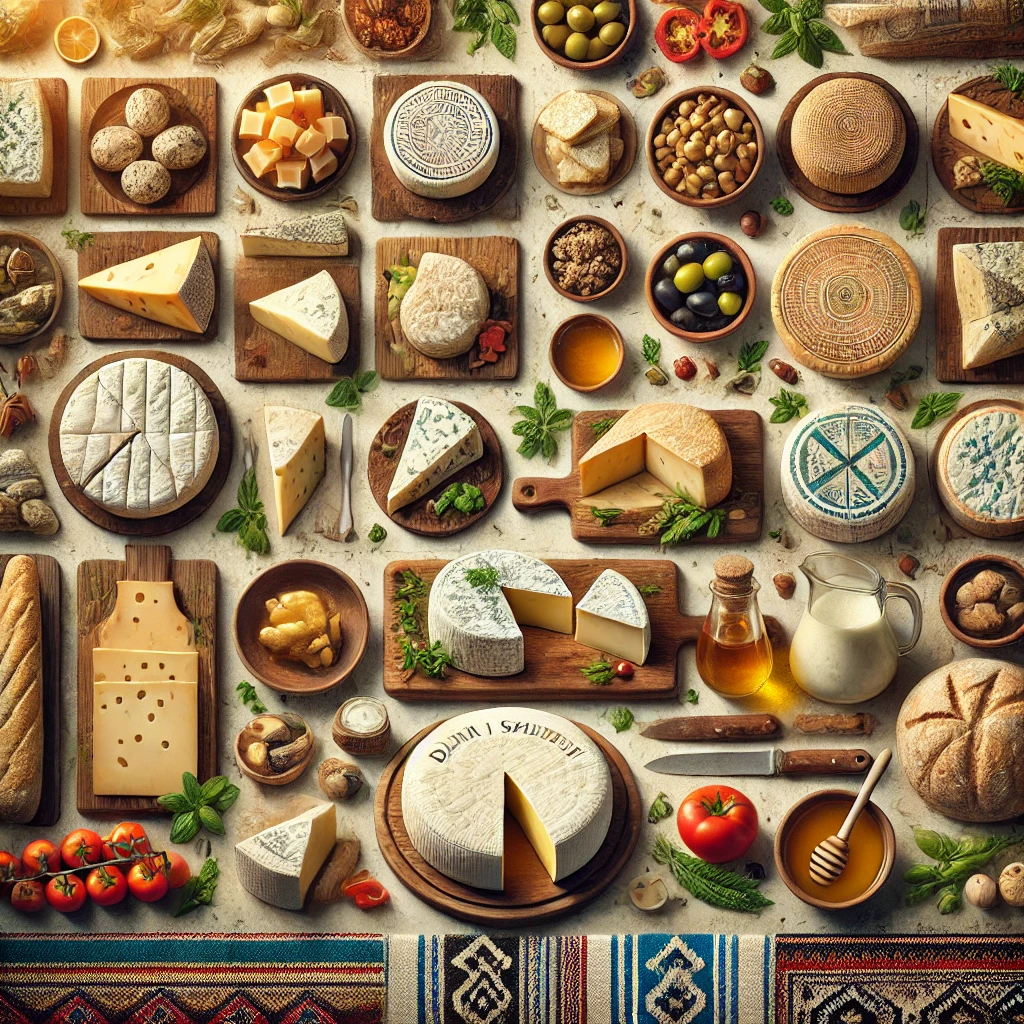
Albania’s dairy landscape is as rugged and soulful as its mountains, rivers, and stone-built villages. At the heart of its culinary identity stands Djatë i Shqipërisë, a term Albanians use to refer to their traditional cheese styles, especially the white brined varieties that dominate table spreads, meze platters, and daily home cooking. It is not simply cheese—it is a taste of shepherding heritage, Ottoman influence, Adriatic climate, and Albanian household pride.
From the coastal plains of Vlora to the alpine folds of Tropoja and Korçë, Djatë reflects pastoral rhythm: sheep herded on high summer pastures, goats grazing freely on medicinal herbs, and cows feeding on valley grasses. Every bite reveals a combination of salt, sun, mountain air, and centuries of Balkan preservation knowledge.
🧀 What Exactly Is Djatë i Shqipërisë?
“Djatë” simply means cheese in Albanian, but culturally, it refers to white brined cheese, the country’s most iconic dairy product. While variations exist, the signature style is a crumbly, salty, tangy brine-cured cheese somewhat related to feta, yet distinct in aroma, texture, and terroir.
Key Characteristics
| Feature | Description |
|---|---|
| Texture | crumbly, sliceable, slightly creamy |
| Salt Level | medium to high (brined) |
| Flavor | tangy, milky, herbal undertones |
| Milk Type | sheep, goat, cow, or blended |
| Color | bright white |
| Aging | 1–3 months in brine (sometimes longer) |
Sheep and goat milk remain dominant because Albania’s hilly terrain favors small grazing animals, not large cattle herds.
🌍 Regional Cheese Variations in Albania
Albanians take cheese seriously, and regional micro-styles reveal cultural pride.
1. Djatë i Bardhë (White Brined Cheese)
-
Albania’s culinary symbol
-
salty, tangy, and preserved in brine
-
used in pies (byrek), salads, meze
2. Djatë i Butë (Soft Creamy Cheese)
-
smoother, less salty
-
often served fresh
-
used as spread with olive oil
3. Djatë i Zbutur me Ajkë (Cheese with Cream)
-
lactic, almost buttery
-
eaten for breakfast with bread and olives
4. Djatë i Vjetër (Aged Cheese)
-
firmer, sharper, more intense
-
aged beyond three months
5. Mishavinë (Alpine Aged Cheese from Kelmend)
-
matured in wooden barrels
-
complex, earthy, crumbly, aromatic
This diversity showcases Albania’s dairy geography—from rocky goat paths to high-pasture sheep farms.
🐑 The Role of Pasture & Terroir
Djatë owes much of its flavor to free-grazing livestock on native herbal plateaus, including:
-
mountain thyme
-
sage
-
oregano
-
wild clover
-
rosemary
-
juniper grass
These herbs create the cheese’s unmistakable aromatic undertone, differentiating it from Greek feta, Bulgarian sirene, or Macedonian white cheeses.
Why Albanian Cheese Tastes Unique
-
raw milk use remains common
-
mountainous dairy routes still active
-
minimal industrial intervention
-
brine aging in wooden or tin containers
Djatë is not homogenized dairy—it is mountain milk in its original dialect.
🥛 Traditional Production Process
Cheese making in Albania remains largely artisanal, especially in northern and highland zones.
Steps
-
Fresh raw milk collection (sheep/goat)
-
Heating at low temperature
-
Curdling using rennet (traditionally lamb rennet)
-
Curd cutting and draining in cloth
-
Pressing into blocks
-
Brine curing for several weeks
-
Aging in wooden barrels or metal tins
Brine (ujë me kripë) is the secret to longevity, flavor intensity, and Albania’s distinct salty tang.
🍽 Culinary Uses in Albanian Cuisine
Djatë is central to traditional meals, always accompanied by bread, olives, and tomatoes.
Common Uses
| Dish | How It’s Used |
|—|—|—|
| Byrek (cheese pie) | crumbled filling with spinach |
| Tarator | cheese side with cold cucumber yogurt |
| Meze platter | cherries, olives, smoked meats |
| Grilled cheese | seared to golden crisp |
| Stuffed peppers | mixed with herbs and rice |
Breakfast in Albania almost always features Djatë with honey, fruit, or warm village bread.
🌿 Flavor Notes & Texture
Flavor
-
tangy but not sour
-
full milk richness
-
herbal freshness from pasture
-
brine salt complexity
Texture
-
semi-firm but not rubbery
-
crumbles without collapsing
-
moist but not watery
When aged, it becomes denser, sharper, and slightly nutty.
🧂 Djatë vs Balkan Neighbors
| Cheese | Similarity | Key Difference |
|---|---|---|
| Greek Feta | brined, crumbly | Djatë less acidic, richer sheep notes |
| Bulgarian Sirene | salty brine style | Albanian milk more herb-driven |
| Macedonian Belo Sirenje | soft white brine | Albanian versions more rustic |
| Montenegrin Njeguški | mountain style | Djatë less smoked, more brined |
Albanian cheese stands apart through pasture flora + sheep dominance + raw craft style.
🍷 Beverage Pairings
Traditional Albanian Drinks
-
rakia (plum brandy)
-
boza (sweet grain beverage)
-
mountain herbal tea
-
yogurt drink
Modern Pairings
| Drink | Why It Works |
|—|—|—|
| crisp Chardonnay | balances salt & cream |
| dry rosé | fruit lift |
| IPA beer | bitterness cuts salt |
| cider | apple acidity vs brine |
🧊 Storage & Shelf Life
Because Djatë is brined, it stores well with simple care.
Storage Tips
-
keep submerged in brine at all times
-
refrigerate in glass or ceramic
-
avoid airtight plastic long term
Shelf Life
-
fresh soft cheese: 1–2 weeks
-
brined white cheese: up to 1–3 months
-
aged variants: 3–6 months, sometimes longer
⭐ Final Summary
Djatë i Shqipërisë is more than Albania’s national cheese—it is a taste of stone villages, shepherd songs, wild herbs, and Adriatic wind. It carries centuries of brining tradition, high-pasture grazing, and culinary continuity.
Bold yet humble, crumbly yet creamy, salty yet herb-sweet, Djatë represents a country where dairy is not factory culture but mountain ritual and family memory.
FAQs — Djatë i Shqipërisë
1. What milk is used for Djatë?
Primarily sheep and goat milk, though cow blends occur in lowland regions.
2. Is it similar to feta?
Yes, but it is less acidic, more herbal, and rooted in Albanian mountain terroir.
3. How long is Djatë aged?
Typically 1–3 months in brine; aged versions longer.
4. Can Djatë be eaten fresh?
Yes—fresh, semi-soft versions are popular in home cooking.
5. How is it most commonly served?
With bread, olives, grilled vegetables, and in byrek (cheese pie).