
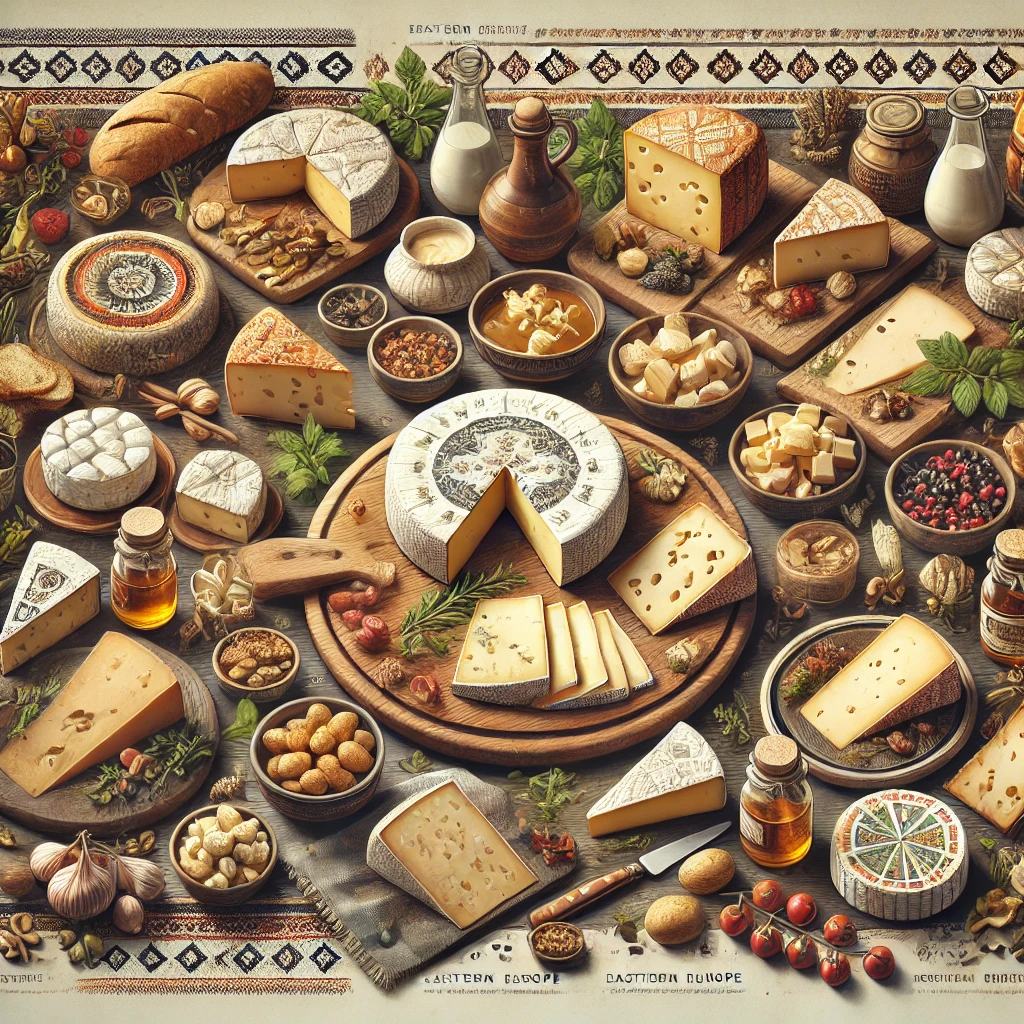
Eastern Europe is one of the world’s quiet dairy powerhouses, home to pastoral history, monastic cheesemaking, deep-brined traditions, and farmhouse preservation methods that predate industrial processing by centuries. From Polish smoked mountainside wheels to Balkan brine cheeses and Ukrainian farm curds, the region treats cheese not merely as food but as cultural memory, winter survival, and village identity.
Whether built in wooden alpine huts, ripened in salt caves, or soaked in brine barrels, Eastern European cheeses reflect a world where seasonal rhythm, flock migration, and mountain air sculpt the taste of milk.
🧀 What Defines Eastern European Cheese?
While Western Europe celebrates rinds and caves, Eastern Europe is built on:
-
brine vats
-
sheep-dominated pastoralism
-
mountain smoke preservation
-
fresh curd simplicity
-
fermentation over luxury aging
Core Characteristics
| Feature | Description |
|---|---|
| Dominant Milk | sheep & goat in mountains, cow in plains |
| Preservation | salt brine, smoke curing |
| Flavor Profile | tangy, salty, earthy, herbal |
| Texture Styles | crumbly, semi-firm, elastic, smoked |
| Seasonality | spring–summer peak production |
🌍 Countries & Signature Cheeses
1. Poland
-
Oscypek (smoked spindle cheese) – Tatras
-
Gołka – milder smoked cow cheese
-
Bundz – fresh sheep curd with tangy notes
This alpine culture uses spruce smoke and carved patterns iconic to Highland shepherding.
2. Romania
-
Telemea – brined, crumbly, feta-like
-
Urda – whey-based, sweet and light
-
Caș – semi-soft young cheese
-
Mishavinë (northern rarity) – barrel-aged, pungent, crumbly
Romanian dairy is defined by Transylvanian and Carpathian grazing.
3. Bulgaria
-
Sirene – brined white staple
-
Kashkaval – aged, buttery, melt-friendly
-
Katuk / Katik – fermented spreadable curd
Sirene rivals feta but carries Balkan herb influence.
4. Ukraine
-
Hutsul Bryndza – Carpathian sheep cheese with protected heritage
-
Syr – farmhouse fresh cheese
-
Budz – curd base for smoked styles
Ukrainian dairy culture is deeply linked to mountain shepherd life.
5. Serbia & Western Balkans
-
Kajmak – creamy dairy spread, lightly fermented
-
Belo Sirenje – white brined cheese
-
Pirotski Kačkavalj – highland sheep cheese
6. Hungary
-
Juhtúró – sheep curd spread
-
Trappista – mild cow’s cheese
-
Pálpusztai – pungent washed rind
Hungary bridges Central European monasteries with Balkan flavor intensity.
🐑 Pastoral Traditions & Mountain Craft
Eastern European cheese remains rooted in transhumance—seasonal movement of flocks between low valley winters and high pasture summers.
Why This Matters
Pasture milk is richer in:
-
fat
-
alpine herbs
-
wild flora oils
-
natural aroma compounds
Sheep graze on wild thyme, nettle, sage, clover, and sun-baked grasses—giving cheese its green, herbal edge.
🧂 Brine: The East European Signature
Unlike France’s rinds, Eastern Europe relies on barrel brining.
Why Brine?
-
winter preservation
-
travel endurance
-
food security
-
microbial safety
-
flavor concentration
Wooden barrels, tin containers, and salt caves define the classic taste.
Brine is both preservative and identity.
🌫 Smoking Traditions
Smoking is widespread across Poland, Slovakia, Ukraine, and Romania.
Woods Used
-
spruce
-
beech
-
alder
-
pine (light)
Oscypek exemplifies this: cheese carved, brined, then smoked into gold-brown flavor.
Why Smoke?
-
insect protection
-
moisture reduction
-
shelf life extension
-
alpine camp consumption
Smoke equals mountain practicality, not just taste.
🥣 Culinary Uses
Eastern European cheese blends into daily and festive cuisine.
Common Dishes
| Dish | Country | Cheese |
|---|---|---|
| Bryndzové halušky | Slovakia | bryndza |
| Banitsa | Bulgaria | sirene |
| Placinta | Romania/Moldova | telemea/urda |
| Pierogi | Poland | twaróg |
| Sopska salad | Bulgaria | sirene |
Table Culture
Cheese is served with:
-
rye bread
-
cured meats
-
plum brandy
-
garden vegetables
-
pickles
It is part of meze tables and wine feasts, not merely breakfast.
🧀 Flavor & Texture Profiles
| Cheese | Flavor | Texture |
|---|---|---|
| Telemea | salty, mild | crumbly |
| Oscypek | smoky, buttery | dense, elastic |
| Sirene | tangy, saline | firm, white |
| Bryndza | pungent, cultured | soft, spreadable |
| Urda | sweet, milky | fluffy, light |
| Kajmak | creamy, fermented | smooth |
These cheeses are rarely bland—salt, smoke, and fermentation define them.
🍷 Beverage Pairing
Traditional
-
Slivovitz (plum brandy)
-
tuică
-
rakia
-
birch sap drinks
-
herbal tea
Modern
| Drink | Pairing | Purpose |
|---|---|---|
| Riesling | telemea | acidity + salt |
| cider | smoked oscypek | fruit vs smoke |
| pilsner | sirene | bitterness balance |
| Pinot Noir | bryndza | earthiness echo |
🧊 Storage & Care
Brined cheeses store best submerged:
-
always keep sirene, telemea, bryndza in brine
-
smoked cheeses can be wrapped in breathable cloth
Longevity
| Cheese | Storage Time |
|---|---|
| brined (telemea/sirene) | 1–3 months |
| smoked (oscypek) | 4–8 weeks |
| fresh curd (tvarog/urda) | 3–5 days |
⭐ Final Summary
Eastern Europe offers a dairy world carved by mountains, barrels, shepherd dogs, salt, and smoke. It is raw milk tradition, ancient brine knowledge, and herb-fed sheep condensed into handheld wheels.
From Bulgarian sirene to Polish oscypek and Ukrainian bryndza, cheese in this region is not luxury—it is mountain survival, monastery discipline, and cultural continuity.
FAQs — Eastern European Cheese
1. Why are brined cheeses so common in Eastern Europe?
Because brine ensures winter survival and safe preservation without refrigeration.
2. What cheese best represents the region?
Sirene, bryndza, telemea, and oscypek define its core identity.
3. Are Eastern European cheeses mostly sheep-based?
Yes, especially in highland areas where sheep thrive on herbal pastures.
4. Why is cheese often smoked?
Smoking protects from insects, enhances shelf life, and adds alpine flavor.
5. Do these cheeses melt well?
Some do (kashkaval), but most remain crumbly or elastic due to brining.