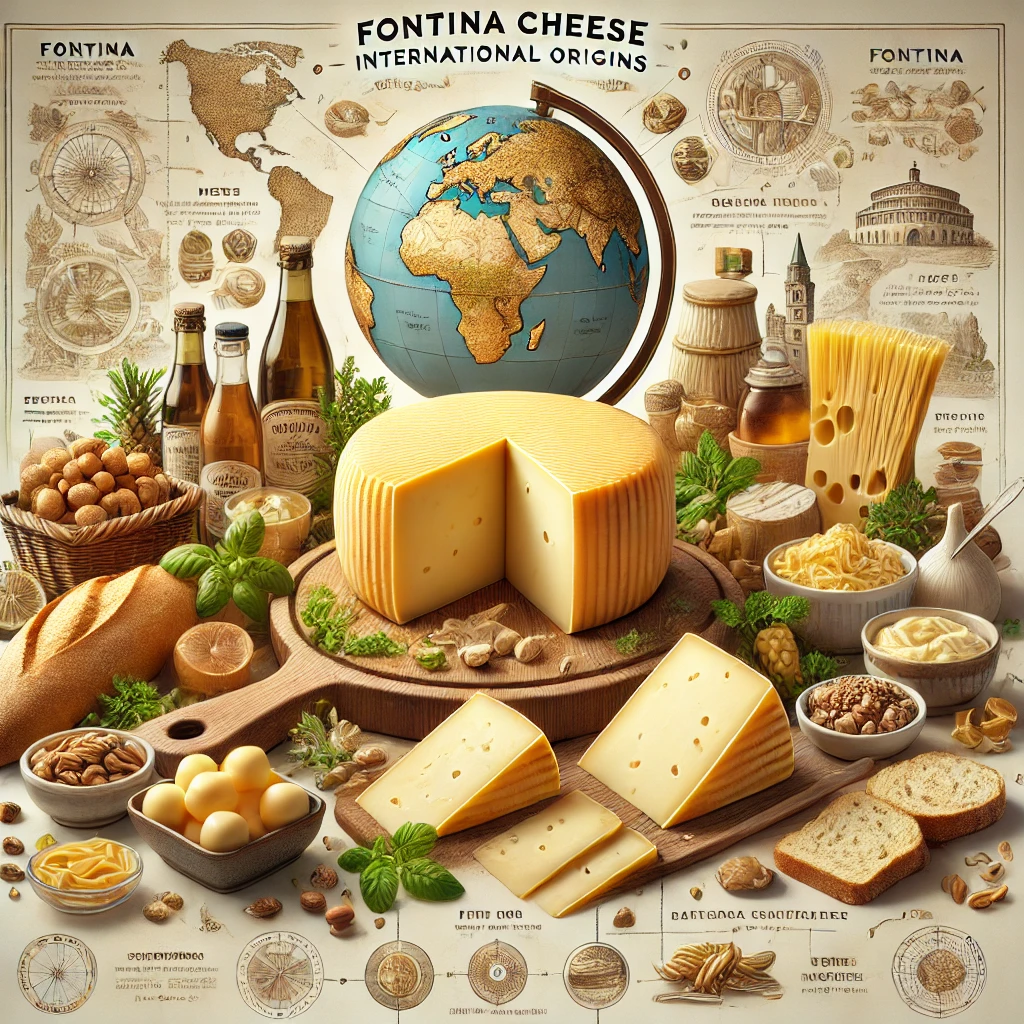
Fontina cheese is one of the world’s most respected alpine dairy creations—creamy, earthy, melt-ready, and historically tied to the snow-lined peaks of the Aosta Valley in northern Italy. Yet its influence is no longer limited to that Italian birthplace; modern dairy practices, export history, and regional adaptations have allowed Fontina to develop international identities in Denmark, Sweden, France, and the United States.
Its flavor is unmistakably mountain-born: nutty, buttery, rich, and tinged with natural cave microflora. While modern industrial versions exist, true Fontina remains tied to its original alpine milk sources and the cool maturation caves of Valle d’Aosta.
🧀 What Makes Fontina Unique?
Fontina is a semi-soft to semi-hard alpine cheese with a high-fat content and exceptional meltability. Its core identity is shaped by raw cow’s milk from pasture-fed alpine cattle, particularly the indigenous Pezzata Rossa and Pezzata Nera breeds.
Key Characteristics
| Attribute | Detail |
|---|---|
| Texture | semi-soft, smooth, slightly elastic |
| Flavor | nutty, buttery, earthy, lightly fruity |
| Milk | whole raw cow’s milk |
| Aging | 60–120+ days depending on region |
| Rind | natural brown, sometimes washed |
| Meltability | excellent—silky, creamy stretch |
The cheese is rarely aggressively salty or pungent; instead, it offers depth and alpine butter richness.
🇮🇹 Italian Origins: True Aosta Valley Fontina DOP
Italy is the undisputed birthplace of Fontina, with records dating back to 1270 CE. Authentic Fontina is labeled Fontina DOP (Denominazione di Origine Protetta), meaning it is legally protected and must originate in Valle d’Aosta.
Terroir Influence
-
alpine grasses
-
wild flowers
-
glacial water meadows
-
mountain herbs
These environmental factors give Fontina sweet-grassy notes and a rich creaminess that cannot be replicated outside its home territory.
Traditional Aging
-
matured in stone and wood caves
-
humidity-rich, naturally cool environment
-
washed rinds to encourage microflora
This process develops the signature:
-
earthy rind
-
supple golden interior
-
aromatic complexity
🌍 Fontina Around the World: International Variants
As global demand grew, dairy producers created local versions outside Italy. While inspired by Aosta, these cheeses differ in taste, milk source, and aging.
📌 Denmark
-
milder, creamier, commercially polished
-
designed for slicing and sandwiches
-
softer rind, less alpine complexity
📌 Sweden
-
slightly firmer
-
more elastic, gentle dairy sweetness
-
often found in Scandinavian comfort dishes
📌 United States
-
typically pasteurized
-
younger, softer, and lighter
-
excellent for melting on pizza and pasta
🇫🇷 France (near Italian border)
-
close in style to DOP Fontina
-
uses similar alpine feeding systems
Comparison Snapshot
| Version | Flavor | Texture | Notes |
|---|---|---|---|
| Fontina DOP (Italy) | earthy, nutty, complex | pliable, buttery | raw milk + cave aging |
| Danish Fontina | mild, creamy | softer | commercial melt cheese |
| Swedish Fontina | sweet-lighter | elastic | Scandinavian table cheese |
| U.S. Fontina | butter-soft | semi-soft | great melt, less terroir |
Only Fontina DOP holds legal heritage status and authentic flavor profile tied to the mountains.
🧈 How Fontina Is Used in Cuisine
Few cheeses melt more elegantly than Fontina, making it a favorite in:
-
fondues
-
sauces
-
baked pastas
-
risottos
Classic Italian Dish: Fonduta alla Valdostana
-
Fontina melted with cream, egg yolks, and white truffle notes
-
smooth, silky, mountain-rich
Popular Culinary Uses
| Dish | Application |
|---|---|
| Pizza blanca | creamy melt, nutty finish |
| Polenta | stirred into hot grains |
| Risotto | adds butter-like silkiness |
| Gourmet sandwiches | mild, rich anchor cheese |
| Meat or veg gratins | velvety, non-greasy melt |
Fontina never separates or oils out excessively—it melts into alpine luxury.
🌱 Flavor Profile
Fontina’s sensory profile depends on age:
Young Fontina
-
creamy, mild
-
buttery sweetness
-
perfect for melting
Aged Fontina
-
deeper nuttiness
-
mild fruit tones
-
light cave must
-
firmer body
🥂 Best Pairings
Wine Pairings
| Wine | Why It Works |
|---|---|
| Nebbiolo | mountain acidity harmonizes |
| Pinot Noir | soft red fruit balance |
| Chardonnay | buttery vs buttery harmony |
| Barbera | cuts richness with acidity |
Food Pairings
-
roasted mushrooms
-
truffle butter
-
speck or prosciutto
-
rye or walnut bread
Aromatic Add-Ons
-
thyme
-
wild honey
-
rosemary oil drizzle
🧊 Storage & Handling
How to Store Fontina
-
wrap in breathable cheese paper or wax paper
-
refrigerate, but not in coldest zone
-
avoid plastic wrap (condensation and ammonia notes)
Shelf Life
-
soft young Fontina: 2–3 weeks
-
semi-aged: 3–6 weeks
Serving Tip
Let Fontina sit at room temperature for 30–40 minutes before eating to release aroma and soften texture.
⭐ Final Summary
Fontina cheese may have international variants, but its heart remains in Italy’s Aosta Valley. Its signature flavor is:
-
alpine pasture richness
-
buttery melt texture
-
earthy rind depth
-
centuries-old dairy craft
While Danish, Swedish, and American counterparts offer accessibility and mildness, true Fontina DOP remains a protected cultural product shaped by mountain grazing, cave aging, and raw milk precision.
Whether melted into fonduta, layered in risotto, or sliced with walnut bread, Fontina is a celebration of alpine cheesemaking excellence and global admiration.
FAQs — Fontina Cheese
1. Is Fontina originally Italian?
Yes—Fontina originates from Italy’s Aosta Valley and is protected as Fontina DOP.
2. What makes Fontina melt so well?
Its high-fat content and smooth protein structure create silky, non-separating melt.
3. How do international versions differ?
They tend to be milder, pasteurized, and less complex due to non-alpine milk sources.
4. Does Fontina taste like Gruyère or Swiss?
It shares nutty tones but is creamier and less sharp.
5. Is Fontina aged?
Yes—traditionally 60–120+ days in alpine caves for authentic DOP versions.