Bangladesh is known for its lush paddy fields, river-fed deltas, fish-based cuisine, and milk-rich sweets like mishti doi and rosogolla. Yet beyond the world of desserts and ghee lies a lesser-known dairy treasure: Bhatta Cheese. Traditionally produced in rural villages, Bhatta cheese is a fresh, soft, mildly salted cow’s milk cheese with a creamy yet crumbly character that reflects Bangladesh’s pastoral rhythm and dairy heritage.
Unlike processed paneer blocks or industrial cheese imports, Bhatta cheese remains deeply local—crafted in village homes, morning milk stalls, cattle cooperatives, and neighborhood haats. Its taste is distinct: not sharp like feta, not rubbery like halloumi, but delicately milky with a whisper of tang, perfectly suited to the Bangladeshi palate and climate.
🧀 What Is Bhatta Cheese?
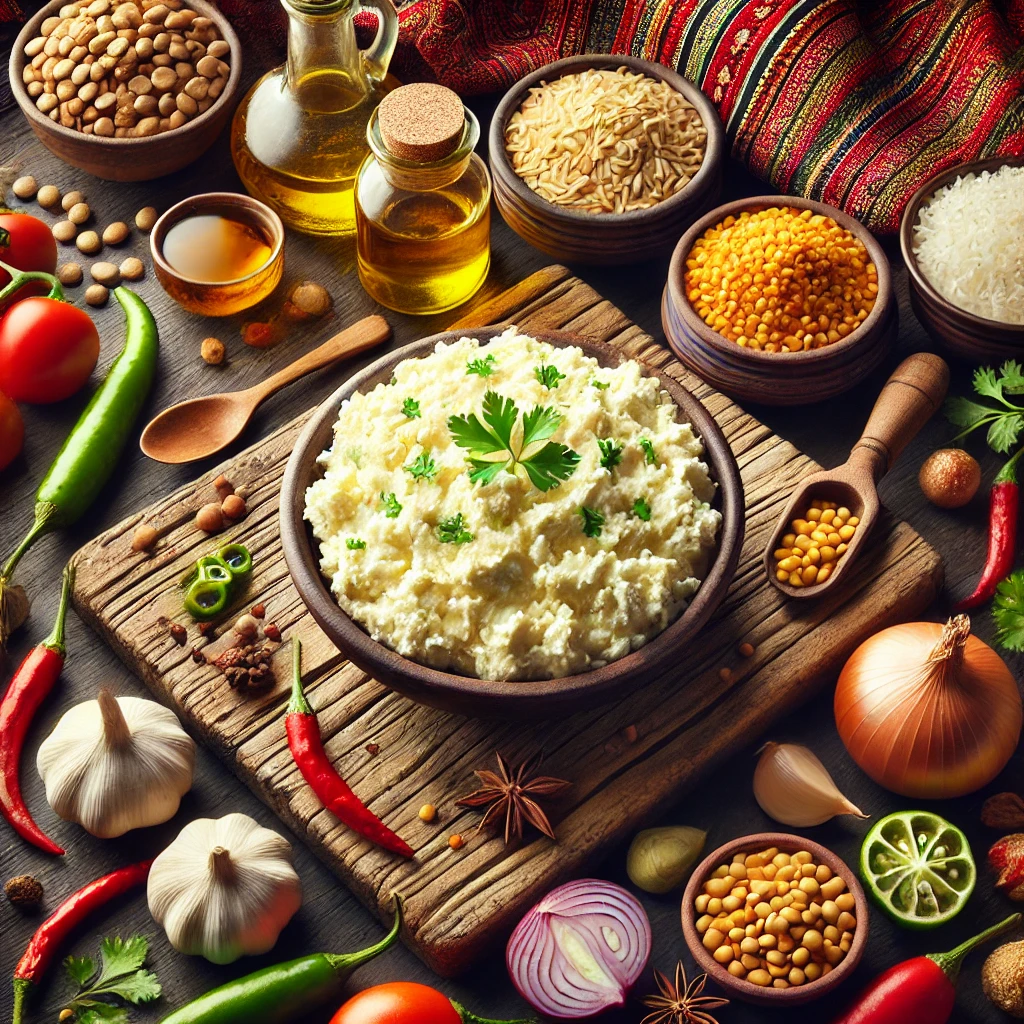
“Bhatta” refers to mashed or softened texture in Bengali culinary language, and Bhatta cheese stays true to its name. It is:
-
soft
-
spreadable
-
slightly crumbly
-
minimally salted
-
fresh and mild in aroma
Key Characteristics
| Feature | Description |
|---|---|
| Texture | soft, mashable, crumbly yet creamy |
| Flavor | mild, dairy-sweet, light tang |
| Milk | primarily cow’s milk |
| Color | snowy white |
| Salt Level | low to moderate |
| Aging | none (consumed fresh) |
Bhatta cheese is not an aged cheese—it is made to be eaten within days, preserving moisture and simplicity.
🐄 Dairy Culture Behind Bhatta Cheese
Bangladesh’s dairy landscape is built on smallholder farms rather than industrial barns. Cows graze on:
-
floodplain grasses
-
riverbank vegetation
-
rice field leftovers
Milk is collected daily and transformed quickly to avoid spoilage due to tropical heat and limited cold storage. This is why fresh cheese rather than aged cheese forms the core of Bangladeshi dairy tradition.
Villages in Rajshahi, Bogura, Pabna, and Jessore are particularly known for producing Bhatta-style fresh cheese, often sold in clay bowls or wrapped in banana leaves.
🥣 How Bhatta Cheese Is Made
The process is straightforward but rooted in generational knowledge.
Traditional Method
-
Fresh cow’s milk is boiled gently.
-
A coagulant is added:
-
lemon juice
-
vinegar
-
cultured whey
-
-
Curds separate from whey.
-
Curd is strained through muslin.
-
Light salting enhances shelf life.
-
Cheese is pressed loosely and then crumbled.
Unlike paneer, Bhatta cheese is not fully compacted or pressed, maintaining softness and moisture.
Why It Developed This Way
-
Bangladesh’s heat discourages aging
-
fresh curd is safer and more digestible
-
low-salt cheese complements rice-based cuisine
🌿 Flavor Profile
The flavor is gentle, creamy, and slightly acidic—not overpowering, not pungent, but deeply comforting.
Tasting Notes
-
fresh milk sweetness
-
soft tang similar to queso fresco
-
melt-in-mouth texture
-
mild saltiness
When warmed or mashed, it becomes buttery and rich without greasiness.
🍽 Culinary Uses of Bhatta Cheese in Bangladeshi Cuisine
Bhatta cheese fits naturally into the Bengali concept of “bhorta” or mash-based dishes.
Common Ways to Serve
| Dish | Description |
|---|---|
| Cheese Bhorta | mashed cheese with mustard oil, onion, chili |
| Chapati & Cheese | breakfast pairing with tea |
| Cheese Paratha Filling | creamy soft stuffing |
| Vegetable Mix Bhorta | cheese mixed with potatoes or eggplants |
| Light Curry with Cheese | soft cubes in mild gravy |
A Modern Twist
In Dhaka cafés and boutique bakeries:
-
cheese toast
-
fusion samosas with cheese filling
-
soft cheese with herbs on naan
-
cheesy breakfast platters
The cheese adapts beautifully to modern café culture and traditional spice kitchens.
🌍 Bhatta Cheese Compared to Other Fresh Cheeses
| Cheese | Similarity | Difference |
|---|---|---|
| Paneer | Both fresh | Bhatta is softer and crumblier |
| Queso Fresco | Mild, white | Bhatta is creamier, less firm |
| Akkawi | Light brine | Bhatta is less salty |
| Ricotta | Soft texture | Ricotta sweeter, Bhatta slightly tangier |
| Cottage Cheese | Curds | Bhatta smoother when mashed |
Bhatta cheese is essentially Bangladesh’s answer to fresh international white cheese, with its own texture identity.
🧊 Storage & Shelf Life
Because it is fresh and lightly salted, Bhatta cheese must be stored carefully.
Storage Guidelines
-
refrigerate in airtight container
-
avoid excessive air exposure
-
wrap in banana leaf for natural preservation
Shelf Life
| Type | Duration |
|---|---|
| fresh | 2–3 days |
| lightly salted | up to 5 days |
It should not be frozen, as freezing breaks the curd structure.
🥂 Pairings
Traditional
-
milk tea (cha)
-
flatbreads (roti, paratha, luchi)
-
rice & dal
Modern
-
honey drizzle
-
basil and olive oil
-
green salad with mint
-
roasted peppers
🌾 Cultural Significance
Bhatta cheese reflects:
-
village dairy economy
-
women-led cottage industry
-
climate-informed food preservation
-
rice-and-vegetable cuisine harmony
It is less a luxury cheese than a community staple, eaten at breakfast tables across Bangladesh.
⭐ Final Summary
Bhatta cheese is Bangladesh’s soft dairy treasure—fresh, spreadable, mild, and born from pastoral everyday life rather than aging cellars. In a cuisine centered on rice, spices, lentils, and fish, Bhatta cheese serves as the calm dairy balance, offering:
-
creamy comfort
-
gentle salt
-
cultural authenticity
-
morning-to-evening versatility
From rural markets wrapped in banana leaves to modern Dhaka cafés reinventing it with herbs, Bhatta cheese continues to bridge tradition and urban innovation, remaining proudly Bangladeshi at every bite.
FAQs — Bhatta Cheese
1. Is Bhatta cheese the same as paneer?
No—Bhatta is softer, more crumbly, and mildly salted.
2. How is it eaten?
Mashed with spices, as paratha filling, or paired with tea.
3. Does it melt?
It softens but doesn’t stretch like mozzarella.
4. Can it be aged?
No, it is a fresh cheese meant to be consumed quickly.
5. What milk is used?
Primarily cow’s milk from village dairy farms.