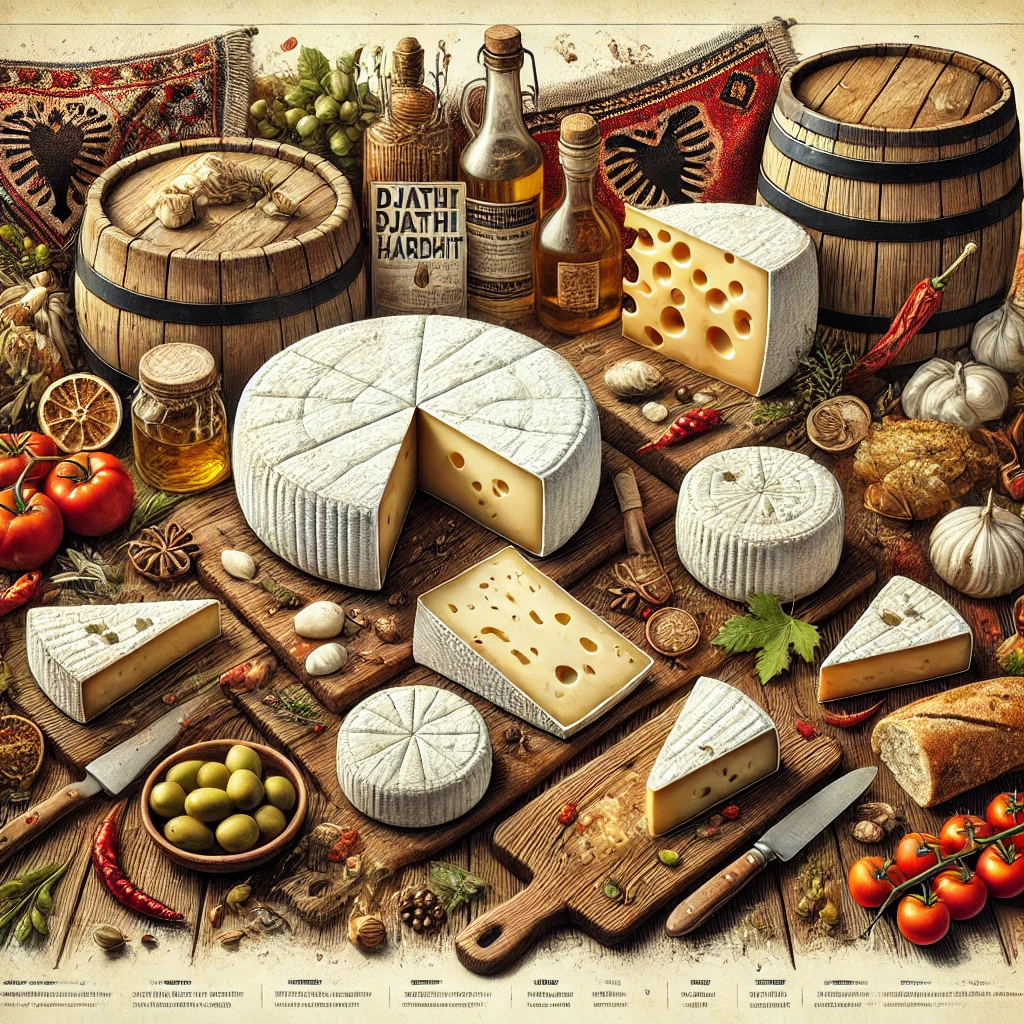
Among Albania’s rich dairy traditions, Djathe i Hardhit stands out as a deeply rustic, pastoral cheese with centuries of cultural identity. Produced mainly in mountainous villages where sheep and goats graze freely on wild herbs, Djathe i Hardhit reflects the soul of Albanian food heritage—simple, salty, aromatic, and crafted by hand rather than modern machinery.
Its name, tied to regional dialects and pastoral vocabulary, represents more than a cheese type. It embodies a lifestyle of transhumance, stone shepherd huts, brine barrels, and morning milk still warm from grazing flocks. In Albania, cheese is not merely a food—it is a lineage.
🧀 What Is Djathe i Hardhit?
Djathe i Hardhit is a traditional Albanian brined white cheese made primarily from sheep’s milk, occasionally blended with goat milk depending on the region.
Key Cheese Profile
| Attribute | Description |
|---|---|
| Milk Source | Sheep (dominant), sheep-goat blend |
| Texture | firm yet crumbly, slightly creamy when fresh |
| Flavor | bold salinity, herbal notes, lactic tang |
| Aroma | clean sheep aroma with mountain herb traces |
| Color | white to pale ivory |
| Aging | 1–4 months in brine |
| Category | Balkan brined cheese |
It belongs to the same family of brined cheeses (sirene, feta, telemea), yet maintains a distinctly Albanian depth influenced by alpine grazing.
🌄 The Terroir of Albanian Mountains
Djathe i Hardhit originates largely in:
-
Kukës, Tropojë, and Has (northern Alps)
-
Përmet, Gjirokastër, Kolonjë (southern highlands)
-
Skrapar & Gramsh (central pastoral belts)
Sheep and goats feed on:
-
thyme wild (çaj mali)
-
mountain oregano
-
juniper patches
-
meadow clover
-
alpine mint
-
sage scrub
This botanical buffet infuses milk with floral, medicinal, and resinous notes that no industrial dairy diet can reproduce.
🥛 How Djathe i Hardhit Is Made
Cheese production in Albania remains artisan-driven, seasonal, and personal.
Traditional Production Process
-
Milking at dawn, usually sheep milk at peak richness.
-
Gentle heating, never boiling, to retain fat integrity.
-
Natural coagulation using rennet or pasture-derived enzymes.
-
Cutting curd into small cubes with minimal agitation.
-
Draining in cloth sacks, suspended for natural whey release.
-
Layered salting—critical for preservation and flavor.
-
Immersion in brine barrels (kace) made of wood or metal.
-
Aging from 30 to 120 days depending on texture desired.
Salt is not merely seasoning—it is Albania’s ancient refrigeration.
🧂 Flavor & Texture
The magic of Djathe i Hardhit lies in its unapologetic character.
Flavor Notes
-
assertive salinity
-
sharp lactic undertone
-
herb-forward finish
-
rich sheep fat depth
Texture Timeline
| Aging | Texture | Intensity |
|---|---|---|
| 1–2 months | soft-firm, creamy edges | medium |
| 2–4 months | crumbly, compact | strong |
| 6 months+ (rare) | dense, dry, grateable | robust |
The cheese never becomes overly ammoniated or excessively sour when aged correctly in brine.
🍽 Culinary Uses in Albania
Traditional Pairings
| Dish | How It’s Used |
|---|---|
| Byrek me djathë | folded layers with salty cheese |
| Tavë me perime | melted and baked into vegetables |
| Bukë misri (cornbread) | eaten fresh or crumbled |
| Meze platter | olives, peppers, cured meats |
| Fërgesë e bardhë | creamy cheese-egg skillet |
Modern Interpretations
-
cheese-stuffed peppers with herbs
-
bruschetta with honey and fig jam
-
alpine salad with walnuts & mountain tea dressing
The interplay between salt and sweetness (figs, grape molasses, honey) produces exceptional contrast.
🌍 Comparison with Other Balkan Cheeses
| Cheese | Comparison | Distinction |
|---|---|---|
| Feta | similar brine style | Djathe i Hardhit is milkier and herb-rich |
| Sirene (Bulgaria) | both sheep/mixed | Albanian version more rustic |
| Telemea (Romania) | brined white cheese | Albania’s has stronger mountain aroma |
| Mizithra (Greece) | tangy sheep | Djathe i Hardhit aged longer in brine |
Albanian cheese culture aligns with its neighbors but expresses wilder herbality and alpine terroir.
🧊 Storage & Salt Management
Brined cheeses last longer but require correct storage.
Storage Guidelines
-
keep fully submerged in brine to avoid drying
-
refrigerate but avoid freezing
-
if salt level too high, soak slices briefly in cold water or milk
Shelf Duration
| Form | Shelf Life |
|---|---|
| in brine | 6–10 weeks |
| drained | 7–10 days |
| vacuum sealed | up to 3 months |
Never rinse aggressively—flavor compounds cling to fat and melt structure.
🥂 Best Pairings
Classic Albanian Drinks
-
Raki rrushi (grape distillate)
-
Çaj mali (high-mountain thyme tea)
-
Local white wines (Korca, Shkodra)
Modern Pairings
| Drink | Reason |
|---|---|
| Sauvignon Blanc | cuts through salt & fat |
| light IPA beer | bitterness balances brine |
| crisp cider | fruit acidity supports richness |
Food Partners
-
roasted peppers
-
olives and citrus zest
-
sourdough
-
walnuts with mountain honey
🌿 Cultural Value
Djathe i Hardhit remains:
-
family-produced
-
shepherd-managed
-
inherited through hands-on practice
In many households, cheese-making knowledge is not written—it is passed from grandmother to mother to daughter, from alpine hut to urban kitchen.
This cheese sustains:
-
local dairy income
-
pastoral job continuity
-
intergenerational identity
Its taste is a direct imprint of Albanian landscape.
⭐ Conclusion
Djathe i Hardhit is Albania’s pastoral truth in cheese form—salty, aromatic, firm yet creamy, steeped in brine and mountain air. Each bite echoes sheep bells in remote valleys, stone milking huts, thyme-scented pastures, and the uncompromising character of Balkan culinary memory.
At a time when food homogenization threatens heritage, Albania continues to hold onto this dairy treasure, offering the world both authenticity and altitude in flavor.
FAQs – Djathe i Hardhit
1. What milk is used for Djathe i Hardhit?
Mostly sheep milk, sometimes blended with goat.
2. Is it very salty?
Yes, as it is traditionally aged in brine. Soaking can reduce salt.
3. How is it eaten?
With byrek, grilled bread, roasted peppers, salads, and meze platters.
4. Does it age well?
Yes—2 to 4 months is typical, but older wheels exist with more intensity.
5. What makes it uniquely Albanian?
Alpine grazing, natural herbal diet of sheep, and brining in village barrels.