Crafting cheese at home has grown from a niche hobby to a refined kitchen craft, and at the center of that evolution is the home cheese vat. Whether you are making mozzarella once a month, culturing feta weekly, or aging farmhouse cheddar, the vat is the vessel where curd magic begins—heat, coagulation, acidification, whey separation, and curd stability.
Unlike pots used casually in cooking, a cheese vat is calibrated for thermo-sensitive milk handling, ensuring precision and hygiene. For home cheesemakers, it brings professional dairy control without industrial scale.
🧀 What Is a Home Cheese Vat?
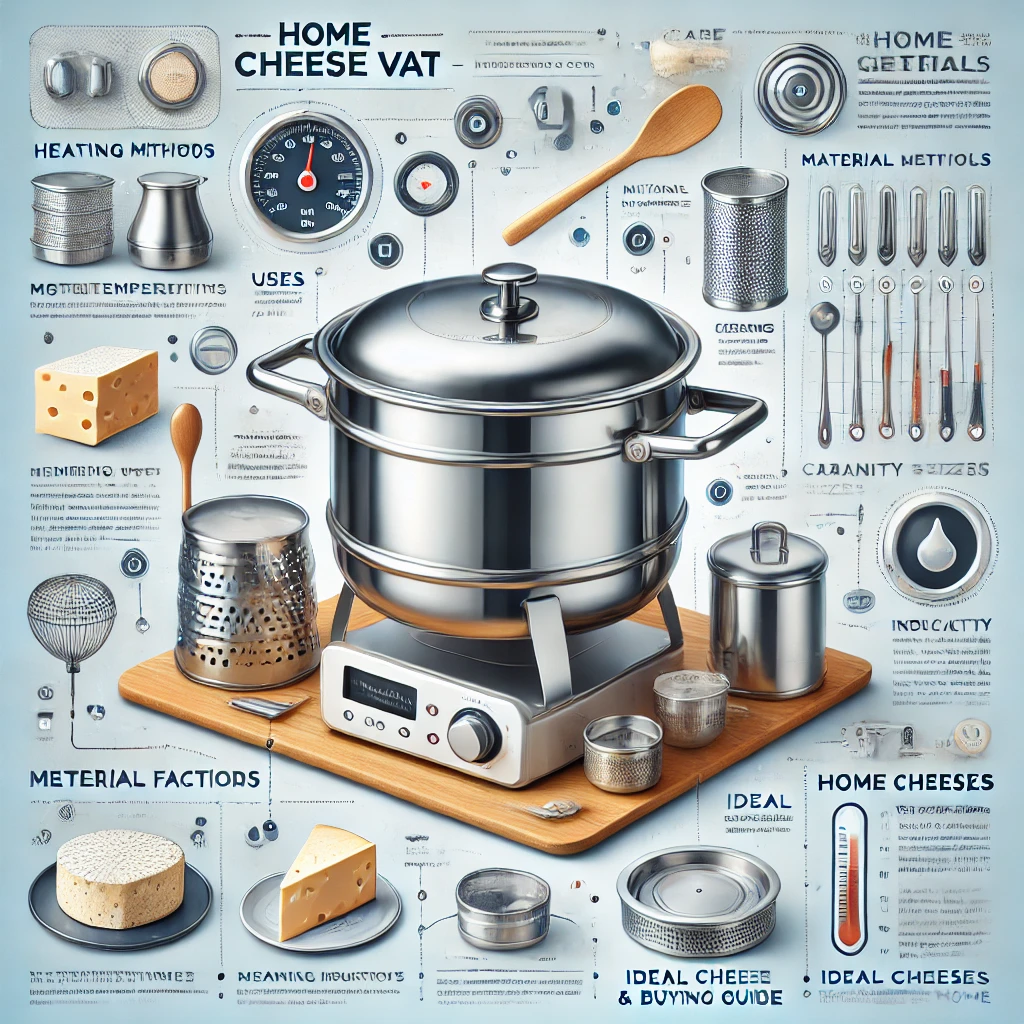
A home cheese vat is a specialized milk-handling container designed to heat, hold, and culture milk at specific temperatures without scorching, curd tearing, or bacterial contamination.
It acts as a micro-dairy unit, built to maintain thermal accuracy, safety, and even heat distribution.
Core Functions
| Function | Purpose |
|---|---|
| Heating milk | controlled temperature for pasteurization or culturing |
| Holding curds | stability during coagulation |
| Cutting & stirring | preserving curd softness |
| Draining whey | clean separation |
| Sanitizing | stainless interior prevents residue |
Home vats range from 5-20 liters, ideal for household batches or farm kitchen production.
⚙️ Why a Cheese Vat Instead of a Pot?
Standard cooking pots are made for boiling, frying, and sautéing—not delicate milk science.
Vat Advantages
-
precise temperature control (±0.5°C)
-
no scorching at bottom
-
smooth stainless interior
-
sanitary welds & dairy-grade alloy
-
gentle heat dispersion preventing curd damage
-
tight lid for fermentation safety
Milk proteins are fragile. Temperature spikes harden curds or weaken structure, altering moisture extraction and aging potential.
🥛 Main Uses of a Home Cheese Vat
| Stage | Role of Vat |
|---|---|
| Pasteurizing | controlled heat at 63–72°C |
| Coagulating | rennet or acid sets curd evenly |
| Cutting curds | intact structure retention |
| Stirring curds | avoids shattering and whey flooding |
| Draining | clean whey channeling |
| Brining (optional) | for soft cheeses |
Cheeses Perfect for Vat Use
-
Mozzarella
-
Feta
-
Gouda
-
Cheddar
-
Tilsit
-
Romano
-
Paneer
-
Ricotta
-
Halloumi
-
Queso fresco
-
Blue cheese types (with controlled temp holds)
🏗 Materials: What Should a Vat Be Made Of?
The material determines hygiene, longevity, and bacterial safety.
Recommended Materials
| Material | Strength | Notes |
|---|---|---|
| Stainless Steel 304 | corrosion-resistant, dairy-safe | most common |
| Stainless Steel 316 | premium anti-corrosion | ideal for heavy salting |
| Food-grade enamel | easy cleaning | avoid chips |
| Copper (rare) | perfect thermal conduction | requires tin lining |
Materials to Avoid
-
aluminum (reacts with acid whey)
-
raw copper (non-lined & oxidizing)
-
low-grade steel (rust risk)
Milk contains lactose and lactic acid—reactive metals compromise flavor and safety.
🧴 Care & Cleaning
Consistent cleaning prevents milk stone, fat film, and bacterial growth.
Daily Cleaning Routine
-
Rinse with lukewarm water immediately after use
-
Add mild dairy-grade detergent
-
Use soft sponge (never abrasive steel pads)
-
Rinse thoroughly
-
Towel-dry to avoid mineral spots
Deep Cleaning (Weekly)
-
Use citric acid solution to dissolve milk stone
-
Rinse and neutralize with warm water
Sanitizing
Before each batch:
-
rinse with hot water at 80–90°C
-
avoid chemical fragrances that affect curd
🔧 Maintenance
-
Inspect welds, seams, and drains for residue
-
Replace silicone gaskets if odor absorbs
-
Keep lid vents clear to avoid microbial buildup
-
Avoid dipping heating coils directly if external heater is attached
Heat System Options
| Type | Precision | Notes |
|---|---|---|
| Built-in electric | highest | integrated thermostat |
| Water jacket (double layer) | gentle & uniform heat | premium version |
| Stove-heated | variable | requires dairy thermometer |
🛍 Buying Guide: How to Choose the Right Vat
Key Considerations
| Feature | Why It Matters |
|---|---|
| Capacity | 10–15L ideal for home artisans |
| Thermostat | prevents overheating |
| Double-jacket heating | professional consistency |
| Stainless grade | 304 or 316 recommended |
| Drain valve | cleaner whey release |
| Smooth welds | hygiene + no curd snagging |
Pricing Range
| Type | Cost |
|---|---|
| Basic stainless pot-style vat | $60–$150 |
| Thermostat-integrated vat | $180–$350 |
| Water-jacket premium | $400–$750 |
🌿 Best Practices
-
never boil milk directly, even in vat
-
keep curd stirring slow; rushing creates grainy cheese
-
maintain steady temperature—cheese dislikes fluctuation
-
clean immediately after draining to avoid whey smell
⭐ Conclusion
A home cheese vat is more than a cooking vessel—it’s the foundation of proper cheesemaking. It gives beginners confidence and artisans precision, allowing milk to be transformed into stable, flavor-balanced, texturally consistent cheese.
From feta to gouda, mozzarella to cheddar, a vat protects curds, controls heat, and ensures sanitary processing. If you are serious about dairy craft, a cheese vat isn’t a luxury—it is the tool that guarantees professional quality in a home environment.
FAQs – Home Cheese Vat
1. Can I use a regular pot instead of a vat?
Yes, but quality and temperature precision will drop significantly.
2. What size is best for beginners?
A 10–12 liter stainless steel vat.
3. How do I reduce scorching risk?
Choose double-jacket heating or use indirect water bath.
4. What’s the safest material?
Food-grade stainless steel (304 or 316).
5. Can I pasteurize milk in a vat?
Yes, with accurate temperature monitoring.