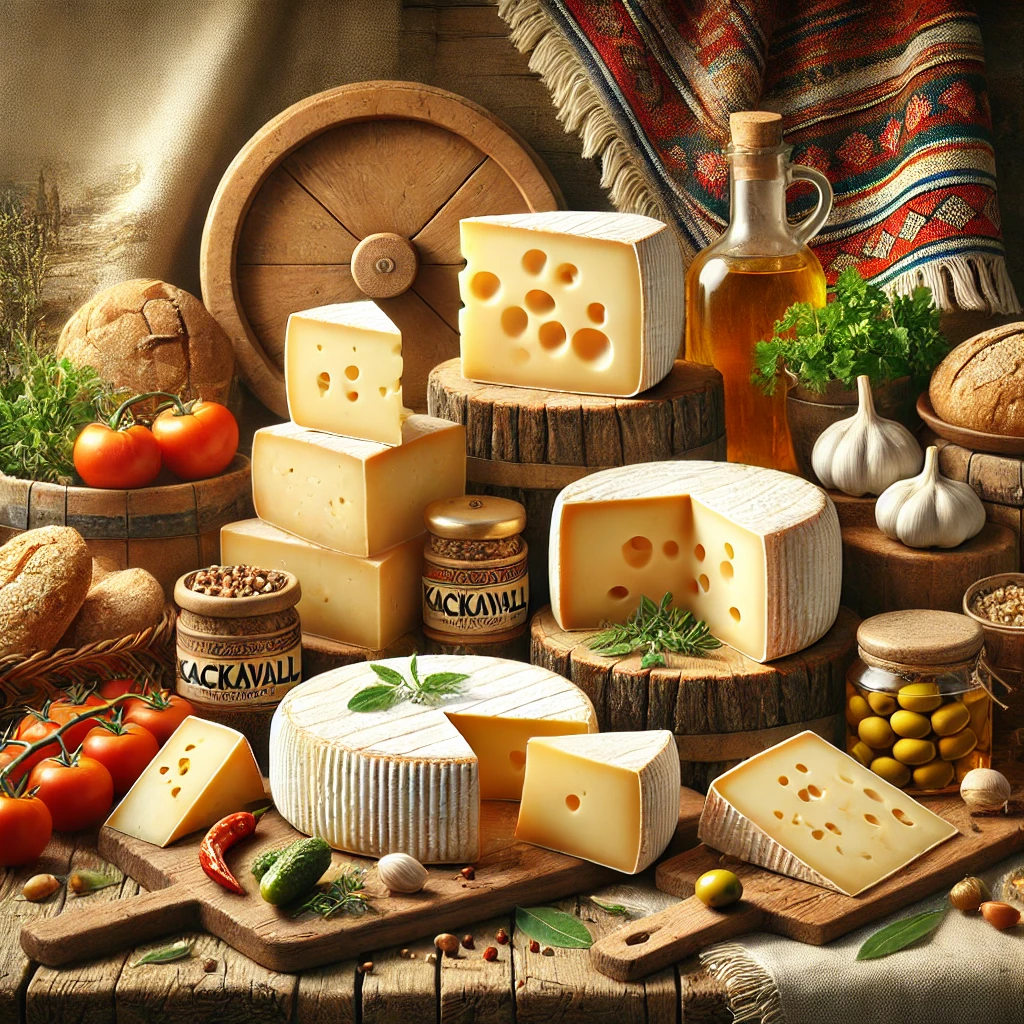
Across the rugged mountains, fertile plains, and Adriatic coastline of Albania, few dairy products are as iconic or beloved as Kaçkavall. This semi-hard yellow cheese has been a staple of Albanian households for centuries, enjoyed in everyday meals, festive gatherings, and traditional dishes passed down through generations. Closely related to Eastern Mediterranean and Balkan cheese traditions, Kaçkavall reflects both local Albanian pastoral heritage and broader regional culinary influences.
Often compared to Italian caciocavallo or Kashkaval from Bulgaria and Romania, Albania’s Kaçkavall has its own distinct identity—mildly sharp, buttery, pleasantly elastic, and perfect for grilling, baking, and melting.
This in-depth guide explores the origins, taste, production, varieties, and best culinary uses of Albania’s beloved Kaçkavall cheese.
🧀 What Is Kaçkavall?
Kaçkavall is a semi-hard, aged cheese traditionally produced from sheep’s milk in Albania, though cow’s milk and mixed-milk versions are now common.
Key Characteristics
| Feature | Description |
|---|---|
| Category | semi-hard yellow cheese |
| Milk Type | sheep (traditional), cow, or mixed |
| Texture | firm, elastic, sliceable |
| Flavor | mildly sharp, buttery, slightly salty |
| Aging | 2–6 months (sometimes longer) |
| Color | pale yellow to deep golden |
Kaçkavall’s hallmark is its smooth yet firm texture and excellent melting properties, making it ideal for cooking.
🌍 Historical Origins
The origins of Kaçkavall trace back to the shared dairy culture of the Balkans, Eastern Mediterranean, and Southern Italy. The name itself resembles caciocavallo, the Italian stretched-curd cheese, suggesting early cross-cultural influence during trade and migration.
In Albania, Kaçkavall flourished due to:
-
abundant sheep grazing in highland regions
-
local cheesemaking traditions practiced in stone huts (stallë)
-
demand for long-lasting cheese in rural communities
-
preference for versatile, protein-rich dairy staples
Regions such as Korçë, Gjirokastër, Shkodër, Berat, and Pogradec are especially renowned for traditional Kaçkavall production.
🥛 How Kaçkavall Is Made
Although recipes vary by region, Albanian Kaçkavall follows a time-tested artisanal process.
1. Milk Collection & Heating
Fresh sheep or cow milk is heated to a controlled temperature.
2. Rennet & Curd Formation
Natural rennet is added to coagulate the milk into curds.
3. Curd Cutting & Draining
Curds are cut and stirred to release whey, then drained.
4. Pasta Filata Technique (Optional)
Some producers stretch and knead the curd, similar to provolone or caciocavallo.
This step gives Kaçkavall its subtle elasticity.
5. Molding & Pressing
Curds are shaped into wheels or rectangular blocks and pressed to firm texture.
6. Salting
Cheeses are either:
-
dry salted, or
-
brined for enhanced preservation
7. Aging
Aged for 2–6 months, allowing:
-
rind formation
-
flavor development
-
moisture reduction
Traditional Kaçkavall is aged in cool limestone cellars, lending a rustic aroma and deeper character.
🧂 Taste & Texture Profile
Kaçkavall has a balanced flavor that appeals to broad palates.
Taste Notes
-
mild to medium sharpness
-
buttery richness
-
pleasant saltiness
-
occasional herbal or nutty undertones (sheep’s milk versions)
Texture Notes
-
firm and elastic when young
-
drier and more crumbly with longer aging
-
melts smoothly without becoming oily
Compared to other cheeses:
-
less sharp than aged cheddar
-
less salty than feta
-
more flavorful than mozzarella
-
milder than pecorino
Kaçkavall’s versatility makes it a favorite in both traditional and modern kitchens.
🧀 Varieties of Albanian Kaçkavall
1. Kaçkavall dele (Sheep’s Milk)
-
most traditional form
-
stronger aroma
-
buttery and full-bodied
-
rich yellow color
2. Kaçkavall lope (Cow’s Milk)
-
milder flavor
-
lighter yellow hue
-
softer texture
-
more widely available
3. Mixed-Milk Kaçkavall
-
combines richness of sheep’s milk with smoothness of cow’s milk
-
ideal balance for melting and frying
4. Aged Kaçkavall
Aged beyond 6 months for a sharper, firmer profile.
🍽 Culinary Uses in Albanian Cuisine
Kaçkavall is a culinary workhorse. It can be sliced, grated, grilled, fried, or melted.
Traditional Albanian Dishes with Kaçkavall
| Dish | How Kaçkavall Is Used |
|---|---|
| Kaçkavall i fërguar | sliced and pan-fried until golden |
| Byrek me kaçkavall | grated inside flaky filo pastries |
| Tavë me vezë & kaçkavall | baked with eggs |
| Pizza shqiptare | melted topping |
| Grilled vegetables | finished with grated cheese |
Modern Uses
-
cheese platters with olives and dried figs
-
melted into pasta or risotto
-
sandwich and burger slices
-
grated over roasted potatoes
-
stuffed into chicken or vegetables
Kaçkavall’s meltability allows it to replace mozzarella, cheddar, or provolone in many recipes.
🥂 Best Pairings for Kaçkavall
Food Pairings
-
olives, tomatoes, cucumbers
-
prosciutto or dried meats
-
honey and fig jam
-
roasted peppers and zucchini
-
fresh bread or pita
Wine Pairings
| Wine | Reason |
|---|---|
| Albanian Shesh i Bardhë | crisp acidity cuts richness |
| Chardonnay | buttery complement |
| Merlot | soft tannins match mild sharpness |
| Rosé | refreshing balance |
Beverage Pairings
-
rakia
-
light beers
-
herbal teas (mountain tea)
🧊 Storage & Shelf Life
Proper Storage
-
wrap in parchment or breathable paper
-
keep refrigerated
-
avoid airtight plastic (causes sweating)
Shelf Life
| Type | Duration |
|---|---|
| whole wheel | up to 6 months |
| sliced | 2–3 weeks |
| grated | 1–2 weeks |
For best taste, let Kaçkavall sit at room temperature 20–30 minutes before serving.
🌎 How Kaçkavall Compares to Other Cheeses
| Cheese | Similarity | Difference |
|---|---|---|
| Caciocavallo (Italy) | semi-hard, yellow, stretched-curd | Italian versions spicier when aged |
| Kashkaval (Balkans) | almost identical | Albanian versions typically less salty |
| Provolone | elastic texture | provolone melts more, flavor sharper |
| Gouda | semi-hard | Kaçkavall saltier, more tang |
Kaçkavall’s mild sharpness and smooth melting ability make it a unique cheese in the Mediterranean-Balkan family.
⭐ Conclusion
Kaçkavall embodies the heart of Albanian dairy culture: simple, rustic, deeply flavorful, and wonderfully versatile. Whether enjoyed warm and melty, sliced on a fresh table spread, or incorporated into traditional dishes, it brings both comfort and character to the Albanian table.
Its legacy, rooted in shepherding traditions and artisanal craftsmanship, has made Kaçkavall a beloved staple—and an increasingly appreciated cheese worldwide. For cheese lovers eager to explore Balkan flavors, Albanian Kaçkavall is a must-try delicacy.
FAQs – Kaçkavall Cheese (Albania)
1. Is Kaçkavall the same as Kashkaval?
They belong to the same cheese family, but Albanian Kaçkavall has a milder, buttery flavor.
2. What milk is used in Albanian Kaçkavall?
Traditionally sheep’s milk, though cow and mixed-milk versions are now common.
3. Can Kaçkavall be fried?
Yes—it’s famous for pan-frying without falling apart.
4. How long does it age?
Typically 2–6 months depending on style.
5. Is Kaçkavall good for melting?
Excellent—it melts smoothly, making it ideal for pizza, byrek, pasta, and grills.