
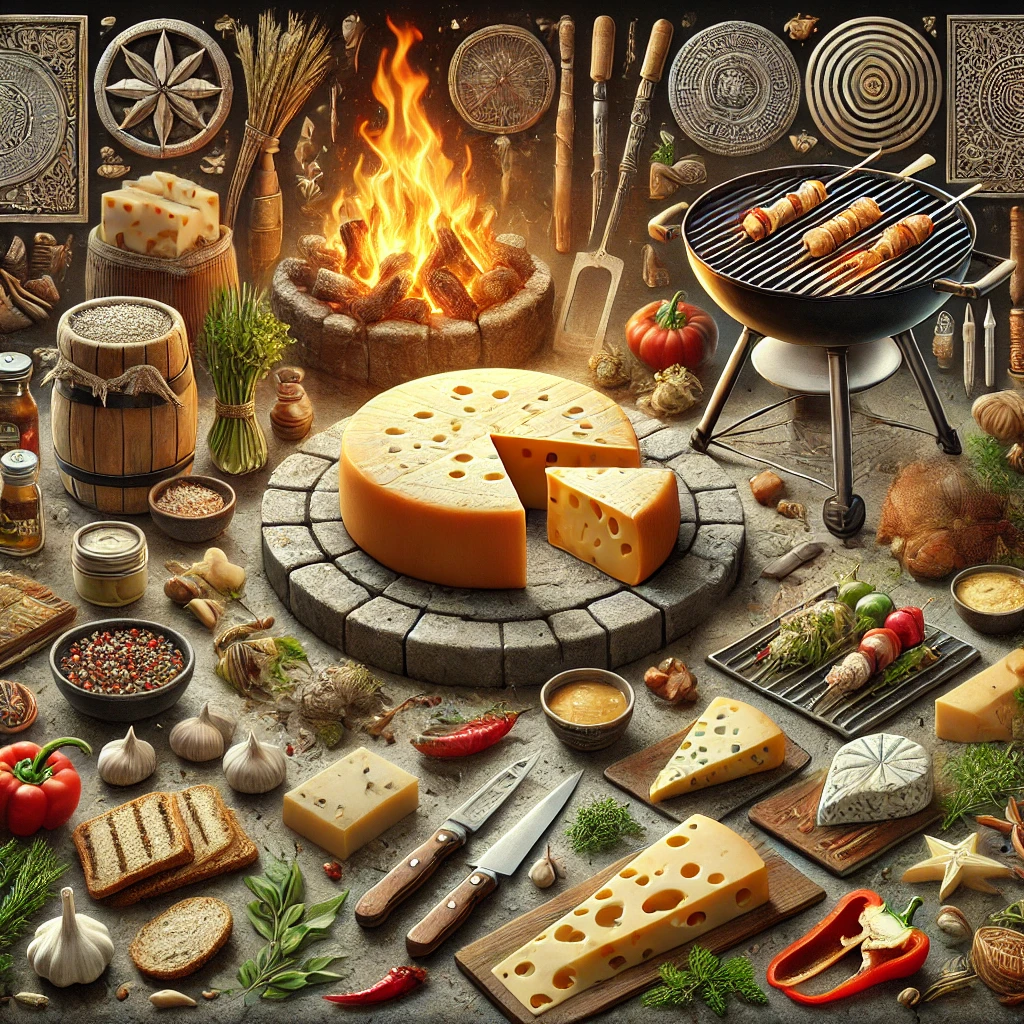
Cheese and fire have shared a long, delicious history. From ancient pastoral societies grilling fresh curds over open flames to today’s gourmet barbecue culture, barbecue cheese continues to evolve while staying rooted in centuries-old traditions. What began as a practical method of warming or preserving cheese has become a culinary art—featuring melting, searing, smoking, and charring techniques that unlock bold textures and flavors.
Today, barbecue cheese is a rising star across global food scenes. Whether it’s grilled halloumi, smoked cheddar, Brazilian coalho skewers, Scandinavian juustoleipä, or innovative fire-pit recipes, cheese is proving it belongs alongside classic barbecue staples like meat and vegetables.
This in-depth guide explores the origins, traditional methods, modern innovations, best cheese types, and expert tips for achieving perfect barbecue cheese—from the mountains of ancient herding cultures to backyard fire pits around the world.
🧀 What Is Barbecue Cheese?
Barbecue cheese refers to varieties of cheese specifically suited for grilling, smoking, or cooking over fire. These cheeses:
-
resist melting
-
hold their shape when heated
-
develop smoky, caramelized flavors
-
offer satisfying chew or crispness
Unlike cheeses that liquefy when heated, barbecue-ready cheeses have low moisture, high protein stability, or a unique cooking structure.
Common Characteristics
| Feature | Description |
|---|---|
| Texture | Firm, elastic, or semi-hard |
| Melting Point | High, resistant to melting |
| Flavor | Mild to savory, absorbs smoke well |
| Cooking Use | Grilling, skewer-roasting, pan-searing, fire-pit cooking |
Barbecue cheese is enjoyed worldwide in both traditional and modern recipes.
🔥 Ancient Roots of Barbecue Cheese
Many of the world’s earliest cheeses were cooked over fire—either to enhance flavor or improve preservation.
Nomadic & Pastoral Traditions
In ancient herding societies across:
-
the Middle East
-
the Balkans
-
Central Asia
-
North Africa
Fresh goat or sheep cheeses were warmed over stones or embers to soften them and bring out their richness.
Fire as a Preserving Method
Heating or smoking cheese:
-
reduced moisture
-
extended shelf life
-
prevented spoilage
Thus, cheese and fire evolved side by side, long before modern refrigeration existed.
Historic Examples
-
Cypriot halloumi: created to withstand heat cooking
-
Finnish juustoleipä: baked and lightly charred
-
South American asado cheeses: grilled on parrillas
-
Arabian grilling cheeses: served warm with herbs
Barbecue cheese is not new—it is a rediscovery of ancient wisdom.
🍢 Traditional Global Barbecue Cheeses
1. Halloumi (Cyprus & Greece)
Perhaps the world’s most famous grilling cheese:
-
firm and springy
-
resists melting
-
develops a golden-brown crust
2. Queso de Coalho (Brazil)
A favorite in Brazilian street food:
-
skewered and grilled
-
chewy with a salty kick
-
often served with molasses or herbs
3. Juustoleipä (Finland)
Also known as “Finnish squeaky cheese”:
-
baked or grilled
-
lightly caramelized surface
-
served with cloudberry jam
4. Paneer (India)
This fresh cheese is ideal for tandoor-style cooking:
-
used in kebabs and tikka
-
absorbs marinades beautifully
5. Provoleta (Argentina)
A traditional barbecue starter:
-
disc of provolone grilled on parrillas
-
served with chimichurri
These cheeses celebrate their region’s food culture while showing how universal cheese grilling truly is.
🔥 The Modern Barbecue Cheese Movement
With the rise of gourmet grilling and outdoor cooking, barbecue cheese has become a global trend.
Modern Trends Include:
-
smoked cheddar and gouda
-
grilled cheese planks and slabs
-
cast-iron skillet cheese dips
-
cheese-stuffed barbecue meats
-
fire-pit cheese boards
Restaurants and home cooks are experimenting with:
-
smoking woods (hickory, mesquite, apple, birch)
-
spice rubs and marinades
-
herb crusts and glazes
-
high-heat searing
Barbecue cheese fits perfectly in a world that loves bold flavors and outdoor dining.
🧀 Best Cheeses for Barbecuing
1. Halloumi
Gold standard for grilling
Does not melt, browns beautifully
2. Paneer
Absorbs marinades
Great for skewers
3. Provolone (Provoleta style)
Ideal for melting and browning
4. Queso Panela (Mexico)
Holds shape on the grill
Mild and versatile
5. Juustoleipä
Caramelizes when heated
6. Kefalotyri & Graviera (Greece)
Hard Greek cheeses that sear well
7. Aged Cheddar & Gouda (for smoking)
Take on smoky notes beautifully
8. Coalho (Brazil)
Known for perfect skewer grilling
🍽 Cooking Methods for Barbecue Cheese
1. Grilling
Ideal for halloumi, coalho, and Greek cheeses
-
preheat grill
-
oil lightly
-
sear each side 1–3 minutes
2. Cast-Iron Skillet
Perfect for provolone, cheddar, or soft-melting cheeses
-
prevents sticking
-
retains high, even heat
3. Smoking
Best for semi-hard cheeses
-
low temperature (<90°F)
-
add wood chips for aroma
4. Fire-Pit Cooking
Rustic and traditional
-
great for skewered cheeses
-
works well with coalho or paneer
5. Baking or Broiling
Creates crispy edges and gooey centers
Each method offers a different texture—from crisp and springy to molten and bubbly.
🌿 Marinades, Rubs & Seasonings
Barbecue cheese absorbs flavors well. Try these:
Marinades
-
lemon + oregano
-
chili + garlic
-
soy + sesame
-
honey + mustard
-
balsamic glaze
Dry Rubs
-
smoked paprika
-
za’atar
-
cumin + coriander
-
black pepper + herbs
Toppings
-
chimichurri
-
roasted peppers
-
grilled fruit
-
olive tapenade
The goal is to complement—not overpower—the cheese.
🥂 Best Pairings for Barbecue Cheese
Food Pairings
-
grilled vegetables
-
roasted tomatoes
-
flatbreads or pita
-
olives and pickles
-
fresh herbs
-
fruit preserves
-
grilled meats or seafood
Beverage Pairings
| Drink | Why It Works |
|---|---|
| Riesling | balances salt and smoke |
| Rosé | refreshing acidity |
| Pale ale | cuts richness |
| Cider | bright and fruity |
| Sparkling wine | cleanses palate |
Barbecue cheese thrives alongside citrusy, crisp, or lightly sweet beverages.
🧊 Storage & Handling Tips
-
keep cheese chilled until ready to cook
-
pat dry before grilling to improve browning
-
store leftovers in airtight containers
-
smoked cheeses last longer because of low moisture
Avoid freezing soft barbecue cheeses, as it alters texture.
⭐ Cultural Importance of Barbecue Cheese
Barbecue cheese represents:
-
ancient survival techniques
-
communal outdoor cooking
-
tradition meeting innovation
-
global culinary fusion
From Middle Eastern shepherds to Scandinavian farmers to Brazilian street vendors, cheese over fire has always brought people together.
⭐ Conclusion
Barbecue cheese is more than a trend—it’s a delicious connection to the past and an exciting frontier for modern cooking. Whether you’re grilling halloumi on a summer evening, smoking cheddar for a backyard feast, or searing provolone in a cast-iron skillet, you’re participating in a tradition that spans continents and cultures.
With its bold flavors, satisfying textures, and endless versatility, barbecue cheese is a must-explore world for food lovers and grill enthusiasts alike.
FAQs – Barbecue Cheese
1. What cheeses are best for grilling?
Halloumi, paneer, provolone, coalho, and juustoleipä work best.
2. Why doesn’t barbecue cheese melt?
Some cheeses have high protein stability or low moisture, allowing them to keep their shape when heated.
3. Can you smoke cheese at home?
Yes—keep temperatures low and use wood like apple, hickory, or oak.
4. What dishes pair well with grilled cheese?
Grilled vegetables, herbs, flatbread, chimichurri, and fruit.
5. Is barbecue cheese healthy?
It can be, especially varieties like halloumi and paneer, which are rich in protein and cooked without heavy oils.