
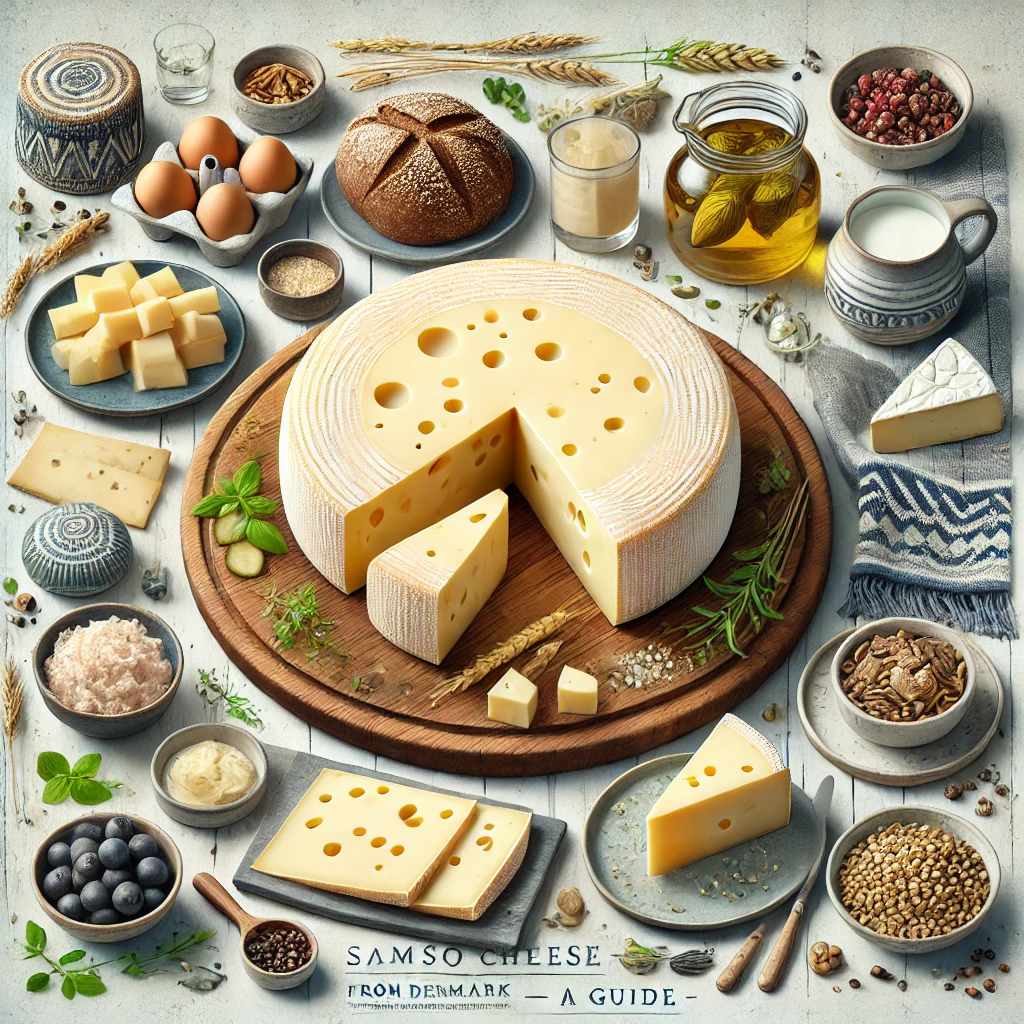
Denmark has long been celebrated as one of the world’s great dairy nations. From creamy butters to internationally respected cheeses, Danish dairy reflects precision, quality milk, and centuries of expertise. Among these cheeses, Samsø cheese stands out as a quiet classic—less flashy than blue or mold-ripened varieties, yet deeply satisfying, versatile, and rooted in Danish tradition.
Named after the island of Samsø in central Denmark, this semi-hard cheese represents the heart of Scandinavian cheesemaking: clean flavors, balanced sweetness, and a strong connection to pasture-based farming. In this complete guide, we explore the origins, production, taste, varieties, culinary uses, pairings, storage, and cultural importance of Samsø cheese.
🧀 What Is Samsø Cheese?
Samsø cheese is a semi-hard cow’s milk cheese, traditionally made from pasteurized milk and aged for several months. It belongs to the Alpine-style family of cheeses and is often compared to cheeses like Emmental or Maasdam, though it has a character distinctly its own.
Key Characteristics
| Feature | Description |
|---|---|
| Milk | Cow’s milk |
| Texture | Semi-hard, elastic, sliceable |
| Flavor | Mild, nutty, slightly sweet |
| Rind | Natural or waxed |
| Aging | 3–12 months (sometimes longer) |
| Origin | Denmark |
Samsø is prized for its approachable taste, making it popular with families, chefs, and cheeseboards alike.
🌿 Origins of Samsø Cheese
The cheese takes its name from Samsø Island, located between the Jutland peninsula and Zealand. This island is known for its fertile soil, strong agricultural traditions, and dairy farming culture.
Historical Background
-
Developed in the 19th century, inspired by Alpine cheesemaking techniques
-
Adapted to Danish milk, climate, and taste preferences
-
Became widely produced across Denmark, not only on Samsø Island
-
One of Denmark’s most consumed everyday cheeses
The island’s pastures, rich in grasses and herbs, contribute to the clean, slightly sweet milk that defines the cheese’s flavor.
🥛 How Samsø Cheese Is Made
Samsø cheese follows traditional semi-hard cheese production methods, emphasizing cleanliness, consistency, and controlled aging.
1. Milk Preparation
Fresh cow’s milk is pasteurized and gently heated. Starter cultures are added to begin fermentation.
2. Coagulation
Rennet is introduced, causing the milk to form a firm curd.
3. Cutting the Curd
The curd is cut into small pieces to release whey. Smaller cuts lead to a firmer final texture.
4. Heating & Stirring
The curds are gently heated and stirred, helping them contract and expel more whey.
5. Molding & Pressing
Curds are placed into round molds and pressed to form smooth wheels and remove remaining moisture.
6. Salting
Cheese wheels are soaked in brine, adding flavor and supporting preservation.
7. Aging
Samsø is aged in cool, humid cellars for several months. During this time, wheels are turned regularly to ensure even maturation.
This careful process creates a cheese that is balanced, consistent, and reliable in quality.
🧂 Taste & Texture Profile
Samsø cheese is loved for its mild but satisfying flavor that develops complexity with age.
Flavor Notes
-
Lightly nutty
-
Gently sweet
-
Buttery and milky when young
-
More savory and rounded when aged
Unlike sharper Alpine cheeses, Samsø remains smooth and restrained, which is part of its appeal.
Texture
-
Semi-firm and elastic
-
Easy to slice or cube
-
Occasionally small eyes (holes)
-
Becomes slightly crumbly when well-aged
The texture makes Samsø ideal for both eating raw and cooking.
🧀 Varieties of Samsø Cheese
While often sold simply as “Samsø,” the cheese varies depending on age and producer.
Young Samsø (3–4 months)
-
Very mild and creamy
-
Soft elasticity
-
Ideal for sandwiches and melting
Mature Samsø (6–9 months)
-
Balanced nutty flavor
-
Firmer body
-
Great for cheese boards and cooking
Aged Samsø (12+ months)
-
Deeper, more savory notes
-
Slight crystalline texture
-
Excellent with wine or beer
Some artisanal producers also experiment with raw milk Samsø, which offers greater depth and aromatic complexity.
🍽 Culinary Uses of Samsø Cheese
Samsø’s versatility is one of its greatest strengths.
1. Everyday Eating
-
Sliced on rye bread (rugbrød)
-
Cubed for lunchboxes
-
Melted on toast or open sandwiches
2. Cooking & Baking
Samsø melts smoothly without becoming oily, making it ideal for:
-
Gratin dishes
-
Casseroles
-
Cheese sauces
-
Quiches
-
Pasta bakes
3. Danish Classics
Used in traditional dishes such as:
-
Cheese-topped potatoes
-
Savory pies
-
Warm cheese sandwiches
4. Cheese Boards
Pairs beautifully with:
-
Apples and pears
-
Rye crackers
-
Mustard or mild chutneys
Its mildness makes it a crowd-pleaser on mixed boards.
🥂 Pairing Samsø Cheese
Food Pairings
| Pairing | Why It Works |
|---|---|
| Apples & pears | Enhance sweetness |
| Rye bread | Traditional Danish balance |
| Pickled vegetables | Add acidity |
| Nuts | Complement nutty notes |
| Mild cured meats | Do not overpower flavor |
Drink Pairings
-
Lager or pilsner – classic Scandinavian match
-
Wheat beer – complements creaminess
-
Chardonnay – buttery harmony
-
Riesling (dry) – balances sweetness
-
Cider – refreshing contrast
Samsø’s gentle flavor allows it to pair well with both alcoholic and non-alcoholic drinks.
🧊 Storage & Shelf Life
Proper storage helps preserve Samsø’s texture and flavor.
Storage Tips
-
Wrap in parchment or wax paper
-
Store in the refrigerator’s cheese drawer
-
Avoid plastic wrap directly on the surface
-
Keep away from strong-smelling foods
Shelf Life
| Type | Duration |
|---|---|
| Young Samsø | 2–3 weeks |
| Mature Samsø | 3–4 weeks |
| Aged Samsø | 1–2 months |
Always bring the cheese to room temperature before serving for best flavor.
🌍 Samsø Cheese in Danish Food Culture
Samsø is not a luxury cheese—it is an everyday Danish staple. It reflects the Scandinavian philosophy of food:
-
high quality
-
simple ingredients
-
practical versatility
-
respect for local farming
In Denmark, Samsø is commonly found in:
-
family kitchens
-
school lunches
-
cafés and bakeries
-
supermarkets and cheese shops
Its accessibility and consistency make it one of Denmark’s most trusted cheeses.
🌱 Sustainability & Modern Production
Many Danish dairies producing Samsø emphasize:
-
animal welfare
-
pasture-based feeding
-
low-impact farming
-
renewable energy use
This aligns with Denmark’s broader commitment to sustainable agriculture and food production.
⭐ Conclusion
Samsø cheese may not seek the spotlight, but it quietly earns its place as one of Denmark’s most beloved and reliable cheeses. With its mild nutty flavor, smooth texture, and remarkable versatility, it represents the essence of Danish dairy craftsmanship.
Whether enjoyed on rye bread, melted into comforting dishes, or served on a simple cheese board, Samsø offers a genuine taste of Denmark—clean, honest, and deeply satisfying. For anyone exploring Scandinavian cheeses, Samsø is an essential stop on the journey.
FAQs – Samsø Cheese
1. What type of cheese is Samsø?
Samsø is a semi-hard cow’s milk cheese from Denmark with a mild, nutty flavor.
2. Is Samsø cheese similar to Emmental?
Yes, it is Alpine-style but milder, sweeter, and less sharp than Emmental.
3. Does Samsø cheese melt well?
Yes, it melts smoothly, making it excellent for cooking and baking.
4. How long is Samsø cheese aged?
Typically between 3 and 12 months, though some versions are aged longer.
5. What is the best way to serve Samsø cheese?
Serve at room temperature with rye bread, fruit, or as part of a cheese board.