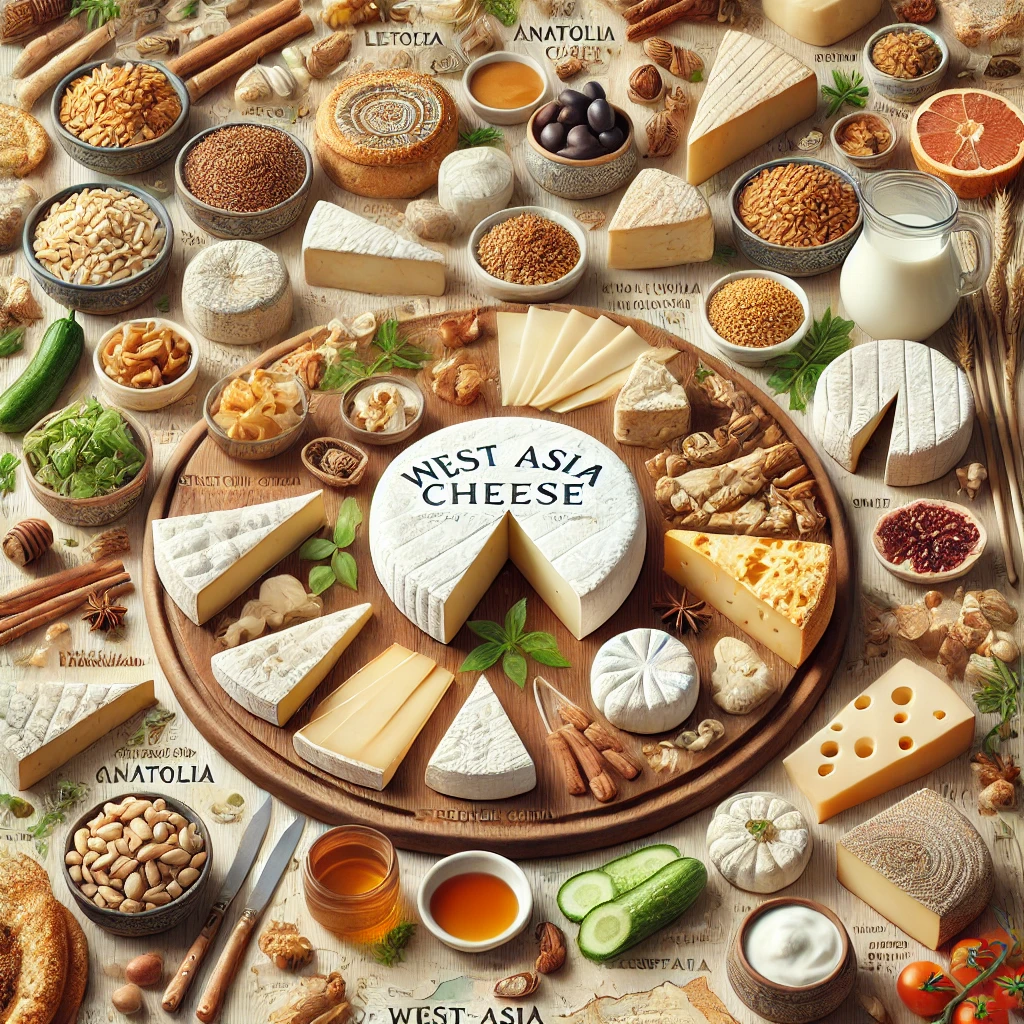
West Asia—often referred to as the Middle East—is one of the world’s oldest cradles of cheesemaking. Long before refrigeration or industrial dairies existed, communities across this region developed ingenious methods to preserve milk using salt, fermentation, drying, and brining. The result is a rich and diverse cheese culture that remains deeply tied to daily life, hospitality, and tradition.
From soft breakfast cheeses to firm grilling varieties and intensely flavored aged forms, West Asian cheeses reflect geography, climate, religion, and centuries of pastoral knowledge. This comprehensive guide explores the history, major cheese types, production methods, regional varieties, culinary uses, pairings, storage, and modern relevance of cheese across West Asia.
🧀 What Defines West Asian Cheese?
West Asian cheeses are typically shaped by hot climates, nomadic traditions, and religious dietary practices. As a result, they tend to be:
-
fresh or lightly aged
-
brined or salted for preservation
-
made primarily from sheep, goat, or cow milk
-
resistant to melting (in many cases)
Common Characteristics
| Feature | Description |
|---|---|
| Milk types | Sheep, goat, cow (sometimes camel) |
| Texture | Fresh, semi-firm, or hard |
| Aging | Minimal to moderate |
| Salt use | Moderate to high |
| Preservation | Brining, drying, fermentation |
| Flavor | Tangy, salty, milky, herbal |
These cheeses are designed to be practical, nutritious, and versatile rather than heavily aged or mold-ripened.
🌍 A Brief History of Cheesemaking in West Asia
Cheesemaking in West Asia dates back more than 7,000 years, making it one of the earliest regions to transform milk into cheese. Archaeological and textual evidence from Mesopotamia, Anatolia, and the Levant confirms the use of:
-
fermented milk
-
strained curds
-
salted cheeses for travel and storage
Cultural Influences
-
Nomadic lifestyles encouraged portable, long-lasting cheeses
-
Islamic dietary laws shaped ingredients and production
-
Trade routes spread techniques across regions
Cheese became a staple not only for nourishment but also for hospitality, often served to guests with bread, olives, and tea.
🥛 Milk Sources in West Asian Cheesemaking
The type of milk used strongly influences flavor and texture.
Common Milk Types
-
Sheep’s milk – rich, fatty, ideal for firm and brined cheeses
-
Goat’s milk – tangy, aromatic, well-suited to fresh cheeses
-
Cow’s milk – milder, increasingly common in urban areas
-
Camel milk – rare but used in arid regions
Sheep and goat milk dominate traditional production due to their adaptability to dry landscapes.
🧂 Major Categories of West Asian Cheeses
1. Fresh & Soft Cheeses
These cheeses are lightly salted or unsalted and consumed quickly.
Examples:
-
Labneh (strained yogurt cheese)
-
Areesh (Egypt & Levant)
-
Chakah (Afghanistan)
Uses:
-
breakfast spreads
-
mezze platters
-
dips with olive oil and herbs
2. Brined Cheeses
Brining is one of the most important preservation methods in West Asia.
Examples:
-
Akkawi (Levant)
-
Nabulsi (Palestine/Jordan)
-
Feta-style regional cheeses
Characteristics:
-
salty and firm
-
stored in brine
-
mild acidity
Often eaten fresh, soaked, or lightly heated.
3. Grilling & Frying Cheeses
These cheeses are valued for their ability to withstand heat.
Examples:
-
Halloumi (Cyprus)
-
Nabulsi (when heated)
Uses:
-
grilled slices
-
pan-fried cubes
-
salads and sandwiches
Their squeaky texture and savory flavor make them especially popular.
4. Dried & Aged Cheeses
Designed for long-term storage, often in harsh climates.
Examples:
-
Qurut (Central & West Asia)
-
Shanklish (Levant)
Characteristics:
-
firm to very hard
-
intense flavor
-
grated or rehydrated
5. Fermented & Spiced Cheeses
Some cheeses are intentionally inoculated with herbs, spices, or mold.
Examples:
-
Shanklish rolled in thyme and chili
-
Herb-coated goat cheeses
These cheeses add boldness to simple meals.
🗺️ Notable West Asian Cheeses by Region
Levant (Lebanon, Syria, Palestine, Jordan)
-
Akkawi
-
Nabulsi
-
Shanklish
-
Labneh
Anatolia & Türkiye
-
Beyaz Peynir (white brined cheese)
-
Tulum (aged in skins)
Arabian Peninsula
-
Jibneh Baida
-
Soft fresh cheeses
Iran & Caucasus
-
Lighvan-style brined cheeses
-
Yogurt-based cheeses
Afghanistan & Central Asia
-
Chakah
-
Qurut
Each region adapts cheese to local climate and cuisine.
🍽️ Culinary Uses of West Asian Cheeses
Cheese is rarely eaten alone—it is part of a broader food culture.
Common Uses
-
Breakfast: cheese, olives, flatbread, tea
-
Mezze: small plates with herbs and oil
-
Cooking: stuffed pastries, flatbreads, rice dishes
-
Grilling: especially halloumi-style cheeses
-
Soups & sauces: using dried cheeses like qurut
Cheese provides protein and richness without overpowering dishes.
🥂 Food & Beverage Pairings
Food Pairings
| Pairing | Why It Works |
|---|---|
| Flatbreads | Neutral base |
| Olives | Shared saltiness |
| Tomatoes | Acid balance |
| Herbs | Regional harmony |
| Honey | Sweet-salty contrast |
Beverages
-
mint tea
-
black tea
-
ayran (yogurt drink)
-
light white wines (modern pairings)
🧊 Storage & Preservation Methods
West Asian cheeses are designed for longevity.
Preservation Techniques
-
brining
-
drying
-
salting
-
oil storage
Storage Guidelines
-
brined cheeses: keep submerged
-
fresh cheeses: refrigerate, consume quickly
-
dried cheeses: store dry and cool
These methods evolved long before refrigeration.
🌱 Nutritional Value
West Asian cheeses are nutritionally dense.
Benefits
-
high protein
-
calcium-rich
-
probiotic (fermented varieties)
-
suitable for vegetarian diets
Sheep and goat cheeses are often easier to digest than cow’s milk cheeses.
🌍 West Asian Cheese in the Modern World
Today, West Asian cheeses are gaining international recognition due to:
-
global interest in Middle Eastern cuisine
-
diaspora communities
-
health-focused diets
-
artisanal food movements
Cheeses like halloumi and labneh have already become global staples, while others remain hidden gems waiting to be discovered.
⭐ Conclusion
West Asian cheese is not defined by luxury or long aging, but by ingenuity, adaptability, and tradition. From brined breakfast staples to grill-ready cheeses and dried survival foods, these cheeses tell the story of people who learned to preserve nourishment in demanding environments.
As global food culture continues to embrace authenticity and heritage, West Asian cheeses offer a timeless lesson: simple ingredients, respected traditions, and deep cultural meaning can create foods that endure for thousands of years.
FAQs – West Asian Cheese
1. What types of cheese are common in West Asia?
Fresh, brined, grilling, dried, and fermented cheeses dominate the region.
2. Why are West Asian cheeses often salty?
Salt and brine are traditional preservation methods for hot climates.
3. Are West Asian cheeses aged?
Some are lightly aged, but most are fresh or brined rather than long-aged.
4. Which milk is most commonly used?
Sheep and goat milk are most traditional, with cow’s milk increasingly common.
5. Is halloumi a West Asian cheese?
Yes, it originated in Cyprus and is widely used across West Asia.