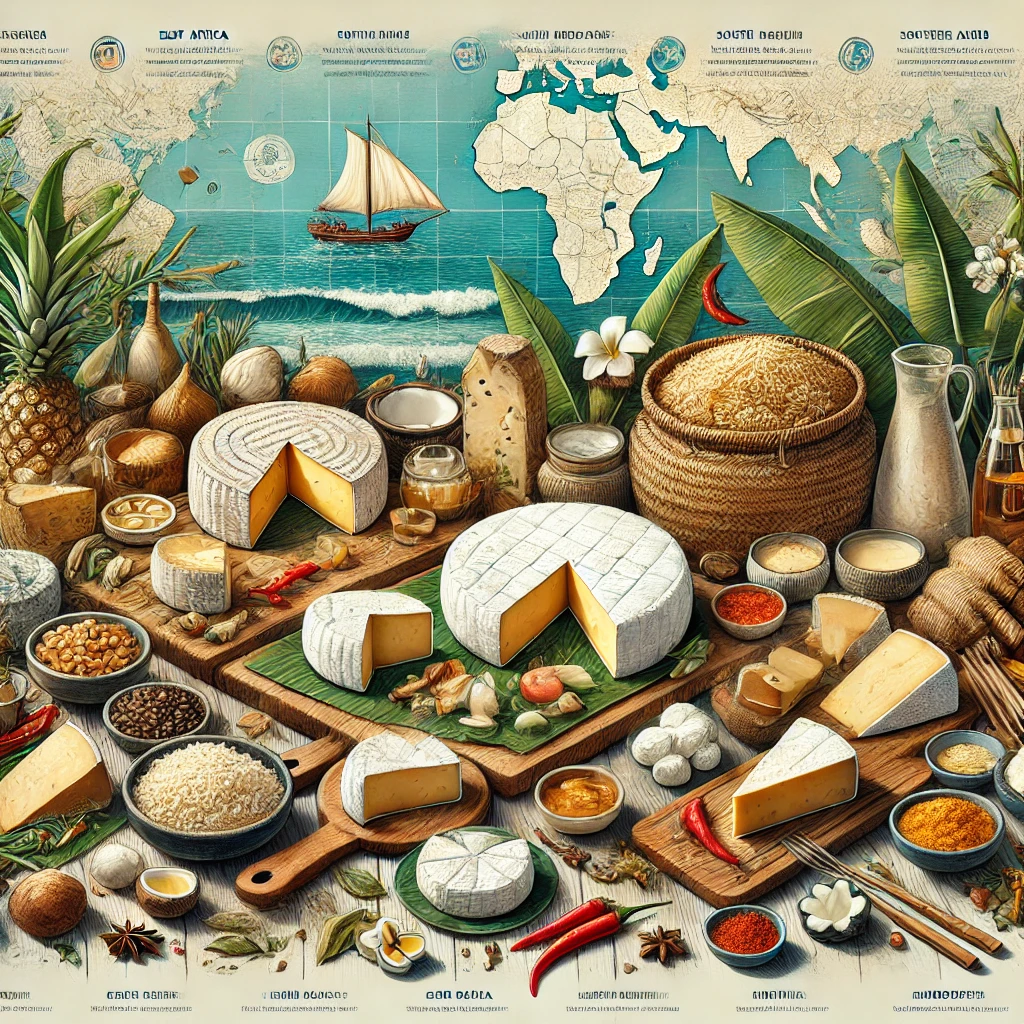
The Indian Ocean Rim connects Africa, the Middle East, South Asia, Southeast Asia, and island nations through centuries of trade, migration, and shared food traditions. While this vast region is better known for spices, seafood, and fermented foods, it also has a lesser-known but deeply meaningful relationship with cheese.
Indian Ocean Rim cheese is not defined by a single style. Instead, it represents a collection of traditional, fresh, and lightly processed cheeses shaped by warm climates, pastoral lifestyles, and cultural exchange. These cheeses are practical, nourishing, and closely tied to everyday life rather than long aging or luxury.
Geography and Climate Influence on Cheese Making
The Indian Ocean Rim includes regions with tropical, subtropical, and arid climates. These environmental conditions strongly influence how cheese is made and consumed.
Key Climate Factors
-
High temperatures discourage long aging
-
Fresh milk is quickly processed
-
Fermentation and acid-set cheeses are favored
-
Drying and salting are used for preservation
As a result, most Indian Ocean Rim cheeses are fresh, soft, or lightly dried, rather than hard, aged varieties.
Historical Roots of Cheese in the Indian Ocean Rim
Cheese traditions in this region developed independently from Europe. Instead of monastic aging cellars, cheese-making emerged from nomadic herding, village farming, and coastal trade networks.
Key historical influences include:
-
Arab and Persian trade routes
-
African pastoral traditions
-
South Asian dairy culture
-
Southeast Asian fermentation knowledge
Cheese was often produced at home for immediate consumption, making it a practical and accessible food.
Milk Types Used Across the Region
Indian Ocean Rim cheese showcases remarkable diversity in milk sources.
Cow’s Milk
Used in coastal Africa, South Asia, and island regions. Produces mild, soft cheeses.
Goat’s Milk
Common in arid and semi-arid regions. Adds tangy and earthy notes.
Sheep’s Milk
Found in parts of East Africa and island communities. Rich and nourishing.
Buffalo Milk
Especially important in South Asia. Produces creamy, high-fat cheeses.
Major Indian Ocean Rim Cheese Regions
East Africa
Countries like Kenya, Tanzania, Somalia, and Ethiopia feature simple, fresh cheeses often made at home.
Characteristics:
-
Acid-set or lightly pressed
-
Mild and milky
-
Often unsalted or lightly salted
These cheeses are commonly eaten with flatbreads or grains.
South Asia
India, Sri Lanka, and nearby regions emphasize fresh dairy products.
Notable styles include:
-
Paneer-like cheeses
-
Soft pressed curds
-
Farmer’s cheese
These cheeses are integral to vegetarian cuisine and daily cooking.
Southeast Asia
Cheese is less common historically, but local adaptations exist in Indonesia and coastal regions.
Features:
-
Fresh cow or goat milk
-
Minimal aging
-
Used in fusion dishes
Modern cheese-making is growing rapidly here.
Island Nations
Madagascar, Mauritius, Réunion, and island communities blend African, European, and Asian influences.
Cheese traits include:
-
Fresh or semi-soft textures
-
European-inspired methods adapted to heat
-
Small-scale artisanal production
Common Types of Indian Ocean Rim Cheese
Rather than named varieties, these cheeses are best grouped by style.
Fresh Acid-Set Cheeses
-
Soft and crumbly
-
Mild tanginess
-
Short shelf life
Lightly Pressed Cheeses
-
Firmer texture
-
Sliceable
-
Used in cooking
Dried or Salted Cheeses
-
Reduced moisture
-
Extended storage
-
Common in pastoral cultures
These styles prioritize freshness and functionality.
Taste Profile of Indian Ocean Rim Cheese
Indian Ocean Rim cheeses are subtle and comforting.
Typical Flavor Notes
-
Mild and milky
-
Light tanginess
-
Gentle saltiness
-
Clean dairy finish
The goal is nourishment and balance rather than bold intensity.
Texture and Appearance
| Style | Texture | Appearance |
|---|---|---|
| Fresh | Soft, crumbly | White to cream |
| Pressed | Semi-firm | Pale yellow |
| Dried | Firm | Off-white |
Textures vary widely depending on moisture and preparation.
Traditional Uses in Regional Cuisines
Cheese in this region is used as an ingredient, not a centerpiece.
Common Traditional Uses
-
Added to vegetable curries
-
Crumbled into flatbreads
-
Paired with grains or rice
-
Served with fermented foods
Cheese complements spices rather than competing with them.
Modern and Contemporary Uses
With globalization and culinary experimentation, Indian Ocean Rim cheeses are being reimagined.
Modern Applications
-
Fusion dishes
-
Café menus
-
Farm-to-table cooking
-
Vegetarian protein alternatives
Local cheeses are gaining recognition beyond their regions.
Best Food Pairings
Grain Pairings
-
Flatbreads
-
Rice
-
Millet and sorghum
Vegetable Pairings
-
Spinach
-
Eggplant
-
Tomatoes
Condiments
-
Chutneys
-
Pickles
-
Light spice blends
Beverage Pairings
Traditional beverages work best.
Recommended Pairings
-
Spiced tea
-
Buttermilk
-
Fermented drinks
-
Coconut water
These drinks enhance freshness and digestibility.
Nutritional Value
Indian Ocean Rim cheeses are valued for simple nutrition.
Nutritional highlights:
-
High-quality protein
-
Calcium and phosphorus
-
Natural fats
-
Minimal processing
Fresh cheeses are often easier to digest.
Indian Ocean Rim Cheese vs European Cheese
| Feature | Indian Ocean Rim | European |
|---|---|---|
| Aging | Minimal | Often long |
| Climate | Warm | Cool |
| Flavor | Mild | Strong |
| Use | Cooking | Standalone |
Both traditions reflect their environments and cultures.
Buying and Storing
Buying Tips
-
Choose fresh, local sources
-
Avoid overly dry cheese
-
Check production dates
Storage Tips
-
Refrigerate immediately
-
Use airtight containers
-
Consume quickly
Freshness is essential for quality.
Why Indian Ocean Rim Cheese Deserves Attention
As global food culture shifts toward local, sustainable, and traditional foods, Indian Ocean Rim cheese stands out for its authenticity. These cheeses represent centuries of adaptation to climate, culture, and community needs.
They are not designed for prestige but for nourishment, connection, and daily life—values increasingly appreciated worldwide.
Conclusion
Indian Ocean Rim cheese is a quiet but meaningful part of global cheese heritage. Shaped by warm climates, diverse cultures, and practical traditions, these cheeses emphasize freshness, simplicity, and balance.
From African pastoral communities to South Asian kitchens and island dairies, Indian Ocean Rim cheese tells a story of resilience, adaptability, and cultural exchange. Exploring it offers not just new flavors, but a deeper understanding of how food connects people across oceans.
Frequently Asked Questions (FAQ)
What defines Indian Ocean Rim cheese?
It refers to traditional, fresh, and lightly processed cheeses from regions bordering the Indian Ocean.
Are Indian Ocean Rim cheeses aged?
Most are fresh or lightly dried due to warm climates.
What milk is commonly used?
Cow, goat, sheep, and buffalo milk are all used depending on region.
How are these cheeses usually eaten?
They are mainly used in cooking or paired with grains and vegetables.
Are Indian Ocean Rim cheeses healthy?
Yes, they are minimally processed and provide protein and calcium when eaten in moderation.