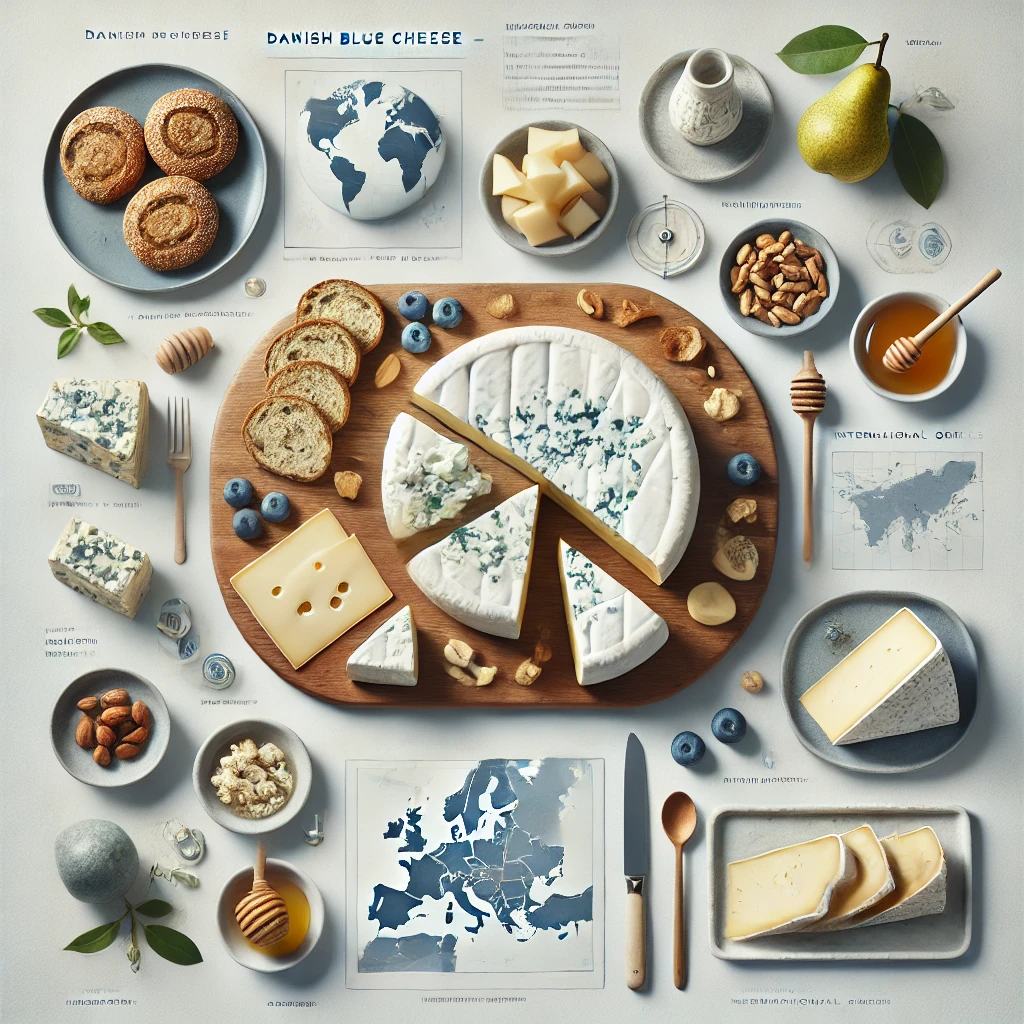
Danish Blue cheese, often referred to as Danablu, is one of the world’s most recognized blue cheeses. Known for its creamy texture, sharp flavor, and distinctive blue veining, it represents Denmark’s most successful contribution to international cheese culture.
Although inspired by traditional European blue cheeses, Danish Blue is not a copy. It is a modern, industrially refined blue cheese that balances bold flavor with smoothness, making it accessible to a global audience. Today, Danish Blue is exported worldwide and enjoyed in both everyday cooking and gourmet dining.
The International Origins of Danish Blue Cheese
Danish Blue cheese was created in the early 20th century, a period when European cheesemakers were experimenting with standardization and export-friendly production.
Inspired by Roquefort
Denmark sought to create a domestic alternative to Roquefort, the famous French blue cheese. While Roquefort relied on sheep’s milk and natural caves, Danish producers aimed for:
-
Cow’s milk production
-
Controlled environments
-
Consistent quality
-
Scalable manufacturing
In 1915, Danish cheesemaker Marius Boel developed what would become Danish Blue. Using Penicillium roqueforti cultures and modern techniques, he created a cheese that mimicked blue-veined complexity while offering smoother texture and wider appeal.
Why Danish Blue Became a Global Cheese
Danish Blue quickly gained international recognition because it was designed for export and consistency.
Key reasons for its global success include:
-
Reliable flavor and texture
-
Year-round production
-
Longer shelf life
-
Lower cost compared to artisanal blues
-
Adaptability in cooking
Unlike some traditional blue cheeses that can be overpowering, Danish Blue offers a balanced profile that suits a variety of cuisines.
Milk Source and Core Ingredients
Danish Blue is traditionally made from pasteurized cow’s milk, making it milder than sheep- or goat-milk blue cheeses.
Core Ingredients
-
Pasteurized cow’s milk
-
Starter cultures
-
Penicillium roqueforti
-
Rennet
-
Salt
Pasteurization ensures safety and uniformity, a key factor in its international distribution.
How Danish Blue Cheese Is Made
The production of Danish Blue blends traditional blue-cheese techniques with modern dairy science.
Step-by-Step Production Process
-
Milk Preparation
Cow’s milk is pasteurized and cultured. -
Coagulation
Rennet is added to form curds. -
Curd Cutting and Molding
Curds are cut and placed into molds without pressing, allowing air pockets to form. -
Salting
Salt is applied to control moisture and flavor. -
Needling
The cheese is pierced to introduce oxygen, encouraging blue mold growth. -
Aging
Cheeses are aged in controlled environments for several weeks.
This process produces consistent blue veining and creamy texture.
Aging and Maturation
Danish Blue is typically aged for 8 to 12 weeks, shorter than many traditional blue cheeses.
Aging Results
-
Younger cheese: milder, creamier
-
Fully aged cheese: sharper, saltier, more aromatic
Controlled aging allows producers to fine-tune flavor for different markets.
Texture and Appearance
| Feature | Description |
|---|---|
| Texture | Semi-soft to creamy |
| Color | Pale ivory base |
| Veins | Blue-green marbling |
| Rind | Thin or rindless |
The cheese slices cleanly and spreads easily at room temperature.
Taste Profile of Danish Blue Cheese
Danish Blue is known for its balanced blue-cheese flavor.
Flavor Characteristics
-
Sharp but not aggressive
-
Salty and savory
-
Creamy mouthfeel
-
Earthy blue mold notes
-
Slight tangy finish
Compared to Roquefort or Stilton, Danish Blue is smoother and less pungent.
Danish Blue vs Other International Blue Cheeses
| Feature | Danish Blue | Roquefort | Stilton |
|---|---|---|---|
| Origin | Denmark | France | England |
| Milk | Cow | Sheep | Cow |
| Texture | Creamy | Crumbly | Firm |
| Flavor | Balanced | Strong | Rich |
| Aging | Short | Longer | Medium |
Danish Blue is often chosen for its versatility and accessibility.
Traditional and Modern Culinary Uses
Danish Blue works well in both classic and contemporary dishes.
Common Culinary Uses
-
Cheese boards
-
Salad crumbles
-
Pasta sauces
-
Steak toppings
-
Burger enhancements
Its smooth melting quality makes it popular in sauces and dressings.
Danish Blue in Global Cuisine
Thanks to its adaptable flavor, Danish Blue appears in many international dishes.
Popular Global Applications
-
European salad dressings
-
American burgers and wings
-
Asian fusion sauces
-
Scandinavian open sandwiches
It enhances dishes without overpowering other ingredients.
Best Food Pairings for Danish Blue Cheese
Sweet Pairings
-
Pears
-
Apples
-
Grapes
-
Honey
Savory Pairings
-
Walnuts
-
Rye bread
-
Beef or lamb
-
Mushrooms
Sweet and earthy foods balance its saltiness.
Beverage Pairings
Danish Blue pairs best with beverages that complement its richness.
Beverage Options
-
Dessert wines
-
Port
-
Dry red wine
-
Dark beer
Non-alcoholic options include sparkling water or apple juice.
Nutritional Value of Danish Blue Cheese
Danish Blue is rich and nutrient-dense.
Nutritional highlights include:
-
High-quality protein
-
Calcium and phosphorus
-
Vitamin B12
-
High fat and sodium content
Moderation is recommended due to salt levels.
Buying and Storing Danish Blue Cheese
Buying Tips
-
Look for even blue veining
-
Avoid overly wet or ammonia-smelling cheese
-
Check freshness dates
Storage Tips
-
Wrap in cheese paper or foil
-
Refrigerate properly
-
Allow to breathe slightly
Bring to room temperature before serving for best flavor.
Cultural and Economic Importance
Danish Blue is one of Denmark’s most successful food exports. It represents:
-
Innovation in dairy production
-
Denmark’s role in global food markets
-
The modernization of traditional cheese styles
Its success paved the way for other Scandinavian cheeses to gain international recognition.
Why Danish Blue Still Matters Today
In today’s cheese market, Danish Blue remains relevant because it offers:
-
Consistency
-
Versatility
-
Broad consumer appeal
-
Reliable quality
It bridges the gap between traditional blue cheese lovers and newcomers.
Conclusion
Danish Blue cheese is a remarkable example of how tradition and innovation can work together. Inspired by classic European blues yet refined for global tastes, it has become a staple in kitchens around the world.
With its creamy texture, balanced sharpness, and versatile uses, Danish Blue continues to define Denmark’s place in international cheese culture. Whether enjoyed on a cheese board, melted into a sauce, or crumbled over a salad, it delivers bold flavor with universal appeal.
Frequently Asked Questions (FAQ)
What is Danish Blue cheese made from?
It is made from pasteurized cow’s milk and blue mold cultures.
Is Danish Blue the same as Roquefort?
No, Danish Blue is inspired by Roquefort but uses cow’s milk and modern production methods.
How strong is Danish Blue cheese?
It is moderately strong, creamier and milder than many traditional blue cheeses.
Can Danish Blue be cooked?
Yes, it melts well and is excellent for sauces, pastas, and baked dishes.
How should Danish Blue be served?
Serve at room temperature with fruit, bread, or wine for best flavor.