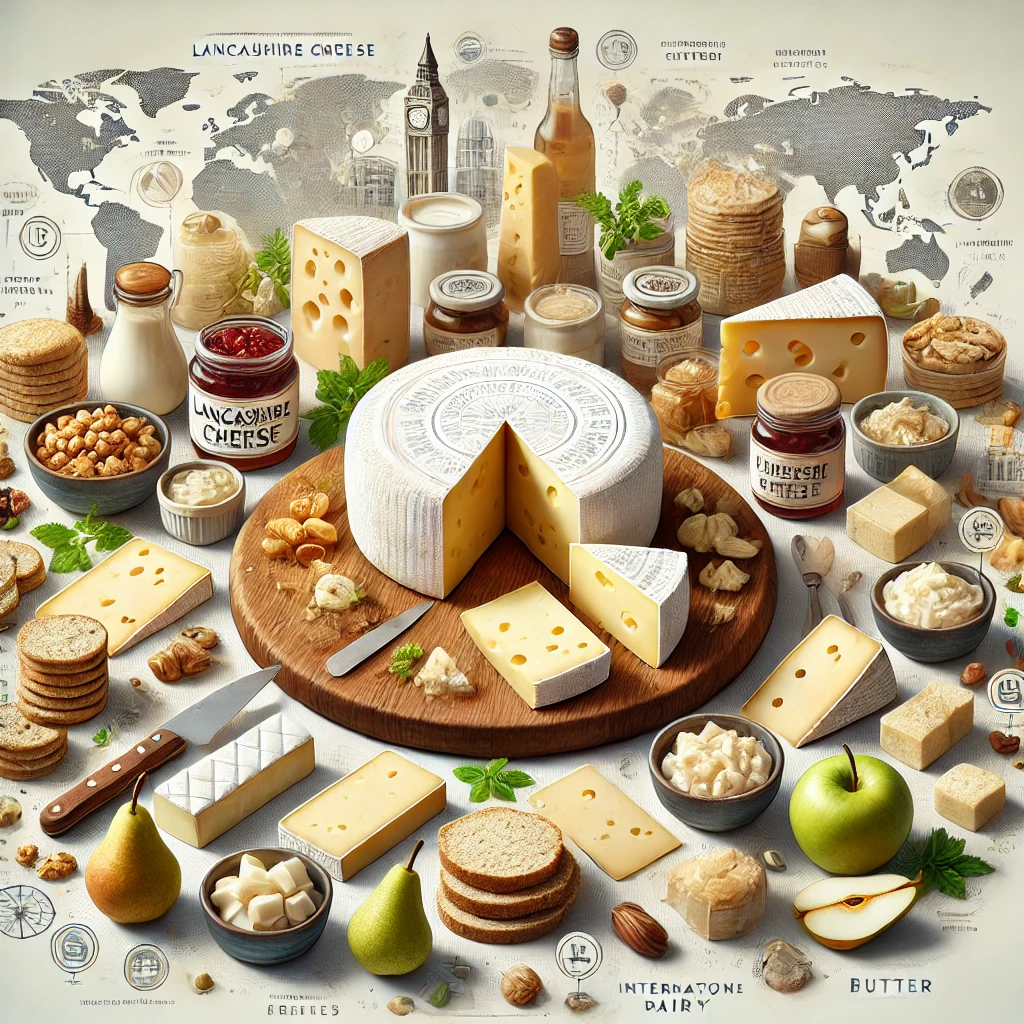
Lancashire cheese is one of Britain’s most historic and beloved cheeses, known for its crumbly texture, fresh acidity, and comforting flavor. Originating in the county of Lancashire in northwest England, this cheese has grown from a regional farmhouse staple into a global favorite enjoyed far beyond British borders.
Unlike heavily aged or intensely aromatic cheeses, Lancashire cheese is valued for its balance and versatility. It can be mild or mature, crumbly or creamy, and equally suited to traditional British cooking or modern international cuisine. Its approachable character has helped it stand the test of time and secure a lasting place on the world cheese stage.
Origins of Lancashire Cheese
Lancashire cheese dates back to at least the 13th century, making it one of England’s oldest cheeses. It developed in rural Lancashire, where dairy farming thrived thanks to fertile pastureland and a cool, damp climate ideal for milk production.
Originally, Lancashire cheese was made on farms using surplus milk. Farmers often combined curds from several days’ milking, a practice that helped shape the cheese’s distinctive crumbly yet moist texture. Over centuries, this method evolved into a recognized regional style closely associated with working-class food culture and everyday meals.
Lancashire Cheese and the Industrial Revolution
The rise of Lancashire cheese coincided with the Industrial Revolution. As factory towns expanded, demand grew for affordable, nourishing foods. Lancashire cheese became a staple for mill workers because it was:
-
Filling and nutritious
-
Easy to transport
-
Affordable
-
Suitable for cooking
Its role as a practical, everyday cheese helped spread its popularity across Britain and later internationally.
Milk Source and Ingredients
Lancashire cheese is traditionally made from cow’s milk, reflecting the region’s strong dairy farming heritage.
Core Ingredients
-
Fresh cow’s milk
-
Starter cultures
-
Rennet
-
Salt
The simplicity of ingredients allows milk quality and technique to define the final flavor.
How Lancashire Cheese Is Made
Lancashire cheese production follows a traditional but carefully controlled process.
Traditional Production Method
-
Milk Preparation
Fresh milk is warmed and cultured. -
Curd Formation
Rennet is added, forming curds. -
Curd Cutting and Draining
Curds are cut and partially drained. -
Blending Curds
Curds from different stages are mixed, creating the signature texture. -
Molding and Pressing
The cheese is pressed lightly. -
Salting and Aging
Cheese is salted and matured for varying lengths of time.
This unique blending process gives Lancashire cheese its recognizable structure.
Main Types of Lancashire Cheese
Lancashire cheese comes in several distinct styles, each with its own personality.
Creamy Lancashire
-
Short maturation
-
Soft, moist texture
-
Fresh, milky flavor
This is the mildest and most traditional style.
Tasty Lancashire
-
Medium aging
-
Balanced crumbly texture
-
Slightly sharper taste
Often considered the most versatile version.
Mature Lancashire
-
Longer aging
-
Firm, crumbly body
-
Robust, tangy flavor
Popular among those who prefer a stronger cheese.
Texture and Appearance
| Feature | Description |
|---|---|
| Texture | Crumbly yet moist |
| Color | Pale ivory |
| Rind | Natural or lightly formed |
| Interior | Open, flaky structure |
Lancashire cheese breaks cleanly into flakes rather than slicing smoothly.
Taste Profile of Lancashire Cheese
Lancashire cheese is admired for its fresh, lively flavor.
Flavor Characteristics
-
Clean dairy notes
-
Gentle acidity
-
Slight saltiness
-
Nutty undertones (with age)
Unlike sharper British cheeses, it remains refreshing rather than overpowering.
Lancashire Cheese vs Other British Cheeses
| Feature | Lancashire | Cheddar | Wensleydale |
|---|---|---|---|
| Texture | Crumbly | Firm | Crumbly |
| Flavor | Fresh, tangy | Sharp | Mild |
| Aging | Short–medium | Often long | Short |
| Cooking | Excellent | Excellent | Moderate |
Lancashire stands out for its freshness and flakiness.
Traditional Uses in British Cuisine
Lancashire cheese plays a central role in classic British cooking.
Traditional Dishes
-
Cheese and onion pie
-
Lancashire hotpot topping
-
Sandwiches and ploughman’s lunch
-
Melted on toast
Its melting ability makes it especially popular in baked dishes.
Lancashire Cheese in Modern Global Cuisine
Today, Lancashire cheese appears in kitchens far beyond the UK.
Modern Uses
-
Gourmet cheese boards
-
Artisan sandwiches
-
Fusion dishes
-
Contemporary baking
Chefs appreciate its balance and adaptability.
Best Food Pairings for Lancashire Cheese
Savory Pairings
-
Onions
-
Potatoes
-
Mushrooms
-
Wholegrain bread
Sweet Pairings
-
Apples
-
Pears
-
Chutneys
These combinations highlight the cheese’s natural acidity.
Beverage Pairings
Lancashire cheese pairs well with a range of drinks.
Beverage Options
-
English ale
-
Dry white wine
-
Light red wine
-
Apple cider
Its freshness complements both alcoholic and non-alcoholic beverages.
Nutritional Value of Lancashire Cheese
Lancashire cheese provides balanced nutrition.
Nutritional highlights include:
-
High-quality protein
-
Calcium for bone health
-
Moderate fat content
-
Naturally gluten-free
Its moderate richness makes it suitable for everyday consumption.
Global Popularity of Lancashire Cheese
Lancashire cheese is now enjoyed in:
-
Europe
-
North America
-
Australia
-
Parts of Asia
Its approachable flavor has helped it adapt easily to international tastes and recipes.
Buying Authentic Lancashire Cheese
What to Look For
-
Clear labeling of origin
-
Natural rind
-
Fresh, clean aroma
-
Crumbly but moist texture
Traditional versions often carry protected regional labeling.
Storage and Serving Tips
Storage
-
Wrap in wax or cheese paper
-
Refrigerate properly
-
Avoid airtight plastic
Serving
-
Bring to room temperature
-
Break rather than slice
-
Serve simply
These steps enhance flavor and texture.
Cultural Importance of Lancashire Cheese
Lancashire cheese represents British food heritage at its most honest. It tells the story of rural farming, industrial communities, and everyday nourishment. Even today, it remains a symbol of comfort, tradition, and regional pride.
Why Lancashire Cheese Remains a Global Favorite
Lancashire cheese continues to thrive because it offers:
-
Familiar yet distinctive flavor
-
Versatility in cooking
-
Rich historical identity
-
Broad consumer appeal
It proves that simplicity and craftsmanship never go out of style.
Conclusion
Lancashire cheese has earned its reputation as a global favorite through centuries of tradition, practicality, and flavor. Crumbly, fresh, and endlessly versatile, it bridges the gap between heritage and modern cuisine.
Whether enjoyed melted in a classic pie, crumbled over vegetables, or served on a cheese board, Lancashire cheese delivers comfort and character in every bite. For cheese lovers seeking authenticity and balance, Lancashire cheese remains a timeless choice.
Frequently Asked Questions (FAQ)
What milk is used to make Lancashire cheese?
Lancashire cheese is traditionally made from cow’s milk.
Is Lancashire cheese aged?
Yes, but aging varies from a few weeks to several months depending on the type.
How does Lancashire cheese taste?
It tastes fresh, slightly tangy, and mildly salty, becoming nuttier with age.
Is Lancashire cheese good for cooking?
Yes, it melts beautifully and is ideal for baked and savory dishes.
How should Lancashire cheese be stored?
Store wrapped in cheese paper in the refrigerator and bring to room temperature before serving.