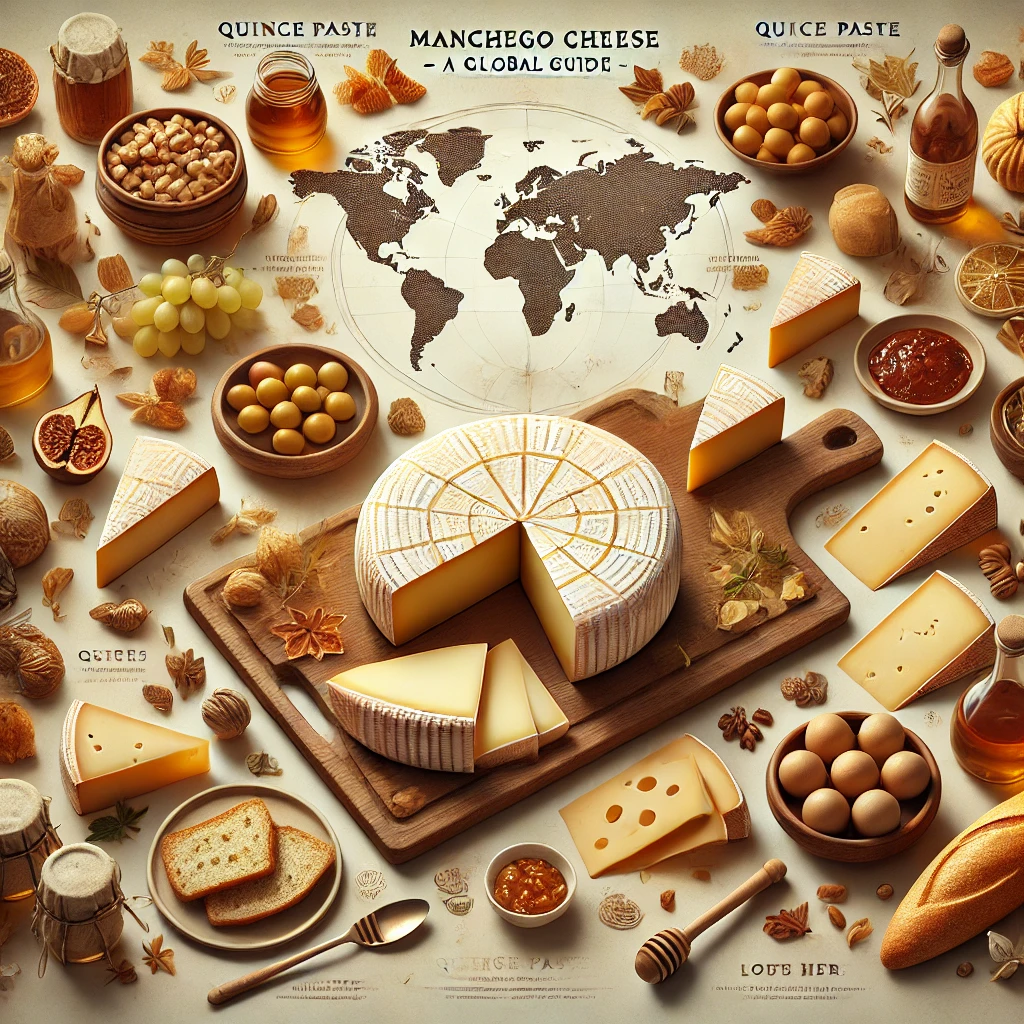
Manchego cheese is one of the most celebrated cheeses in the world and a true ambassador of Spanish cuisine. Instantly recognizable by its firm texture, nutty flavor, and distinctive zigzag rind pattern, Manchego has earned a permanent place on cheese boards, restaurant menus, and home kitchens across the globe.
Produced exclusively in Spain’s La Mancha region, Manchego is deeply rooted in history, geography, and tradition. Its balanced flavor profile—neither too mild nor overpowering—makes it appealing to both seasoned cheese lovers and newcomers alike. This global guide explores everything you need to know about Manchego cheese, from its origins and production to its varieties, pairings, and cultural importance.
Origins of Manchego Cheese
Manchego cheese originates from La Mancha, a vast plateau in central Spain made famous by Don Quixote. This dry, windswept landscape is perfectly suited for sheep grazing, particularly the Manchega sheep, whose milk is essential to authentic Manchego.
Cheesemaking in La Mancha dates back over 2,000 years, with evidence found in Roman texts and archaeological remains. For centuries, shepherds transformed sheep’s milk into cheese as a way to preserve nutrition in a harsh climate. These early practices laid the foundation for modern Manchego.
Protected Designation of Origin (PDO)
Authentic Manchego cheese is protected under PDO (Denominación de Origen Protegida) status. This guarantees:
-
Milk exclusively from Manchega sheep
-
Production only in La Mancha
-
Traditional methods and standards
-
Strict aging requirements
PDO labeling ensures quality, authenticity, and regional integrity—key reasons for Manchego’s global reputation.
Milk Source and Ingredients
Manchego cheese is made exclusively from pasteurized or raw Manchega sheep’s milk, which gives it richness and depth unmatched by cow’s milk cheeses.
Core Ingredients
-
Manchega sheep’s milk
-
Starter cultures
-
Rennet
-
Salt
No additives or flavorings are used, allowing the milk’s natural character to shine.
How Manchego Cheese Is Made
Manchego production blends tradition with precision.
Traditional Production Process
-
Milk Coagulation
Milk is warmed and combined with rennet to form curds. -
Curd Cutting
Curds are cut finely to release whey. -
Molding and Pressing
Curds are pressed in cylindrical molds that create the signature rind pattern. -
Salting
Cheese wheels are salted by brine or dry salt. -
Aging
Wheels are aged under controlled conditions for months or years.
Each stage contributes to Manchego’s texture and flavor development.
Aging Categories of Manchego Cheese
Manchego is classified by aging time, which directly affects taste and texture.
Fresco (Fresh)
-
Aged less than 2 weeks
-
Rarely exported
-
Mild, milky flavor
Semicurado (Semi-Cured)
-
Aged 2–3 months
-
Soft to firm texture
-
Lightly tangy and buttery
Curado (Cured)
-
Aged 6–12 months
-
Firm texture
-
Nutty, savory flavor
Viejo (Aged)
-
Aged over 12 months
-
Hard, crumbly
-
Intense, complex taste
Most international markets feature curado and semicurado styles.
Texture and Appearance
| Feature | Description |
|---|---|
| Texture | Firm to hard |
| Color | Pale ivory to golden |
| Rind | Zigzag pattern |
| Interior | Compact, small holes |
The rind pattern comes from traditional grass molds used historically.
Taste Profile of Manchego Cheese
Manchego offers a beautifully balanced flavor that evolves with age.
Flavor Characteristics
-
Buttery and nutty
-
Slightly sweet
-
Gentle acidity
-
Caramel and grass notes in aged versions
Its richness is distinctive yet refined, making it extremely versatile.
Manchego vs Other Sheep’s Milk Cheeses
| Feature | Manchego | Pecorino | Roquefort |
|---|---|---|---|
| Origin | Spain | Italy | France |
| Texture | Firm | Hard | Crumbly |
| Flavor | Nutty, balanced | Salty, sharp | Strong, pungent |
| Blue Mold | No | No | Yes |
Manchego stands out for its smoothness and accessibility.
Traditional Uses in Spanish Cuisine
Manchego is central to Spanish food culture.
Traditional Serving Styles
-
Sliced with olive oil
-
Served with olives
-
Part of tapas spreads
-
Paired with quince paste (membrillo)
It is often enjoyed simply to highlight its quality.
Manchego in Global Cuisine
Manchego’s versatility has made it popular worldwide.
Modern Uses
-
Cheese boards
-
Salads and grain bowls
-
Sandwiches and burgers
-
Grated over vegetables or pasta
Its ability to melt slightly without becoming greasy makes it ideal for cooking.
Best Food Pairings for Manchego Cheese
Sweet Pairings
-
Quince paste
-
Honey
-
Figs
-
Grapes
Savory Pairings
-
Marcona almonds
-
Olives
-
Jamón serrano
-
Crusty bread
Sweet-savory contrasts enhance Manchego’s complexity.
Beverage Pairings
Manchego pairs beautifully with both Spanish and international drinks.
Beverage Options
-
Tempranillo wine
-
Rioja
-
Sherry
-
Cava
-
Dry cider
Non-alcoholic options include sparkling water or apple juice.
Nutritional Value of Manchego Cheese
Manchego is nutrient-dense and satisfying.
Nutritional highlights include:
-
High-quality protein
-
Calcium and phosphorus
-
Healthy fats
-
Naturally gluten-free
Sheep’s milk is also easier to digest for some people.
Buying Authentic Manchego Cheese
What to Look For
-
PDO seal on the rind
-
“Manchego” clearly labeled
-
Firm but not dry texture
-
Nutty, clean aroma
Avoid products labeled “Manchego-style” if authenticity matters.
Storage and Serving Tips
Storage
-
Wrap in cheese paper or wax paper
-
Refrigerate properly
-
Avoid plastic wrap long-term
Serving
-
Bring to room temperature
-
Slice thin or cube
-
Serve with minimal accompaniments
Proper handling enhances aroma and taste.
Cultural and Economic Importance
Manchego is one of Spain’s most valuable food exports. It supports:
-
Traditional sheep farming
-
Rural economies
-
Spanish culinary identity
Globally, it represents quality, heritage, and authenticity.
Why Manchego Cheese Is a Global Favorite
Manchego continues to thrive worldwide because it offers:
-
Consistent quality
-
Balanced flavor
-
Culinary versatility
-
Strong cultural identity
Few cheeses achieve such universal appeal without sacrificing tradition.
Conclusion
Manchego cheese is more than just a Spanish specialty—it is a global icon of craftsmanship and flavor. From the windswept plains of La Mancha to cheese boards around the world, Manchego delivers a unique combination of richness, balance, and heritage.
Whether enjoyed young and buttery or aged and intense, Manchego offers something for every palate. For anyone seeking a cheese that embodies tradition while fitting seamlessly into modern cuisine, Manchego remains an unmatched classic.
Frequently Asked Questions (FAQ)
What milk is used to make Manchego cheese?
Authentic Manchego is made exclusively from Manchega sheep’s milk.
Is Manchego cheese aged?
Yes, it ranges from semi-cured to aged over one year.
How does Manchego cheese taste?
It tastes nutty, buttery, slightly sweet, and more intense with age.
Is Manchego good for cooking?
Yes, it works well sliced, grated, or lightly melted.
How can I tell if Manchego is authentic?
Look for the PDO seal and zigzag rind pattern.