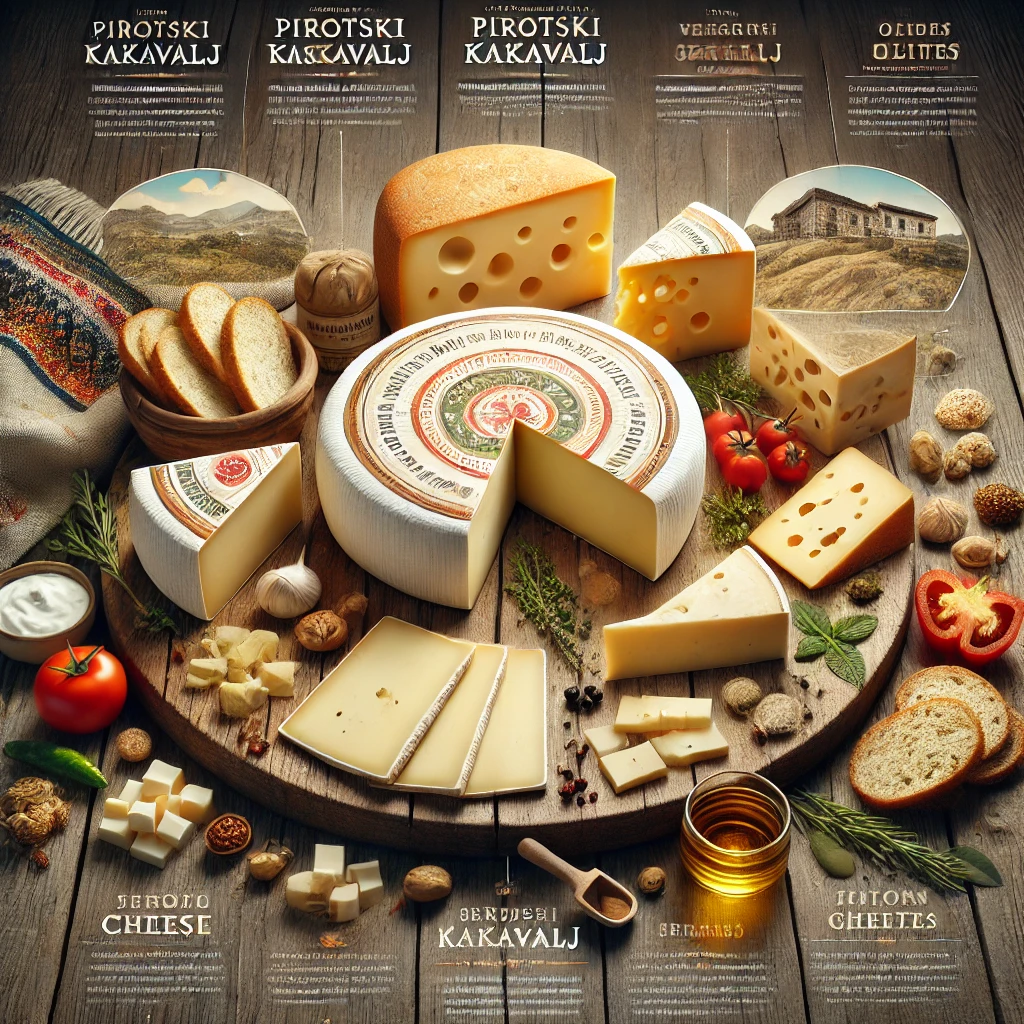
Pirotski Kačkavalj is one of Serbia’s most respected and historically significant cheeses. Originating from the Pirot region in southeastern Serbia, this firm, aged cheese is celebrated for its deep flavor, smooth texture, and artisanal heritage. Often compared to Mediterranean pasta-filata cheeses, Pirotski Kačkavalj stands out for its balance of richness, saltiness, and nutty complexity.
For centuries, it has been a symbol of Serbian mountain life, craftsmanship, and food preservation. Today, Pirotski Kačkavalj is enjoyed both locally and internationally, earning recognition as a true Balkan dairy classic.
The Meaning of “Kačkavalj”
The word Kačkavalj is used across the Balkans to describe a family of stretched-curd cheeses. However, Pirotski Kačkavalj refers specifically to the traditional cheese made in and around the town of Pirot, following established regional methods.
Unlike generic kačkavalj cheeses, the Pirot version is known for:
-
Longer aging
-
More pronounced flavor
-
Strict traditional techniques
This distinction gives it a strong regional identity.
Geographic and Cultural Roots in Pirot
The Pirot region lies near the Stara Planina (Balkan Mountains), an area known for:
-
Clean mountain air
-
Rich alpine pastures
-
Long pastoral traditions
Sheep and cattle grazing on these pastures produce milk rich in fats and proteins—ideal for cheese making. Historically, Pirot was also a crossroads of trade, allowing local cheese traditions to absorb influences while maintaining their uniqueness.
Historical Background of Pirotski Kačkavalj
Cheesemaking in the Pirot area dates back hundreds of years, deeply connected to shepherd life. Pirotski Kačkavalj was developed as a way to:
-
Preserve milk for winter
-
Create a durable, transportable food
-
Add economic value to pastoral work
By the 19th century, Pirotski Kačkavalj had gained a reputation beyond Serbia, being traded throughout the Balkans and Central Europe.
Milk Source and Traditional Ingredients
Traditionally, Pirotski Kačkavalj was made from sheep’s milk, though today cow’s milk or blended versions are also common.
Core Ingredients
-
Sheep’s milk or cow’s milk
-
Natural starter cultures
-
Rennet
-
Salt
Sheep’s milk versions are richer and more intense, while cow’s milk varieties are milder and creamier.
How Pirotski Kačkavalj Is Made
Pirotski Kačkavalj belongs to the pasta-filata (stretched-curd) family of cheeses.
Traditional Production Process
-
Milk Coagulation
Milk is warmed and combined with rennet to form curds. -
Curd Maturation
Curds are left to acidify naturally. -
Stretching
Curds are heated and stretched until elastic. -
Shaping
Cheese is formed into large wheels or blocks. -
Salting
Salting enhances flavor and preservation. -
Aging
Cheese is aged for several months under controlled conditions.
This method creates the cheese’s signature firm yet smooth structure.
Aging and Maturation
Aging is crucial to Pirotski Kačkavalj’s identity.
Common Aging Periods
-
Young (2–3 months): Mild and elastic
-
Medium (4–6 months): Balanced and savory
-
Aged (6+ months): Firm, nutty, and complex
Longer aging intensifies flavor and aroma.
Texture and Appearance
| Feature | Description |
|---|---|
| Texture | Firm, smooth, sliceable |
| Color | Pale yellow to golden |
| Rind | Natural or lightly formed |
| Interior | Compact, small openings |
With age, the cheese becomes drier and more crumbly.
Taste Profile of Pirotski Kačkavalj
Pirotski Kačkavalj is admired for its depth and balance.
Flavor Characteristics
-
Salty but not overpowering
-
Nutty and buttery notes
-
Slight tang from fermentation
-
Long, savory finish
Sheep’s milk versions tend to be bolder, while cow’s milk versions are smoother.
Main Varieties of Pirotski Kačkavalj
Sheep’s Milk Pirotski Kačkavalj
-
Rich and aromatic
-
Higher fat content
-
Traditional and highly prized
Cow’s Milk Pirotski Kačkavalj
-
Milder flavor
-
Softer texture
-
More widely available
Mixed Milk Versions
-
Balanced richness
-
Transitional style between the two
Each variety reflects milk source and aging time.
Pirotski Kačkavalj vs Other Balkan Cheeses
| Cheese | Origin | Texture | Flavor |
|---|---|---|---|
| Pirotski Kačkavalj | Serbia | Firm | Nutty, savory |
| Kashkaval | Balkans | Semi-firm | Mild |
| Graviera | Greece | Hard | Sweet-nutty |
| Caciocavallo | Italy | Firm | Buttery |
Pirotski Kačkavalj is known for its stronger Balkan character.
Traditional Uses in Serbian Cuisine
Pirotski Kačkavalj is a staple in Serbian cooking.
Common Traditional Uses
-
Served with bread and ajvar
-
Grated over baked dishes
-
Melted in pastries
-
Eaten as a table cheese
It is equally suited to cooking and direct consumption.
Modern and International Uses
Today, the cheese is gaining popularity beyond Serbia.
Contemporary Applications
-
Gourmet cheese boards
-
Pasta and risotto
-
Grilled sandwiches
-
Fusion Balkan cuisine
Its excellent melting properties make it especially versatile.
Best Food Pairings for Pirotski Kačkavalj
Savory Pairings
-
Rustic bread
-
Ajvar (pepper spread)
-
Cured meats
-
Roasted vegetables
Sweet Pairings
-
Pears
-
Apples
-
Honey
Sweet elements soften its saltiness and enhance complexity.
Beverage Pairings
Pirotski Kačkavalj pairs well with robust drinks.
Beverage Options
-
Serbian red wine
-
Rakija
-
Dry white wine
-
Sparkling water
Avoid overly sweet drinks that mask its flavor.
Nutritional Value
Pirotski Kačkavalj is nutritionally dense.
Nutritional highlights include:
-
High-quality protein
-
Calcium and phosphorus
-
Healthy fats
-
Moderate sodium
It provides long-lasting energy, especially valued in rural diets.
Buying Authentic Pirotski Kačkavalj
What to Look For
-
Origin labeled “Pirot”
-
Firm texture without cracks
-
Clean, savory aroma
-
Natural rind
Authentic versions are often found in Balkan specialty shops.
Storage and Serving Tips
Storage
-
Wrap in cheese paper
-
Refrigerate properly
-
Avoid airtight plastic
Serving
-
Bring to room temperature
-
Slice thinly
-
Serve simply to highlight flavor
Proper handling enhances taste and aroma.
Cultural Importance Today
Pirotski Kačkavalj represents:
-
Serbian rural heritage
-
Traditional craftsmanship
-
Regional pride
It is often featured in food festivals and cultural events celebrating Serbian identity.
Why Pirotski Kačkavalj Deserves Global Recognition
As global consumers seek:
-
Authentic regional foods
-
Artisanal cheeses
-
Traditional techniques
Pirotski Kačkavalj stands out as a true expression of Balkan cheesemaking excellence.
Conclusion
Pirotski Kačkavalj is more than a cheese—it is a testament to Serbian history, geography, and craftsmanship. With its firm texture, complex flavor, and versatile uses, it bridges tradition and modern cuisine effortlessly.
Whether enjoyed on a rustic table in Serbia or on an international cheese board, Pirotski Kačkavalj offers a rich, satisfying experience rooted in centuries of pastoral wisdom. For cheese lovers seeking depth, authenticity, and character, this Serbian classic is well worth discovering.
Frequently Asked Questions (FAQ)
What milk is used for Pirotski Kačkavalj?
Traditionally sheep’s milk, though cow’s milk and mixed versions are also made.
Is Pirotski Kačkavalj aged?
Yes, it is aged from a few months to over six months.
How does it taste?
Nutty, salty, and savory, becoming more intense with age.
Is it good for melting?
Yes, it melts smoothly and is excellent for cooking.
How should it be stored?
Wrapped in cheese paper and refrigerated, then brought to room temperature before serving.