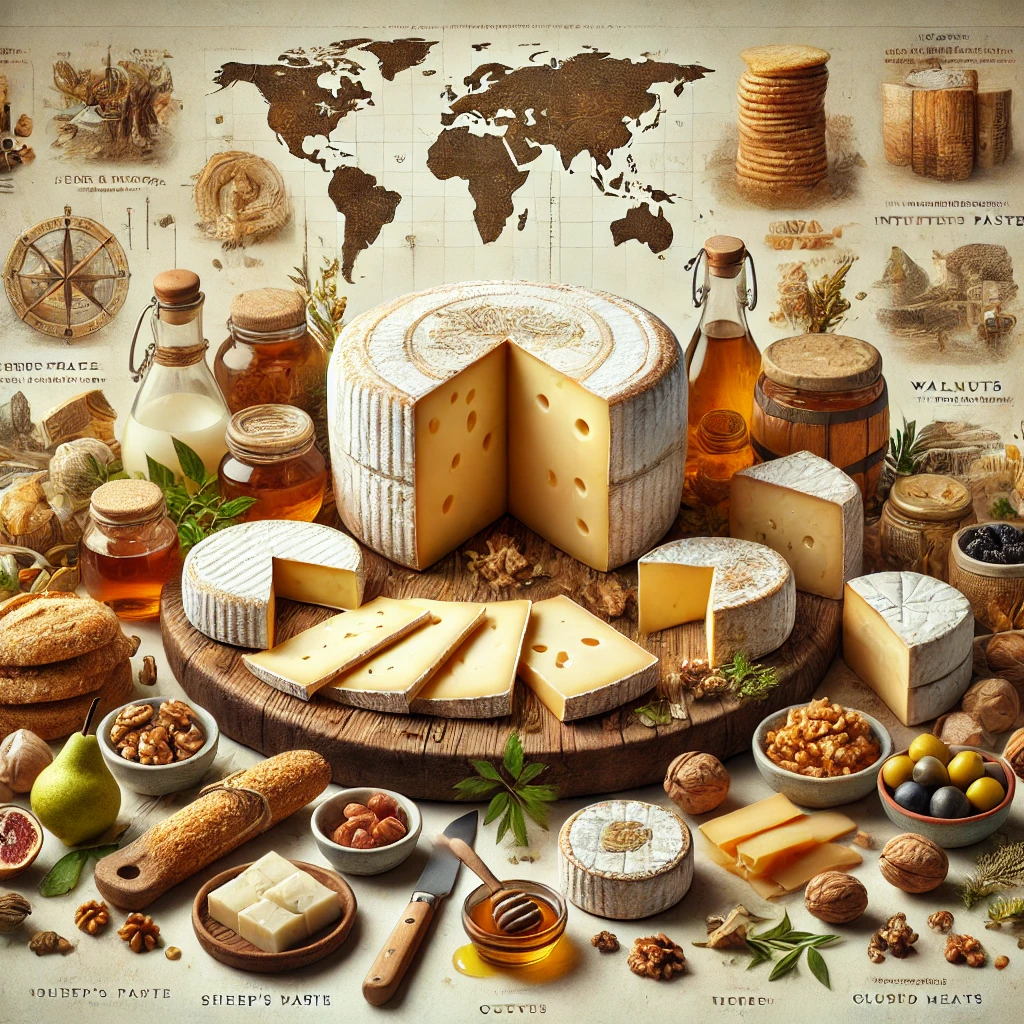
Roncal cheese (Queso Roncal) is one of Spain’s most historic and respected cheeses, prized for its bold sheep’s milk flavor, firm texture, and deep mountain heritage. Produced in the Roncal Valley of Navarre, near the Pyrenees, this cheese is a benchmark of traditional Spanish shepherd cheesemaking.
Unlike milder or mass-produced cheeses, Roncal delivers character, complexity, and authenticity. It was the first Spanish cheese to receive a Protected Designation of Origin (PDO), a testament to its cultural and gastronomic importance. Today, Roncal is enjoyed not only in Spain but also by cheese lovers around the world who seek robust, artisanal flavors.
This international guide explores Roncal cheese in depth—its origins, varieties, taste profile, pairings, and best ways to enjoy it.
Origins of Roncal Cheese
Roncal cheese originates from the Roncal Valley, a remote mountainous area in northeastern Navarre, Spain. This region is known for:
-
High-altitude pastures
-
Cool mountain climate
-
Strong shepherd traditions
-
Indigenous sheep breeds
For centuries, shepherds in the Pyrenees relied on sheep’s milk cheeses like Roncal as a durable, nutritious food that could withstand long winters and travel. Cheesemaking knowledge was passed down orally, preserving methods that are still respected today.
Protected Designation of Origin (PDO)
Roncal holds a special place in Spanish food history.
Why PDO Status Matters
Roncal was Spain’s first PDO cheese, officially recognized in 1981. This protection guarantees:
-
Milk from specific local sheep breeds
-
Production only in defined Navarrese areas
-
Traditional methods and aging standards
-
Authentic taste and quality
PDO status ensures that true Roncal cheese remains closely tied to its land and heritage.
Milk Source and Traditional Ingredients
Roncal cheese is made exclusively from raw sheep’s milk, giving it richness and depth unmatched by cow’s milk cheeses.
Approved Sheep Breeds
-
Latxa
-
Rasa Aragonesa
Core Ingredients
-
Raw sheep’s milk
-
Natural rennet
-
Salt
No additives or artificial cultures are allowed, ensuring a pure expression of milk and environment.
How Roncal Cheese Is Made
Roncal cheese follows a traditional hard sheep’s milk cheese process, refined over generations.
Traditional Production Process
-
Milk Coagulation
Raw milk is warmed and curdled with rennet. -
Curd Cutting
Curds are cut finely to release whey. -
Pressing
Curds are pressed into molds to remove moisture. -
Salting
Cheese wheels are salted to enhance flavor and preservation. -
Aging
Roncal is aged for a minimum of four months, often longer.
This slow maturation develops Roncal’s firm texture and intense flavor.
Texture and Appearance
| Feature | Description |
|---|---|
| Texture | Firm to hard |
| Interior | Compact, small eyes |
| Color | Pale yellow |
| Rind | Hard, natural |
| Shape | Cylindrical wheels |
With age, the cheese becomes drier and more crumbly.
Taste Profile of Roncal Cheese
Roncal is known for its powerful yet balanced flavor, making it a favorite among sheep’s milk cheese enthusiasts.
Flavor Characteristics
-
Bold and savory
-
Nutty and slightly spicy
-
Herbaceous notes from mountain pastures
-
Long, lingering finish
Younger Roncal is milder and buttery, while aged versions develop sharper, more complex notes.
Roncal Cheese Varieties
While Roncal follows strict PDO rules, variations occur naturally through aging and producer style.
Young Roncal
-
Aged 4–6 months
-
Firm but sliceable
-
Balanced, approachable flavor
Aged Roncal
-
Aged 8–12 months or more
-
Harder and crumbly
-
Intense, spicy, and nutty
Artisan Roncal
-
Small-batch production
-
More pronounced terroir
-
Slight differences in texture and aroma
All versions reflect the same regional identity.
Roncal vs Other Spanish Sheep’s Milk Cheeses
| Cheese | Region | Texture | Flavor |
|---|---|---|---|
| Roncal | Navarre | Hard | Savory, spicy |
| Manchego | La Mancha | Firm | Nutty, buttery |
| Idiazábal | Basque | Firm | Smoky, tangy |
| Zamorano | Castilla y León | Hard | Rich, earthy |
Roncal stands out for its mountain intensity and rustic edge.
Traditional Uses in Spanish Cuisine
In Navarre, Roncal is treated with great respect.
Traditional Serving Styles
-
Sliced with rustic bread
-
Paired with quince paste
-
Served with walnuts
-
Enjoyed as a table cheese
It is often eaten on its own to appreciate its full flavor.
Roncal in Modern and International Cuisine
Beyond Spain, Roncal is gaining recognition in gourmet kitchens.
Contemporary Uses
-
Cheese boards
-
Grated over roasted vegetables
-
Added to savory pastries
-
Paired with artisanal charcuterie
Its firmness makes it suitable for shaving and grating.
Best Food Pairings for Roncal Cheese
Savory Pairings
-
Rustic sourdough or country bread
-
Jamón serrano
-
Roasted peppers
-
Olives
Sweet Pairings
-
Quince paste (membrillo)
-
Honey
-
Dried figs
Sweet elements balance Roncal’s intensity beautifully.
Wine and Beverage Pairings
Roncal pairs best with structured drinks.
Wine Pairings
-
Tempranillo
-
Garnacha
-
Rioja Reserva
Other Beverages
-
Dry cider
-
Sherry (dry styles)
-
Sparkling water
Avoid overly light wines that get lost next to its bold flavor.
Nutritional Value of Roncal Cheese
Roncal is a nutrient-dense sheep’s milk cheese.
Nutritional highlights include:
-
High-quality protein
-
Calcium and phosphorus
-
Healthy fats
-
Naturally gluten-free
Due to its richness, it is best enjoyed in moderate portions.
Buying Authentic Roncal Cheese
What to Look For
-
PDO seal on the label
-
Origin listed as Navarre
-
Firm texture without cracks
-
Clean, sheepy aroma
Avoid cheeses labeled only as “Roncal-style” if authenticity matters.
Storage and Serving Tips
Storage
-
Wrap in cheese paper or wax paper
-
Refrigerate at proper temperature
-
Avoid airtight plastic
Serving
-
Bring to room temperature
-
Cut into thin wedges
-
Serve simply to highlight flavor
Proper handling enhances aroma and complexity.
Cultural Importance of Roncal Cheese
Roncal cheese is more than a food—it is a symbol of:
-
Navarrese identity
-
Mountain shepherd heritage
-
Spanish artisanal excellence
It remains central to local festivals and rural economies.
Why Roncal Deserves Global Recognition
Roncal cheese stands out because it offers:
-
Authentic PDO protection
-
Bold sheep’s milk character
-
Strong connection to place
-
Timeless traditional methods
For cheese lovers seeking depth and authenticity, Roncal is a rewarding discovery.
Conclusion
Roncal cheese represents the soul of Spain’s mountain cheesemaking tradition. Firm, flavorful, and deeply rooted in the Pyrenees, it offers a rich sensory experience shaped by land, sheep, and centuries of craftsmanship.
Whether enjoyed with bread and wine, paired with fruit, or featured on an international cheese board, Roncal delivers intensity without excess and tradition without compromise. For anyone exploring the world of sheep’s milk cheeses, Roncal is not just an option—it is a reference point.
Frequently Asked Questions (FAQ)
What milk is used to make Roncal cheese?
Roncal is made exclusively from raw sheep’s milk.
Is Roncal cheese aged?
Yes, it is aged for a minimum of four months, often longer.
How does Roncal cheese taste?
It tastes savory, nutty, slightly spicy, and complex.
Is Roncal cheese similar to Manchego?
Both are sheep’s milk cheeses, but Roncal is generally bolder and more rustic.
How should Roncal cheese be served?
Serve at room temperature, sliced thinly, with bread or fruit.