
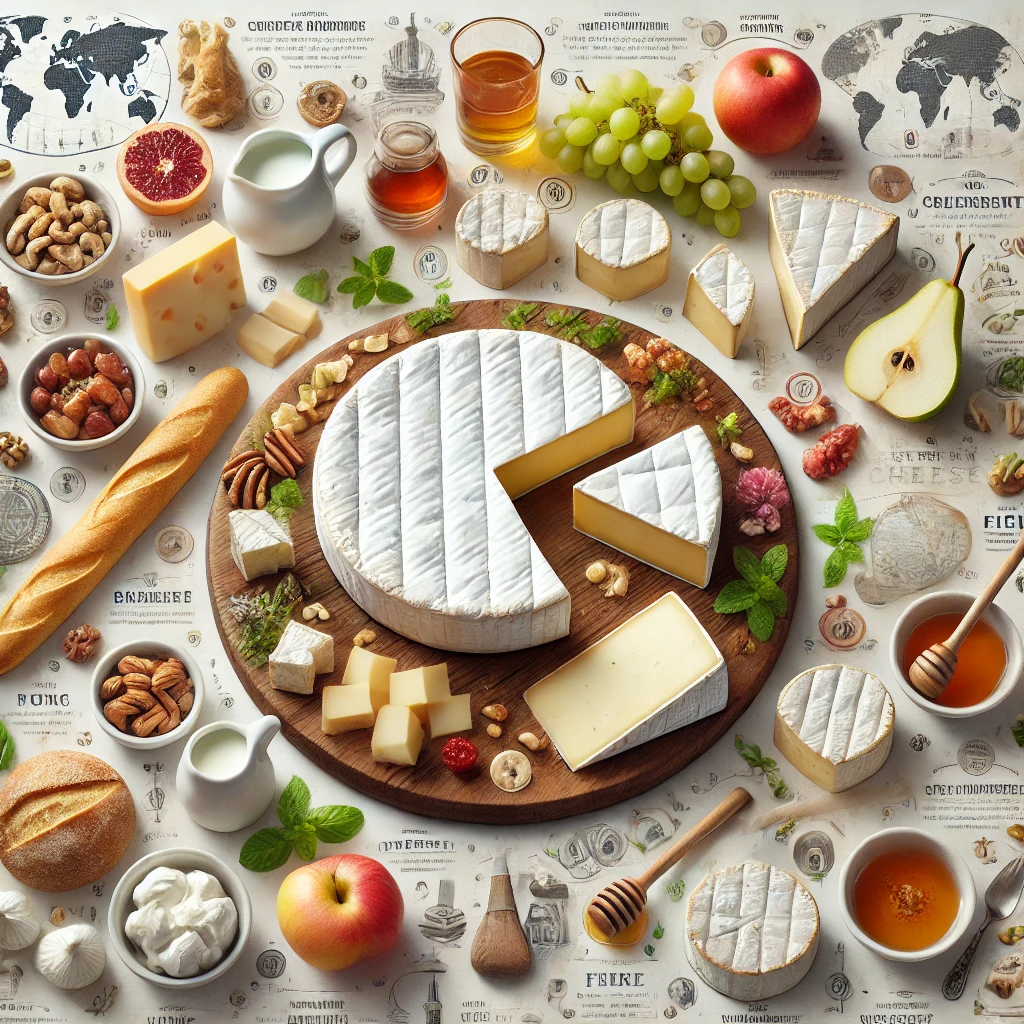
Creamy, aromatic, and instantly recognizable, Camembert cheese is one of the most iconic cheeses in the world. Born in rural France and embraced globally, Camembert has become a symbol of soft-ripened cheesemaking and culinary elegance. From traditional farmhouse wheels to international interpretations found in supermarkets worldwide, Camembert tells a story of place, craft, and global adaptation.
This comprehensive guide explores Camembert’s origins, production, taste profile, varieties, international spread, pairings, culinary uses, and cultural significance, written in a clear, human tone and optimized for first-page SEO performance.
What Is Camembert Cheese?
Camembert is a soft-ripened cow’s milk cheese with a white bloomy rind and a creamy interior that softens as it matures. It belongs to the same cheese family as Brie but is typically smaller, denser, and more assertive in aroma.
Key Characteristics
-
Soft, bloomy rind (Penicillium candidum)
-
Creamy to runny interior when ripe
-
Earthy, mushroom-like aroma
-
Rich yet balanced flavor
-
Best enjoyed at room temperature
Camembert is loved for the contrast between its rustic appearance and refined taste.
Origins of Camembert in France
Camembert originated in Normandy, a region famous for lush pastures and rich dairy traditions. According to legend, it was first made in the late 18th century by a farmer named Marie Harel, who refined local cheesemaking techniques into what we now recognize as Camembert.
From humble beginnings, Camembert rose to national prominence and became a culinary emblem of France. Its popularity surged in the 19th and 20th centuries, aided by improved transportation and the adoption of wooden boxes that allowed the cheese to travel safely.
How Camembert Cheese Is Made
Camembert production follows a carefully balanced soft-cheese process.
Milk and Curd Formation
Fresh cow’s milk is gently heated and coagulated using rennet. The curd is cut lightly and ladled into molds, allowing whey to drain slowly.
Salting and Rind Development
Once unmolded, the cheese is lightly salted and sprayed with white mold cultures. These molds form the characteristic rind and drive the ripening process.
Ripening
Camembert ripens from the outside inward over several weeks. During this time:
-
The rind becomes velvety white
-
The interior softens
-
Flavors deepen and aromas develop
Timing is crucial—too young and the center is firm; too old and it becomes overly runny and pungent.
Taste Profile: Earthy, Creamy, and Complex
Camembert offers a layered flavor experience that evolves with age.
Flavor Notes
-
Fresh cream and butter
-
Mushrooms and damp earth
-
Light nuttiness
-
Subtle tang
Young Camembert is mild and milky, while fully ripe Camembert becomes richer, earthier, and more aromatic.
Texture and Appearance
-
Young: Chalky center with creamy outer ring
-
Perfectly ripe: Fully soft and spreadable
-
Overripe: Very runny with stronger aroma
The rind is thin, edible, and contributes significantly to the cheese’s flavor.
Camembert vs Brie: What’s the Difference?
Although often compared, Camembert and Brie are distinct.
| Feature | Camembert | Brie |
|---|---|---|
| Size | Small round | Large wheel |
| Texture | Dense, soft | Creamy, varied |
| Flavor | Earthy, robust | Mild to buttery |
| Aroma | Stronger | Gentler |
Camembert generally has a bolder personality.
International Varieties of Camembert
As Camembert spread globally, different styles emerged.
Camembert de Normandie
-
Traditional French version
-
Often made with raw milk
-
Complex, deep flavor
Pasteurized Camembert
-
Widely available internationally
-
Milder and more consistent
-
Longer shelf life
International Camembert-Style Cheeses
Produced in Europe, the Americas, and beyond, these versions adapt Camembert techniques to local milk and tastes. While often gentler, they preserve the essential bloomy-rind character.
Camembert in Global Cuisine
Camembert’s versatility has helped it gain worldwide appeal.
Traditional French Use
-
Served after meals
-
Paired with bread and fruit
-
Enjoyed simply, without heavy seasoning
International Uses
-
Cheese boards
-
Baked Camembert appetizers
-
Sandwiches and burgers
-
Savory pastries and tarts
Its melting qualities make it especially popular in warm dishes.
Best Pairings for Camembert Cheese
Bread and Crackers
-
Baguette
-
Sourdough
-
Plain water crackers
Fruits
-
Apples
-
Pears
-
Grapes
Nuts
-
Walnuts
-
Hazelnuts
Wine Pairings
-
Chardonnay
-
Champagne
-
Beaujolais
-
Dry cider (a Normandy classic)
Avoid heavily tannic wines, which can clash with Camembert’s creaminess.
Cooking with Camembert
Camembert performs beautifully when heated.
Popular Culinary Uses
-
Baked Camembert with herbs or honey
-
Grilled sandwiches
-
Melted over vegetables
-
Savory pies and pastries
Heating intensifies aroma while enhancing creaminess.
Nutritional Value of Camembert
Camembert is indulgent yet nutritious when eaten in moderation.
Nutritional Highlights
-
High-quality protein
-
Calcium and phosphorus
-
Vitamins A and B12
-
Energy-dense fats
Small portions are usually satisfying due to its richness.
Storage and Serving Tips
Storage
-
Keep refrigerated
-
Wrap in cheese paper or parchment
-
Avoid airtight plastic
Serving
-
Bring to room temperature 30–45 minutes before serving
-
Cut into wedges, not cubes
-
Serve rind-on for full flavor
Proper handling ensures the best texture and aroma.
Camembert’s Cultural Impact
Camembert is more than a cheese—it is a cultural symbol. In France, it represents rural tradition and national pride. Internationally, it introduced many people to bloomy-rind cheeses and helped shape modern cheese culture.
Its presence in films, literature, and art underscores its iconic status.
Why Camembert Remains Globally Loved
Camembert endures because it balances approachability and complexity. It appeals to newcomers with its creaminess while rewarding experienced cheese lovers with depth and character. Its adaptability across cuisines ensures its place on tables worldwide.
Frequently Asked Questions (FAQ)
What is Camembert cheese?
Camembert is a soft-ripened cow’s milk cheese with a white bloomy rind and creamy interior.
Where does Camembert originate?
Camembert originates in Normandy, France, and is now produced worldwide.
What does Camembert taste like?
It tastes creamy and buttery with earthy, mushroom-like notes that intensify as it ripens.
Is Camembert cheese good for cooking?
Yes. Camembert melts beautifully and works well in baked dishes and sandwiches.
How should Camembert be served?
Camembert should be served at room temperature with bread, fruit, or light wines for the best flavor.