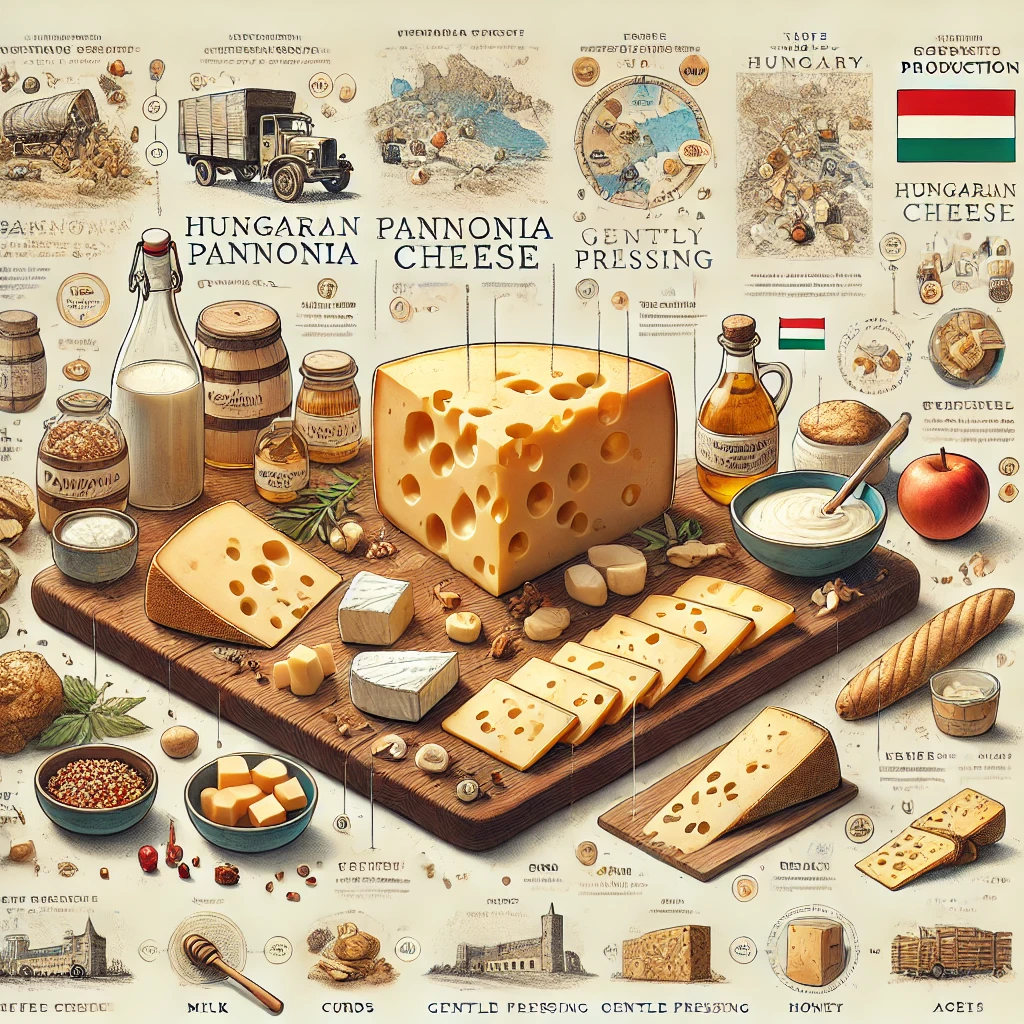
Hungary’s culinary identity is often associated with paprika, hearty stews, and rustic breads, yet its cheese traditions deserve equal attention. Among the country’s most recognizable modern cheeses is Pannonia cheese, a semi-hard variety that reflects Hungary’s agricultural strength, Central European influences, and preference for balanced, approachable flavors. Mild yet versatile, Pannonia cheese has become a staple in Hungarian households and an increasingly appreciated option beyond its borders.
In this comprehensive, SEO-friendly guide, we explore Pannonia cheese varieties, taste profile, production methods, cultural role, pairings, and modern uses, written in a clear, human tone and optimized for strong first-page ranking.
What Is Pannonia Cheese?
Pannonia cheese is a semi-hard cow’s milk cheese developed in Hungary during the 20th century. It is inspired by Alpine and Central European cheese traditions but adapted to local milk quality, climate, and consumer preferences.
Key characteristics include:
-
Smooth, pale yellow interior
-
Elastic yet sliceable texture
-
Mild, slightly nutty flavor
-
Short to medium aging period
Pannonia cheese is designed as an everyday cheese, suitable for sandwiches, cooking, and simple cheese boards.
The Origins of Pannonia Cheese in Hungary
The name “Pannonia” comes from the historical region of Pannonia, which once covered large parts of Central Europe, including modern-day Hungary. The cheese was developed as part of Hungary’s effort to create reliable, high-quality domestic cheeses that could compete with imported European varieties.
During the 20th century, Hungarian dairies combined traditional cheesemaking knowledge with modern food science, resulting in cheeses that were:
-
Consistent in quality
-
Easy to store and transport
-
Adaptable to Hungarian cuisine
Pannonia cheese quickly gained popularity due to its mildness and versatility.
How Pannonia Cheese Is Made
Pannonia cheese production follows classic semi-hard cheese techniques, refined for efficiency and consistency.
Milk Selection
High-quality cow’s milk from Hungarian farms is used. The milk’s balanced fat and protein content contributes to the cheese’s smooth texture.
Curdling and Cutting
The milk is gently heated and coagulated with rennet. Once the curd forms, it is cut into small pieces to release whey.
Pressing and Salting
Curds are pressed into molds and salted, either by brining or dry salting. This step enhances flavor and ensures preservation.
Aging
Pannonia cheese is typically aged for several weeks to a few months. During this time:
-
Texture becomes elastic and uniform
-
Flavor develops mild buttery and nutty notes
-
Small, even holes may appear
The relatively short aging keeps the cheese approachable and mild.
Taste Profile: Mild, Creamy, and Balanced
Pannonia cheese is appreciated for its clean and gentle flavor, making it suitable for a wide range of palates.
Flavor Notes
-
Fresh dairy sweetness
-
Light butteriness
-
Subtle nutty undertones
-
Very low acidity
It avoids sharpness or pungency, which is why it is popular with families and everyday meals.
Texture and Appearance
-
Semi-hard and smooth
-
Elastic without being rubbery
-
Pale yellow interior
-
Thin, natural or lightly treated rind
Pannonia cheese slices easily and melts evenly, making it ideal for both cold and hot dishes.
Pannonia Cheese Varieties
Although often sold under a single name, Pannonia cheese appears in several variations.
Classic Pannonia
-
Mild and creamy
-
Short aging
-
Most widely available
Light Pannonia
-
Reduced fat content
-
Slightly firmer texture
-
Popular among health-conscious consumers
Aged Pannonia
-
Longer maturation
-
More pronounced nutty flavor
-
Firmer and more aromatic
Flavored Pannonia
Some modern versions include:
-
Herbs
-
Caraway seeds
-
Mild spices
These variations add character while preserving the cheese’s approachable nature.
Pannonia Cheese in Hungarian Cuisine
In Hungary, cheese is typically used as a supporting ingredient, and Pannonia fits perfectly into this role.
Traditional Uses
-
Sandwiches and open-faced breads
-
Cold platters with vegetables
-
Breakfast and lunch meals
-
Simple baked dishes
It pairs naturally with Hungarian breads, peppers, and cured meats.
Best Pairings for Pannonia Cheese
Bread and Grains
-
Rye bread
-
White rolls
-
Sourdough
Vegetables
-
Fresh peppers
-
Tomatoes
-
Cucumbers
Meats
-
Mild sausages
-
Ham
-
Roast chicken
Drinks
-
Light white wines
-
Lager-style beers
-
Herbal teas
Neutral pairings allow the cheese’s subtle flavor to shine.
Cooking with Pannonia Cheese
Pannonia’s melting qualities make it particularly useful in the kitchen.
Popular Culinary Uses
-
Grilled cheese sandwiches
-
Casseroles and baked pasta
-
Omelets and scrambled eggs
-
Cheese sauces
It can also be blended with sharper cheeses to add creaminess and balance.
Nutritional Value
Pannonia cheese provides balanced nutrition when enjoyed in moderation.
Nutritional Highlights
-
High-quality protein
-
Calcium and phosphorus
-
Vitamin B12
-
Moderate fat content
Its mildness encourages reasonable portion sizes, supporting everyday diets.
Pannonia vs Other Central European Cheeses
| Cheese | Origin | Flavor | Texture |
|---|---|---|---|
| Pannonia | Hungary | Mild, buttery | Semi-hard |
| Edam | Netherlands | Mild, slightly salty | Semi-hard |
| Emmental | Switzerland | Nutty, sweet | Semi-hard |
Pannonia is milder and more neutral than many Alpine-style cheeses.
Storage and Serving Tips
Storage
-
Keep refrigerated
-
Wrap in cheese paper or foil
-
Avoid excess moisture
Serving
-
Serve at room temperature
-
Slice thin for sandwiches
-
Grate for cooking
Proper handling preserves freshness and flavor.
Modern Production and Availability
Today, Pannonia cheese is produced primarily by Hungarian dairies using modern hygienic standards. While it may not have the international fame of some European cheeses, it remains a trusted everyday choice within Hungary and neighboring regions.
Growing interest in Central European foods is slowly bringing Pannonia cheese to wider attention.
Why Pannonia Cheese Matters
Pannonia cheese represents the quiet strength of Hungarian cheesemaking. It does not aim to shock the palate but to provide consistency, nourishment, and versatility. In a world of extreme flavors, its appeal lies in balance and reliability.
For those exploring Central European cuisine, Pannonia offers an excellent introduction to Hungary’s modern dairy tradition.
Frequently Asked Questions (FAQ)
What is Pannonia cheese?
Pannonia is a Hungarian semi-hard cheese made from cow’s milk, known for its mild and creamy flavor.
What does Pannonia cheese taste like?
It tastes gently buttery and slightly nutty, with very low acidity and no sharpness.
How is Pannonia cheese used in cooking?
It is commonly used in sandwiches, baked dishes, omelets, and casseroles due to its smooth melting.
Is Pannonia cheese aged?
Yes, but usually for a short to medium period, which keeps the flavor mild and approachable.
How should Pannonia cheese be stored?
Store it refrigerated, wrapped properly, and bring it to room temperature before serving.