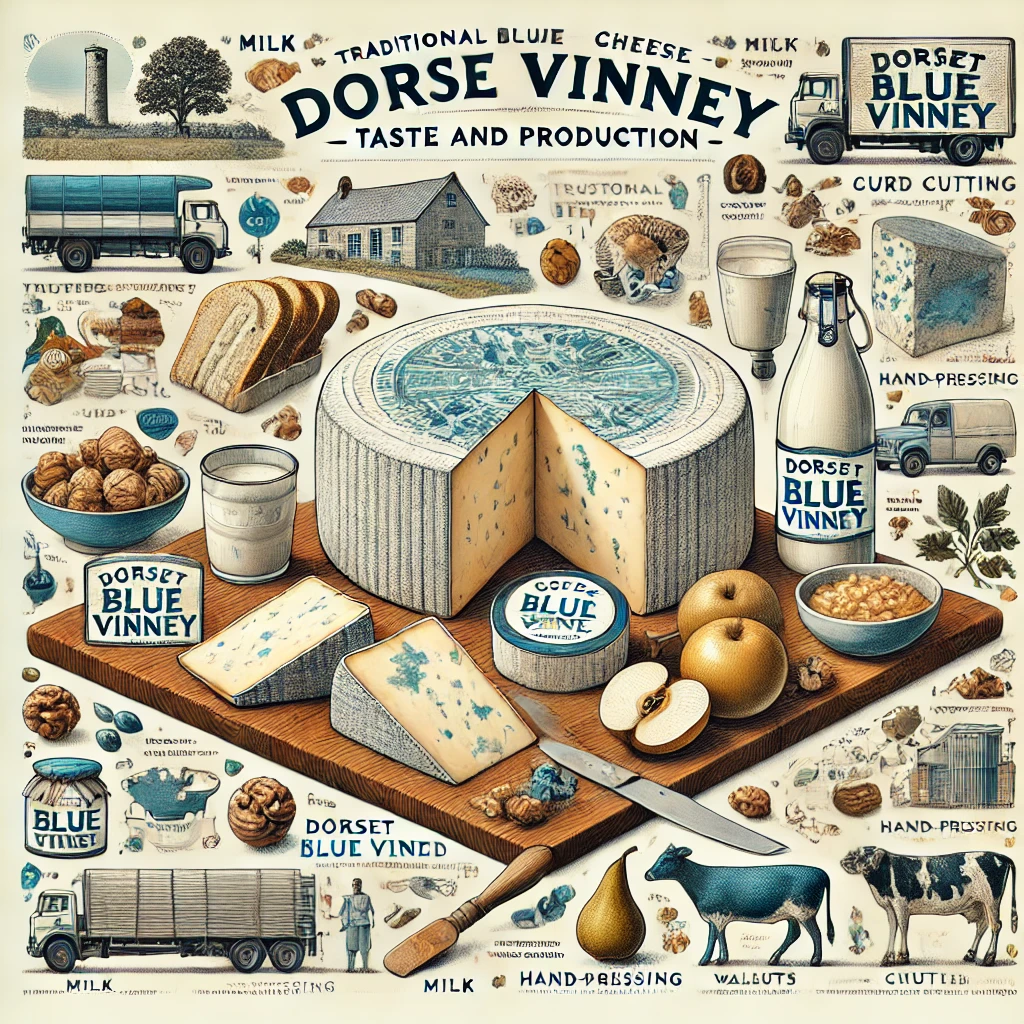
Among England’s traditional cheeses, Dorset Blue Vinney stands apart for its rugged character, deep blue flavor, and strong connection to local farming life. Once nearly lost to history, this distinctive blue cheese has been revived by dedicated producers and is now celebrated as one of Britain’s most authentic farmhouse cheeses. Bold, crumbly, and unapologetically rustic, Dorset Blue Vinney offers a true taste of England’s rural heritage.
In this comprehensive, SEO-friendly guide, we explore Dorset Blue Vinney’s origins, traditional production methods, taste profile, texture, pairings, cultural importance, and modern revival, written in a clear, human style designed for strong first-page ranking and excellent readability.
What Is Dorset Blue Vinney?
Dorset Blue Vinney is a traditional English blue cheese made from cow’s milk. It is known for its firm, crumbly texture and assertive blue flavor, which becomes more intense with age. Unlike creamy blue cheeses, Blue Vinney is drier and more robust, reflecting its origins as a practical farmhouse cheese.
Key characteristics include:
-
Firm to crumbly texture
-
Blue-green veining
-
Strong, earthy aroma
-
Sharp, savory, slightly salty flavor
-
Natural rind
Historically, it was made to use surplus skimmed milk, making it an economical and long-lasting cheese for farming households.
Origins of Dorset Blue Vinney
Dorset Blue Vinney originates in the rural county of Dorset in southern United Kingdom, an area known for rolling hills, dairy farming, and rich pastureland. The name “Vinney” is believed to derive from an old term for mold or fermentation, reflecting the cheese’s blue veins.
In the 18th and 19th centuries, Dorset farmers produced Blue Vinney as a staple food. However, industrialization and changing tastes led to its decline, and by the mid-20th century, the cheese was close to extinction. Thanks to renewed interest in regional foods, Dorset Blue Vinney has since been revived by artisan cheesemakers committed to preserving traditional methods.
Why Dorset Blue Vinney Was Traditionally Made
Blue Vinney was never meant to be delicate or refined—it was made for durability and nourishment.
Historically, it was produced using:
-
Skimmed milk left over after cream removal
-
Minimal ingredients
-
Long aging to ensure preservation
This made it ideal for:
-
Farm laborers
-
Long storage without refrigeration
-
Daily consumption in rural households
Its bold flavor was a byproduct of necessity rather than luxury.
How Dorset Blue Vinney Is Made
Modern producers follow traditional farmhouse techniques, balancing authenticity with food safety.
Milk Selection
Cow’s milk is used, often partially skimmed to reflect historical practice. The milk quality plays a key role in the cheese’s final flavor.
Curdling
The milk is warmed and coagulated using rennet. Once set, the curd is cut to release whey.
Draining and Milling
Curds are allowed to drain thoroughly, resulting in a drier texture. They may be milled or broken up before molding.
Molding and Salting
The curds are pressed lightly into cylindrical molds and dry-salted. Salting controls moisture and flavor development.
Piercing and Aging
After initial drying, the cheese is pierced to allow air inside, encouraging blue mold growth. It is then aged for several months.
During aging:
-
Moisture continues to reduce
-
Blue veins intensify
-
Flavor becomes sharper and more complex
Taste Profile: Bold, Earthy, and Savory
Dorset Blue Vinney is not a mild blue cheese—it is powerful and assertive.
Flavor Notes
-
Strong blue sharpness
-
Earthy, mushroom-like depth
-
Salty, savory finish
-
Slight bitterness in well-aged wheels
The intensity makes it especially appealing to experienced blue cheese lovers.
Texture and Appearance
-
Firm and crumbly rather than creamy
-
Dense interior with blue veining
-
Natural, rustic rind
-
Pale off-white paste
When cut, the cheese breaks into chunks rather than smearing, setting it apart from softer blues.
Dorset Blue Vinney vs Other British Blue Cheeses
| Cheese | Texture | Flavor |
|---|---|---|
| Dorset Blue Vinney | Firm, crumbly | Very strong, earthy |
| Stilton | Creamy, crumbly | Rich, balanced |
| Shropshire Blue | Smooth | Mild, slightly sweet |
Blue Vinney is the most rustic and intense of the group.
Dorset Blue Vinney in British Food Culture
Traditionally, Dorset Blue Vinney was eaten simply, often with bread or potatoes.
Traditional Uses
-
Crumbled on bread
-
Served with boiled potatoes
-
Added to savory pies
-
Eaten as a filling snack
Its strong flavor meant small portions were enough to satisfy.
Best Pairings for Dorset Blue Vinney
Bread and Starches
-
Crusty farmhouse bread
-
Oatcakes
-
Boiled or roasted potatoes
Fruits
-
Apples
-
Pears
-
Grapes
Natural sweetness balances the cheese’s intensity.
Drinks
-
Dry cider
-
Stout or porter
-
Full-bodied red wines
Robust drinks stand up well to its bold flavor.
Cooking with Dorset Blue Vinney
While often enjoyed on its own, Blue Vinney can add depth to cooked dishes.
Culinary Uses
-
Crumbled into sauces
-
Mixed into mashed potatoes
-
Added to savory bakes
-
Used sparingly in fillings
Heat softens its sharpness while preserving character.
Nutritional Value
Dorset Blue Vinney is nutrient-dense.
Nutritional Highlights
-
High-quality protein
-
Calcium and phosphorus
-
Energy-rich fats
Its strong flavor encourages moderate portions.
The Modern Revival of Dorset Blue Vinney
Thanks to renewed interest in traditional British foods, Dorset Blue Vinney has experienced a revival. Artisan producers now make it in limited quantities, focusing on:
-
Traditional recipes
-
Local milk
-
Slow aging
Food festivals, farmers’ markets, and specialty cheesemongers have played a key role in reintroducing it to modern audiences.
Cultural Significance
Dorset Blue Vinney represents more than a cheese—it embodies:
-
Rural resilience
-
Farm-based knowledge
-
Regional identity
Its survival highlights the importance of protecting traditional foods that might otherwise disappear.
How to Enjoy Dorset Blue Vinney Today
Traditional
-
With bread and cider
-
As part of a rustic cheese board
Modern
-
Paired with fruit chutneys
-
Used as a bold accent in recipes
Its intensity rewards simple, thoughtful pairings.
Why Dorset Blue Vinney Matters
In a world of mass-produced cheese, Dorset Blue Vinney stands as a reminder of farmhouse ingenuity and authenticity. It shows how necessity shaped flavor and how tradition, once nearly lost, can be reclaimed and celebrated.
For those exploring Britain’s cheese heritage, Dorset Blue Vinney offers a powerful and unforgettable experience.
Frequently Asked Questions (FAQ)
What is Dorset Blue Vinney?
Dorset Blue Vinney is a traditional English blue cheese made from cow’s milk, known for its firm texture and strong flavor.
What does Dorset Blue Vinney taste like?
It tastes bold, earthy, and sharply savory, with pronounced blue mold character.
How is Dorset Blue Vinney different from Stilton?
It is firmer, drier, and more intensely flavored than Stilton.
How is Dorset Blue Vinney traditionally eaten?
It is eaten with bread, potatoes, or cider, often in small portions.
Is Dorset Blue Vinney still made today?
Yes. It is now produced by artisan cheesemakers in Dorset, preserving traditional methods.