Across the Middle East, cheese is more than a side dish—it is part of daily life, shared meals, and long-standing traditions. Among the most popular cheeses enjoyed in Jordan, Halloumi cheese holds a special place. Known for its firm texture and ability to withstand heat, Halloumi is valued in Jordanian kitchens for both its taste and versatility.
While Halloumi is traditionally associated with Cyprus, it has been fully embraced across the Levant, including Jordan, where it is widely produced, sold, cooked, and enjoyed. This guide focuses on Halloumi cheese as it is used and appreciated in Jordan—its flavor profile, production style, culinary uses, and ideal pairings.
What Is Halloumi Cheese?
Halloumi is a semi-hard, brined cheese traditionally made from sheep’s milk, goat’s milk, or a mixture that may include cow’s milk. Its most distinctive feature is its high melting point, which allows it to be grilled or fried without losing its shape.
In Jordan, Halloumi is commonly produced locally or imported from neighboring regions, then adapted to local tastes. Jordanian Halloumi is often slightly less salty than some commercial versions, making it ideal for everyday meals.
Halloumi’s Journey into Jordanian Food Culture
Halloumi became popular in Jordan through shared Levantine food traditions and regional trade. Over time, it integrated seamlessly into Jordanian cuisine, appearing in breakfasts, street food, and home cooking.
Jordan’s climate and dietary habits favor cheeses that can be stored in brine and cooked easily, making Halloumi a natural fit. Today, it is enjoyed across the country—from urban homes in Amman to rural villages—by people of all ages.
How Halloumi Is Traditionally Made
Milk Selection
In Jordan, Halloumi is typically made from cow’s milk or mixed milk due to availability, though sheep’s and goat’s milk versions are still valued for richer flavor.
Curd Formation
Rennet is added to warm milk, causing it to coagulate. The curds are cut, heated, and pressed to remove whey and create the cheese’s signature firmness.
Folding and Brining
A traditional step involves folding the cheese and sometimes adding mint leaves. The cheese is then stored in salt brine, which preserves it and enhances flavor.
Fresh or Lightly Stored
Halloumi can be eaten fresh or stored in brine for longer periods, depending on preference.
Taste and Texture Profile
Halloumi cheese from Jordan is appreciated for its balanced and savory character:
-
Flavor: Mild, salty, slightly milky
-
Aroma: Fresh dairy with gentle brine notes
-
Texture: Firm, layered, and slightly springy
-
When Cooked: Crispy outside, soft and chewy inside
The saltiness can be adjusted by soaking the cheese in water before use, a common practice in Jordanian kitchens.
Halloumi in Jordanian Cuisine
Breakfast Favorite
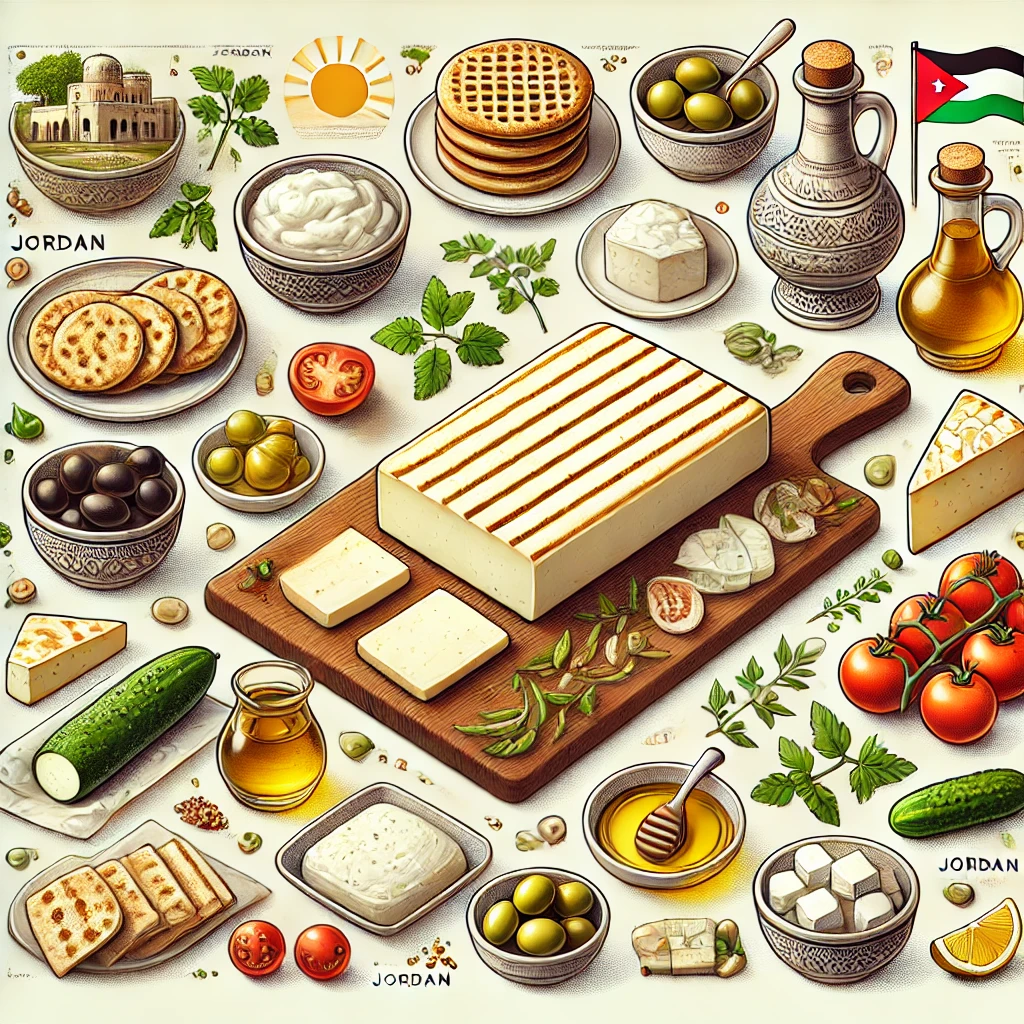
Halloumi is often sliced and lightly fried, then served with flatbread, olives, tomatoes, and tea. This simple breakfast is filling and flavorful.
Grilled and Fried Dishes
One of the most popular ways to enjoy Halloumi in Jordan is grilled or pan-fried. Its golden crust and chewy center make it a satisfying meat alternative.
Salads and Mezze
Grilled Halloumi cubes are added to salads with cucumbers, tomatoes, and herbs. It is also served as part of mezze platters alongside hummus and bread.
Modern and Street Food Uses
In urban areas, Halloumi appears in sandwiches, wraps, and fusion dishes, reflecting modern Jordanian food trends.
Taste Comparisons with Similar Cheeses
| Feature | Halloumi | Akkawi | Feta |
|---|---|---|---|
| Texture | Firm & springy | Soft | Crumbly |
| Melting | Holds shape | Melts | Softens |
| Saltiness | Moderate | Mild | High |
| Cooking Use | Grilling & frying | Fresh eating | Salads |
Halloumi stands out for its cooking versatility.
Perfect Pairings for Halloumi Cheese
Breads
-
Arabic flatbread
-
Saj or pita bread
Vegetables and Fruits
-
Tomatoes and cucumbers
-
Zucchini and bell peppers
-
Watermelon or figs
Condiments and Extras
-
Olive oil
-
Za’atar
-
Honey or date syrup
Drinks
-
Mint tea
-
Yogurt-based drinks
-
Light white wines
These pairings balance Halloumi’s saltiness and enhance its savory notes.
Nutritional Value
Halloumi cheese is nutrient-dense and satisfying:
-
High-quality protein
-
Calcium for bone health
-
Fats that provide long-lasting energy
Because it can be salty, moderate portions and soaking before use are recommended.
Cultural Importance in Jordan
Halloumi represents hospitality and sharing in Jordanian culture. Serving warm Halloumi to guests is a sign of generosity, especially during breakfast or informal gatherings.
Its popularity also reflects changing food habits, as Halloumi is increasingly used as a vegetarian protein option in Jordan.
Availability in Jordan and Beyond
Halloumi is widely available in Jordanian supermarkets, markets, and dairies. Locally produced versions coexist with imported varieties, giving consumers a range of textures and salt levels.
Internationally, Halloumi from the Middle East—including Jordanian-style Halloumi—is increasingly popular, especially among consumers seeking grill-friendly cheeses.
Why Halloumi Cheese Remains Popular in Jordan
Halloumi’s success in Jordan comes from its practicality. It stores well, cooks easily, and fits both traditional and modern meals. Its ability to adapt to sweet, savory, and grilled dishes makes it one of the most versatile cheeses in Jordanian cuisine.
Conclusion
Halloumi cheese from Jordan is a perfect example of how a regional food can be embraced and transformed by local culture. Salty, firm, and wonderfully versatile, it has earned a permanent place on Jordanian tables.
Whether grilled for breakfast, added to salads, or enjoyed with bread and tea, Halloumi continues to delight with its unique texture and balanced flavor. For anyone exploring Middle Eastern cheeses, Halloumi in the Jordanian style offers a delicious and satisfying experience.
FAQ: Halloumi Cheese from Jordan – Taste and Pairings
What does Halloumi cheese taste like?
Halloumi has a mild, salty, and milky flavor with a firm, chewy texture when cooked.
How is Halloumi usually eaten in Jordan?
It is commonly fried or grilled and served with bread, vegetables, or as part of mezze.
Does Halloumi melt when cooked?
No, Halloumi holds its shape, making it ideal for grilling and frying.
Is Jordanian Halloumi very salty?
It can be moderately salty, but soaking it in water reduces the saltiness.
Is Halloumi cheese vegetarian?
Some Halloumi uses animal rennet, so it is best to check labels for vegetarian versions.