
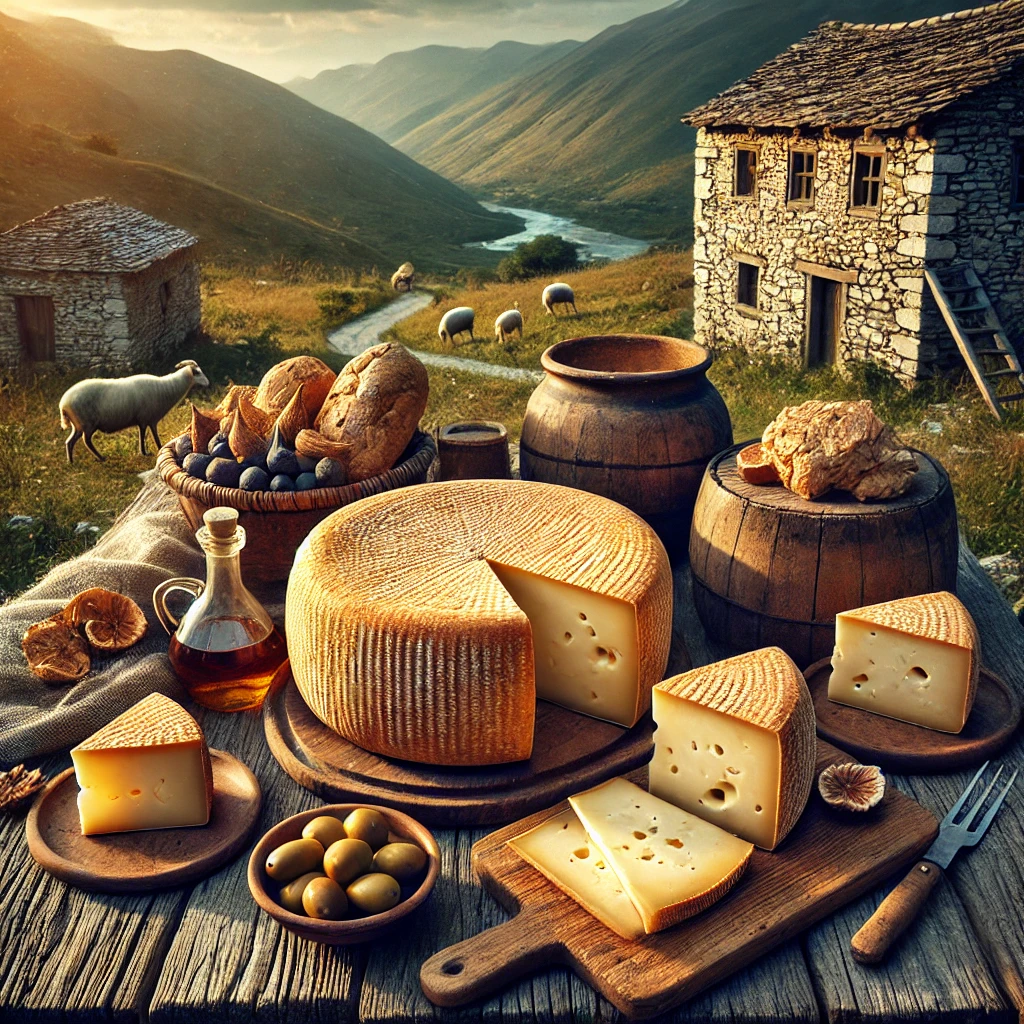
The rugged mountains, green pastures, and coastal plains of Albania have shaped a rich and deeply traditional food culture. Among Albania’s most respected dairy products is Djathë i pjekur, an aged cheese that represents patience, craftsmanship, and authentic Balkan flavor.
Unlike fresh cheeses commonly found across the region, Djathë i pjekur is valued for its time-intensive aging and complex taste. It is not merely food but a symbol of rural self-reliance and hospitality. This guide explores aged Djathë i pjekur in detail—its origins, production methods, taste, uses, and why it remains one of Albania’s most authentic cheeses.
What Is Djathë i Pjekur?
Djathë i pjekur translates directly to “aged cheese” in Albanian. It is typically made from sheep’s milk, cow’s milk, or a mixture of both, depending on region and tradition. The cheese is firm, aged for several months or longer, and develops a concentrated, savory flavor.
While fresh Djathë i bardhë (white cheese) is widely consumed daily, Djathë i pjekur holds a more special status. It is often reserved for colder months, guests, and celebratory meals.
Origins of Djathë i Pjekur in Albania
Aged cheese production in Albania dates back centuries, rooted in pastoral life. Shepherd communities in mountainous regions needed durable foods that could last through winter and long periods of isolation.
By aging cheese in cool stone cellars, caves, or naturally ventilated rooms, families could preserve milk while developing deeper flavors. Over generations, this practice evolved into Djathë i pjekur, a cheese closely associated with rural households and seasonal rhythms.
Traditional Production Methods
Milk Selection
Djathë i pjekur is traditionally made from raw or gently heated milk. Sheep’s milk is especially prized for its richness, though cow’s milk versions are also common.
Curdling and Pressing
Milk is curdled using natural rennet. The curds are cut, drained, and pressed firmly to remove moisture, creating a dense structure suitable for aging.
Salting
Salt is added either dry or through brief brining. This step enhances flavor and protects the cheese during aging.
Aging Process
The cheese is aged for several months, sometimes longer than a year. During this time, wheels are turned regularly and stored in cool, humid conditions. Natural molds may develop on the rind, contributing to flavor.
Taste and Texture Profile
Aged Djathë i pjekur is known for its bold yet balanced character:
-
Flavor: Savory, nutty, slightly sharp
-
Aroma: Earthy, milky, rustic
-
Texture: Firm, dense, slightly crumbly
-
Finish: Long-lasting, warm, and satisfying
Longer aging results in stronger saltiness and deeper complexity.
Regional Variations Across Albania
Djathë i pjekur varies depending on region:
-
Mountain regions: Stronger, drier, sheep-milk dominant
-
Lowland areas: Slightly milder, often cow’s milk
-
Mixed-milk styles: Balanced richness and acidity
These variations reflect local grazing conditions and household preferences.
How Djathë i Pjekur Is Eaten in Albania
Table Cheese
The most traditional way to enjoy Djathë i pjekur is sliced and served with bread, olives, and fresh vegetables. It is a common offering to guests.
Cooking and Grating
Grated Djathë i pjekur adds depth to pasta, baked dishes, and vegetable recipes, functioning much like Parmesan in Italian cuisine.
With Traditional Meals
The cheese is often paired with beans, roasted meats, or corn-based dishes, where its saltiness balances hearty flavors.
Pairing Suggestions
Djathë i pjekur pairs beautifully with simple, rustic foods:
-
Breads: Cornbread, flatbread, sourdough
-
Fruits: Apples, grapes, figs
-
Condiments: Olive oil, honey
-
Drinks: Red wine, rakija, herbal tea
These pairings highlight the cheese’s nutty richness.
Cultural Significance of Djathë i Pjekur
Djathë i pjekur is deeply woven into Albanian hospitality. Serving aged cheese to guests is a sign of respect and generosity. It also represents patience—families invest months of care before enjoying the final product.
Cheesemaking knowledge is traditionally passed down within families, preserving techniques that predate modern industry.
Djathë i Pjekur vs Other Balkan Aged Cheeses
| Feature | Djathë i Pjekur | Paški sir | Kashkaval |
|---|---|---|---|
| Origin | Albania | Croatia | Balkans |
| Milk | Sheep/Cow | Sheep | Cow |
| Texture | Firm & crumbly | Hard | Semi-hard |
| Flavor | Savory & nutty | Salty & intense | Mild-nutty |
Djathë i pjekur stands out for its rustic authenticity.
Nutritional Value
Aged Djathë i pjekur is nutrient-dense:
-
High-quality protein
-
Calcium for bone strength
-
Healthy fats for sustained energy
Due to its salt content, it is best enjoyed in moderation.
Availability Today
Djathë i pjekur is widely available in Albanian markets and rural households. Outside Albania, it can sometimes be found in Balkan specialty shops, though authentic aged versions are still relatively rare internationally.
Interest in traditional European cheeses is helping bring greater attention to this classic Albanian product.
Why Djathë i Pjekur Still Matters
In a world of fast food and industrial dairy, Djathë i pjekur represents tradition, patience, and respect for nature. It tells the story of Albania’s landscapes and people through taste.
For cheese lovers seeking authentic Balkan flavors, aged Djathë i pjekur offers a rewarding and deeply cultural experience.
Conclusion
Aged Djathë i pjekur is one of Albania’s most authentic cheeses. Firm, savory, and full of character, it reflects centuries of pastoral life and artisanal skill. Whether enjoyed simply with bread or grated into hearty dishes, this cheese remains a proud symbol of Albanian culinary heritage.
As global appreciation for traditional cheeses grows, Djathë i pjekur deserves recognition as a true Balkan classic with unmistakable authenticity.
FAQ: Aged Djathë i Pjekur Cheese from Albania
What is Djathë i pjekur?
Djathë i pjekur is a traditional Albanian aged cheese made from sheep’s milk, cow’s milk, or a mixture of both.
How long is Djathë i pjekur aged?
It is typically aged for several months and sometimes over a year.
What does Djathë i pjekur taste like?
It has a savory, nutty, slightly sharp flavor with a firm texture.
How is Djathë i pjekur traditionally eaten?
It is eaten sliced with bread, grated into dishes, or served to guests.
Is Djathë i pjekur available outside Albania?
It is mostly found in Albania but may appear in Balkan specialty food stores abroad.


