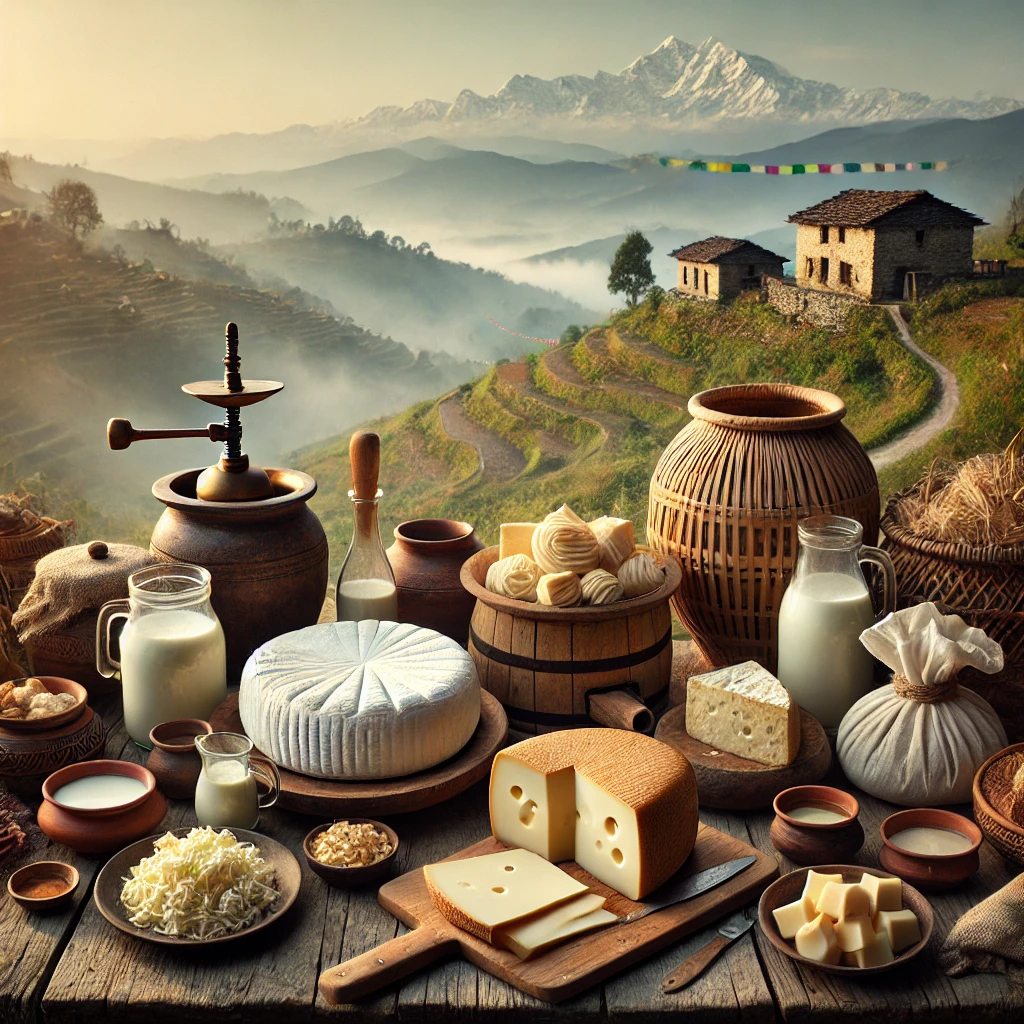
Nestled between the plains of South Asia and the towering Himalayas, Nepal is home to one of the world’s most distinctive dairy cultures. While yak and cow milk often receive attention, buffalo milk plays an equally important role in Nepalese food traditions. Rich, creamy, and highly nutritious, buffalo milk has long been transformed into yogurt, butter, and—less commonly known—buffalo cheese.
Buffalo cheese in Nepal is not a single standardized product. Instead, it exists as a collection of traditional and modern styles shaped by geography, climate, and cultural exchange. From fresh farmhouse cheeses to European-inspired Himalayan varieties, buffalo cheese reflects Nepal’s adaptability and deep respect for dairy craftsmanship. This guide explores the taste, varieties, and production of buffalo cheese in Nepal, offering a comprehensive look at this underappreciated culinary treasure.
Why Buffalo Milk Matters in Nepal
Buffaloes are especially well suited to Nepal’s lower hills and plains, where they thrive in warm, humid conditions. Compared to cow’s milk, buffalo milk contains:
-
Higher fat content
-
More protein
-
Greater natural creaminess
These qualities make it ideal for cheesemaking, producing cheeses that are richer, smoother, and more filling. For many rural households, buffalo milk is a reliable and valuable resource, forming the backbone of daily nutrition.
A Brief History of Cheese in Nepal
Traditional Nepalese cuisine did not historically emphasize aged cheeses. Dairy was more commonly consumed as yogurt (dahi), clarified butter (ghee), or dried milk products. Cheesemaking, especially aged cheese production, expanded during the 20th century through development projects and cultural exchange.
A key milestone came with the establishment of Himalayan cheese production initiatives, some supported by international cooperation. These projects adapted European cheesemaking techniques to local conditions and milk sources—including buffalo milk—giving rise to Nepal’s modern cheese industry.
Traditional Production of Buffalo Cheese
Milk Collection
Buffalo cheese begins with fresh buffalo milk, usually collected daily from smallholder farmers. Because of its richness, the milk requires careful handling to prevent spoilage.
Gentle Heating and Curdling
The milk is gently heated and curdled using rennet or natural acidification. Buffalo milk forms a softer, more elastic curd than cow’s milk, influencing texture.
Cutting and Draining
Curds are cut to release whey, then drained in cloth or molds. Minimal mechanical processing preserves the milk’s natural creaminess.
Salting and Shaping
Salt is added for flavor and preservation. Depending on the cheese style, curds may be lightly pressed or left soft.
Fresh Use or Aging
Some buffalo cheeses are eaten fresh, while others are aged for weeks or months in cool mountain environments.
Taste Profile of Buffalo Cheese
Buffalo cheese from Nepal is known for its indulgent and gentle character:
-
Flavor: Mild, milky, slightly sweet
-
Aroma: Clean dairy with subtle grassy notes
-
Texture: Creamy, smooth, sometimes elastic
-
Finish: Rich, lingering, comforting
Compared to cow’s milk cheese, buffalo cheese feels fuller and silkier on the palate.
Varieties of Buffalo Cheese in Nepal
Fresh Buffalo Cheese
-
Texture: Soft, moist, lightly pressed
-
Taste: Mild and milky
-
Use: Breakfasts, snacks, simple cooking
This style is closest to traditional household cheese, eaten shortly after production.
Semi-Hard Himalayan-Style Cheese
Inspired by European alpine cheeses, this variety is produced in Nepal’s hill regions.
-
Texture: Firm yet elastic
-
Taste: Nutty, creamy, gently savory
-
Use: Slicing, melting, cheese boards
Some producers blend buffalo and cow milk to balance richness and structure.
Aged Buffalo Cheese
Though less common, aged buffalo cheeses are gaining popularity.
-
Texture: Dense, smooth
-
Taste: Deeper, buttery, lightly sharp
-
Use: Grating, cooking, specialty plates
These cheeses demonstrate the aging potential of buffalo milk when carefully handled.
Buffalo Cheese vs Yak and Cow Cheese in Nepal
| Feature | Buffalo Cheese | Yak Cheese | Cow Cheese |
|---|---|---|---|
| Fat Content | Very high | Moderate | Moderate |
| Texture | Creamy & smooth | Firm & dry | Balanced |
| Flavor | Mild & rich | Strong & earthy | Mild |
| Common Regions | Hills & plains | High Himalayas | Widespread |
Buffalo cheese stands out for richness and comfort.
How Buffalo Cheese Is Used in Nepal
Everyday Meals
Fresh buffalo cheese may be eaten with flatbreads, rice dishes, or vegetables, adding protein and richness.
Cooking
Buffalo cheese melts beautifully, making it ideal for sauces, baked dishes, and pan-fried preparations.
Modern and Urban Cuisine
In cities, buffalo cheese is used in sandwiches, pizzas, and fusion dishes, reflecting Nepal’s evolving food scene.
Hospitality and Sharing
Serving dairy to guests is a sign of respect in Nepalese culture, and cheese is increasingly part of this tradition.
Cultural Significance of Buffalo Cheese
Buffalo cheese reflects Nepal’s ability to blend tradition with innovation. It connects small farmers to urban markets and supports sustainable livelihoods in rural areas.
Cheesemaking also represents knowledge transfer—combining local milk traditions with adapted global techniques—creating products that are uniquely Nepalese.
Nutritional Benefits
Buffalo cheese is nutritionally dense:
-
High-quality protein
-
Calcium and phosphorus for bone health
-
Healthy fats for sustained energy
Because of its richness, smaller portions provide lasting satiety.
Availability and Growth of Buffalo Cheese in Nepal
Buffalo cheese is increasingly available in Nepalese markets, hotels, and specialty shops. While still modest in scale, production continues to grow as demand for local and artisanal foods rises.
Some Nepalese cheeses made from buffalo milk are now reaching international specialty markets, helping showcase Nepal’s dairy potential.
Why Buffalo Cheese from Nepal Matters
In a global cheese world dominated by cow’s milk, Nepalese buffalo cheese offers something different—richer milk, mountain terroir, and cultural depth. It highlights how traditional resources can be transformed into modern, high-quality foods without losing authenticity.
For food explorers, buffalo cheese from Nepal is a delicious entry point into Himalayan dairy traditions.
Conclusion
Buffalo cheese in Nepal is a quiet but meaningful part of the country’s culinary landscape. From fresh farmhouse styles to semi-hard Himalayan cheeses, it reflects richness, adaptability, and respect for milk as a precious resource.
As Nepal’s artisan food movement continues to grow, buffalo cheese stands poised to gain greater recognition—both at home and abroad—as one of the Himalayas’ most rewarding dairy treasures.
FAQ: Buffalo Cheese in Nepal – Taste, Varieties, and Production
What is buffalo cheese in Nepal made from?
It is made from buffalo milk, which is richer and creamier than cow’s milk.
What does Nepalese buffalo cheese taste like?
It has a mild, milky, slightly sweet flavor with a creamy texture.
Are there aged buffalo cheeses in Nepal?
Yes, though less common, some producers make semi-hard and aged buffalo cheeses.
How is buffalo cheese traditionally eaten in Nepal?
It is eaten fresh, used in cooking, or served in modern dishes like sandwiches and baked foods.
Is buffalo cheese available outside Nepal?
It is mostly found in Nepal, but some varieties appear in specialty international markets.