Albania’s dairy culture is rich, rustic, and deeply tied to its landscapes. While white brined cheeses and aged mountain wheels often receive attention, there is another traditional cheese that deserves discovery: Djathë i kuq, literally meaning “red cheese.” Produced in parts of Albania, this cheese stands out for its warm reddish hue, savory depth, and artisanal character.
Djathë i kuq is not mass-produced or widely exported. Instead, it exists primarily through regional practice and household knowledge. This guide takes you on a journey to understand Djathë i kuq—its origins, production methods, taste, uses, and why it remains an important yet understated part of Albanian culinary identity.
What Is Djathë i Kuq?
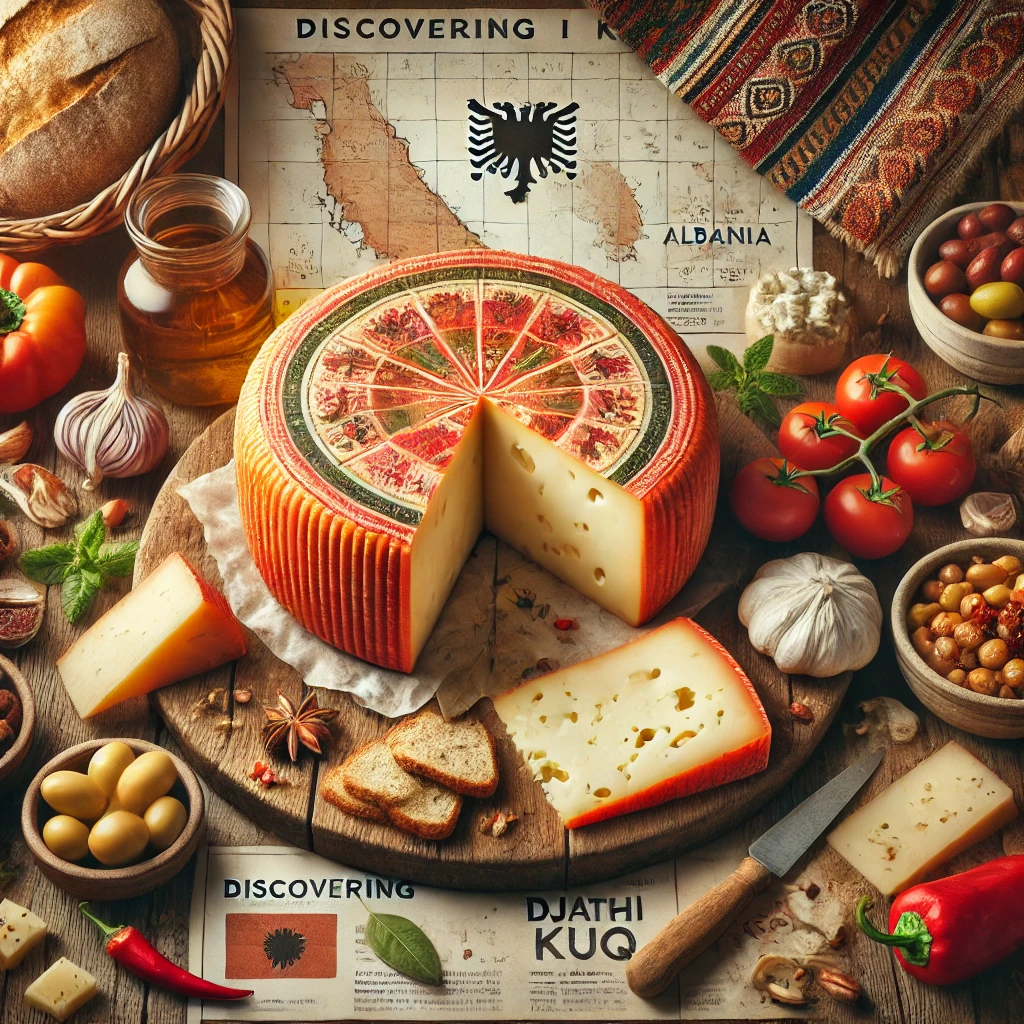
Djathë i kuq is a traditional semi-hard to hard Albanian cheese distinguished by its reddish to amber exterior and interior tones. The color typically comes from natural aging, rind treatments, and sometimes the milk itself, influenced by pasture and seasonal feeding.
It is commonly made from cow’s milk, though regional variations may include sheep’s milk or blends. The cheese is aged long enough to develop firmness and savory complexity but remains approachable and versatile.
Historical Roots of Djathë i Kuq
Cheesemaking in Albania developed out of pastoral necessity. Mountainous terrain and seasonal movement of herds encouraged methods that preserved milk through aging and salting. Djathë i kuq likely evolved as a local adaptation of aged cheeses, influenced by Balkan, Mediterranean, and Central European traditions.
In rural areas, cheese color was often a sign of maturity and strength. A deeper hue suggested careful aging and richer flavor, making Djathë i kuq a respected table cheese for guests and special meals.
Regions Where Djathë i Kuq Is Found
Djathë i kuq is associated with northern and central Albanian regions, particularly areas with cooler climates suitable for aging cheese. Stone cellars, naturally ventilated rooms, and mountain air all play a role in shaping the final product.
Because production is small-scale and localized, Djathë i kuq can vary noticeably from one village to another—each reflecting local milk, climate, and technique.
Traditional Production Methods
Milk Selection
Fresh milk is the foundation. Cow’s milk is most common, valued for balance between fat and protein. In higher-altitude areas, sheep’s milk may add richness and intensity.
Curdling and Cutting
Milk is gently warmed and curdled using rennet. The curds are cut to release whey, then gathered for shaping.
Pressing and Salting
Curds are pressed to form compact wheels or blocks. Salt is added to enhance flavor and protect the cheese during aging.
Aging and Rind Development
Djathë i kuq is aged for several months. During this time, the rind may be rubbed, brushed, or left natural, contributing to the cheese’s red-tinged appearance. Aging deepens flavor and firms the texture.
Taste and Texture Profile
Djathë i kuq is appreciated for its savory warmth and balance:
-
Flavor: Nutty, savory, gently sharp
-
Aroma: Earthy, milky, slightly rustic
-
Texture: Firm, dense, slightly crumbly
-
Finish: Long, satisfying, lightly salty
With extended aging, hints of caramelized milk and toasted nuts may emerge.
How Djathë i Kuq Is Eaten in Albania
Table Cheese
Traditionally sliced and served with bread, olives, and vegetables, Djathë i kuq is a staple at family tables and gatherings.
Cooking and Grating
Grated Djathë i kuq adds depth to baked dishes, pasta, and vegetable recipes, much like other aged Balkan cheeses.
With Hearty Meals
It pairs well with beans, roasted meats, and corn-based dishes, where its savory notes balance rich flavors.
Pairing Suggestions
Djathë i kuq shines with simple, rustic accompaniments:
-
Breads: Cornbread, sourdough, flatbread
-
Fruits: Apples, pears, dried figs
-
Condiments: Honey, olive oil, mild chili paste
-
Drinks: Red wine, rakija, herbal tea
These pairings enhance the cheese without masking its character.
Djathë i Kuq vs Other Albanian Cheeses
| Feature | Djathë i Kuq | Djathë i Bardhë | Djathë i Pjekur |
|---|---|---|---|
| Texture | Firm | Brined & crumbly | Hard |
| Color | Reddish | White | Pale yellow |
| Aging | Medium | Short | Long |
| Flavor | Savory & nutty | Salty & fresh | Intense |
Djathë i kuq occupies a middle ground—aged, but still versatile.
Nutritional Value
Djathë i kuq offers:
-
High-quality protein
-
Calcium and phosphorus
-
Energy-rich dairy fats
Because it is concentrated through aging, modest portions deliver strong nutritional value.
Cultural Significance
Djathë i kuq reflects Albania’s rural ingenuity. Cheesemaking knowledge is passed down informally, preserving techniques that adapt to local conditions rather than rigid standards.
Serving aged cheese like Djathë i kuq to guests is a sign of respect and hospitality, symbolizing patience and care invested over months.
Availability Today
Djathë i kuq is mostly found in local markets and rural households within Albania. It is rarely exported, and labeling may vary, making it a discovery best made through travel or specialty Balkan food shops.
Growing interest in traditional foods has sparked renewed appreciation for regional cheeses like Djathë i kuq.
Why Djathë i Kuq Deserves Attention
In a world dominated by standardized cheese names, Djathë i kuq represents place-based authenticity. Its flavor tells a story of Albanian landscapes, pastoral rhythms, and human craftsmanship.
For cheese lovers seeking something genuine and underexplored, Djathë i kuq offers a rewarding experience—familiar enough to enjoy easily, yet distinct enough to remember.
Conclusion
Discovering Djathë i kuq cheese from Albania is discovering a piece of the country’s soul. Firm, savory, and warmly colored, it embodies tradition, patience, and regional pride.
Whether enjoyed simply with bread or incorporated into hearty dishes, Djathë i kuq stands as a reminder that some of the world’s most meaningful cheeses are found not in export catalogs, but at local tables—shared, savored, and preserved through generations.
FAQ: Discovering Djathë i Kuq Cheese from Albania
What is Djathë i kuq?
Djathë i kuq is a traditional Albanian aged cheese known for its reddish hue and savory flavor.
What milk is used for Djathë i kuq?
It is usually made from cow’s milk, sometimes blended with sheep’s milk.
What does Djathë i kuq taste like?
It tastes nutty, savory, and gently sharp with a firm texture.
How is Djathë i kuq eaten?
It is eaten sliced with bread, grated into dishes, or paired with simple accompaniments.
Is Djathë i kuq available outside Albania?
It is mostly found locally in Albania and is rarely exported.