
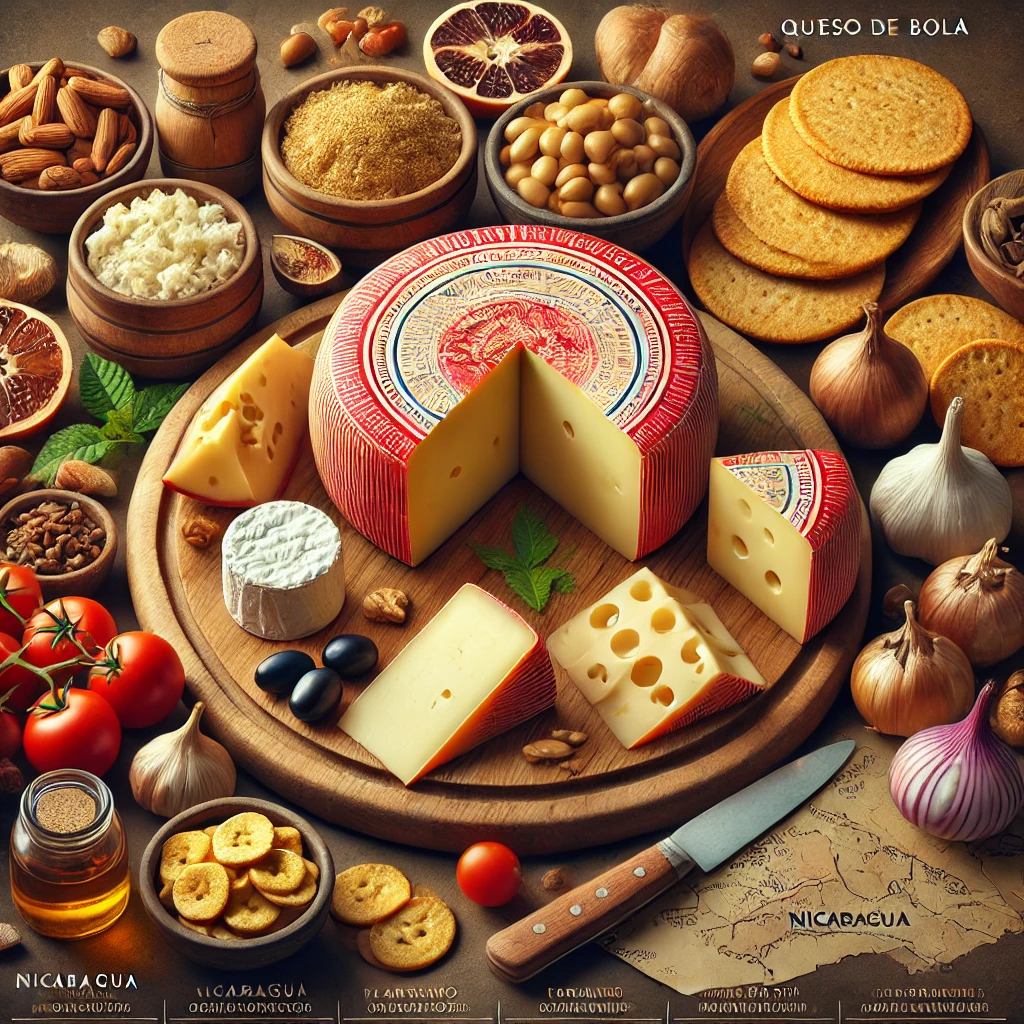
Among Central America’s many traditional foods, Queso de Bola holds a special place in Nicaragua. Instantly recognizable by its round shape and red wax coating, this cheese is far more than a dairy product—it is a symbol of celebration, family gatherings, and national pride.
Unlike fresh white cheeses commonly found across the region, Queso de Bola is aged, firm, and complex. Its distinctive character reflects centuries of cultural exchange, blending European cheesemaking traditions with Nicaraguan culinary identity. In this guide, we explore Queso de Bola’s taste profile, origins, production, uses, and best pairings, revealing why it remains one of Nicaragua’s most cherished cheeses.
What Is Queso de Bola?
Queso de Bola is a firm, aged cheese traditionally made from cow’s milk. It is strongly inspired by Dutch Edam cheese, a legacy of colonial-era trade. The cheese is aged under a red wax rind, which protects it during maturation and gives it its iconic appearance.
While its shape and rind resemble Edam, Queso de Bola has evolved into a distinctly Nicaraguan product, adapted to local milk, climate, and taste preferences.
Historical Origins of Queso de Bola
European Influence
During the colonial period, European foods entered Central America through trade routes. Dutch Edam cheese, known for its durability and wax coating, became popular in tropical regions because it traveled well.
Local Adaptation
Over time, Nicaraguan cheesemakers began producing their own version using local cow’s milk. This adaptation became Queso de Bola—maintaining the round shape and wax rind while developing a flavor suited to local cuisine.
By the 19th and early 20th centuries, Queso de Bola had become a festive cheese associated with holidays and special occasions.
How Queso de Bola Is Made
Milk Selection
High-quality cow’s milk is used, providing a balance of fat and protein ideal for aging.
Curdling and Pressing
The milk is curdled with rennet, and the curds are pressed firmly into spherical molds to remove moisture and create a dense structure.
Salting
Salt is added to enhance flavor and preserve the cheese during aging.
Wax Coating
Once formed, the cheese is sealed in red wax. This prevents moisture loss and protects the cheese from contamination.
Aging
Queso de Bola is aged for several months. During this time, the texture firms up and the flavor deepens.
Taste and Texture Profile
Queso de Bola is loved for its rich yet balanced character:
-
Flavor: Savory, nutty, slightly salty
-
Aroma: Mild dairy with subtle aged notes
-
Texture: Firm, dense, sliceable
-
Finish: Clean, lingering, gently sharp
As it ages, the cheese becomes more intense, developing toasted and buttery undertones.
How Queso de Bola Is Used in Nicaraguan Cuisine
Festive Dishes
Queso de Bola is a key ingredient in Nicaraguan Christmas dishes, especially rellenos (stuffed dishes) and baked preparations.
Grated or Melted
It is often grated over warm foods or melted into sauces, adding depth and richness.
Table Cheese
Sliced Queso de Bola is served with bread or crackers during gatherings and celebrations.
Stuffed Recipes
The hollowed wax rind is sometimes reused as a mold for stuffing the cheese with seasoned meat, rice, or vegetables—a uniquely local tradition.
Taste Pairings for Queso de Bola
Breads and Starches
-
Crusty white bread
-
Corn tortillas
-
Rice dishes
Fruits
-
Apples
-
Pears
-
Plantains (fried or baked)
Savory Pairings
-
Roasted meats
-
Beans and rice
-
Mild sausages
Condiments
-
Pickled vegetables
-
Mild chili sauces
-
Onions sautéed in oil
Drinks
-
Light beer
-
Dry white wine
-
Fresh fruit juice
These pairings highlight the cheese’s savory and nutty qualities without overwhelming it.
Queso de Bola vs Edam Cheese
| Feature | Queso de Bola | Edam |
|---|---|---|
| Origin | Nicaragua | Netherlands |
| Milk | Cow | Cow |
| Flavor | Savory, slightly sharper | Mild, sweet |
| Use | Cooking & celebrations | Table cheese |
| Cultural Role | Festive & traditional | Everyday |
Though related, Queso de Bola has a stronger cultural and culinary identity in Nicaragua.
Nutritional Value
Queso de Bola provides:
-
Protein for muscle and energy
-
Calcium for bone health
-
Concentrated dairy fats
Because it is aged and flavorful, small portions deliver satisfying richness.
Cultural Significance in Nicaragua
Queso de Bola is deeply tied to family traditions and celebrations. It is especially prominent during Christmas and major gatherings, where its preparation becomes a shared ritual.
The cheese also represents resilience and adaptation—how global influences can be reshaped into something uniquely local.
Availability and Buying Tips
Queso de Bola is widely available in Nicaraguan markets and grocery stores, especially around holidays. Outside Nicaragua, it may be found in Central American specialty shops.
Buying tips:
-
Choose a wheel with intact wax
-
Avoid cracks or excessive dryness
-
Store refrigerated once cut
Why Queso de Bola Matters
In a region dominated by fresh cheeses, Queso de Bola stands out as a symbol of patience and celebration. Its aging process, distinctive look, and rich flavor make it a cheese that brings people together.
For food lovers, it offers insight into how traditional European cheesemaking was transformed by Central American culture.
Conclusion
Queso de Bola from Nicaragua is more than an aged cheese—it is a cultural icon. Nutty, savory, and deeply rooted in tradition, it plays a central role in festive cooking and family life.
Whether sliced for sharing, grated into warm dishes, or used in celebratory recipes, Queso de Bola delivers comfort, heritage, and unmistakable Nicaraguan character. For anyone exploring Latin American cheeses, it is an essential and unforgettable discovery.
FAQ: Queso de Bola Nicaragua – Taste and Pairings
What is Queso de Bola?
Queso de Bola is a traditional Nicaraguan aged cheese inspired by Dutch Edam.
What does Queso de Bola taste like?
It tastes nutty, savory, and slightly salty with a firm texture.
How is Queso de Bola traditionally eaten?
It is sliced, grated, melted, or used in festive stuffed dishes.
Why does Queso de Bola have red wax?
The wax protects the cheese during aging and gives it its iconic appearance.
Is Queso de Bola available outside Nicaragua?
It can be found in some Central American specialty stores abroad.