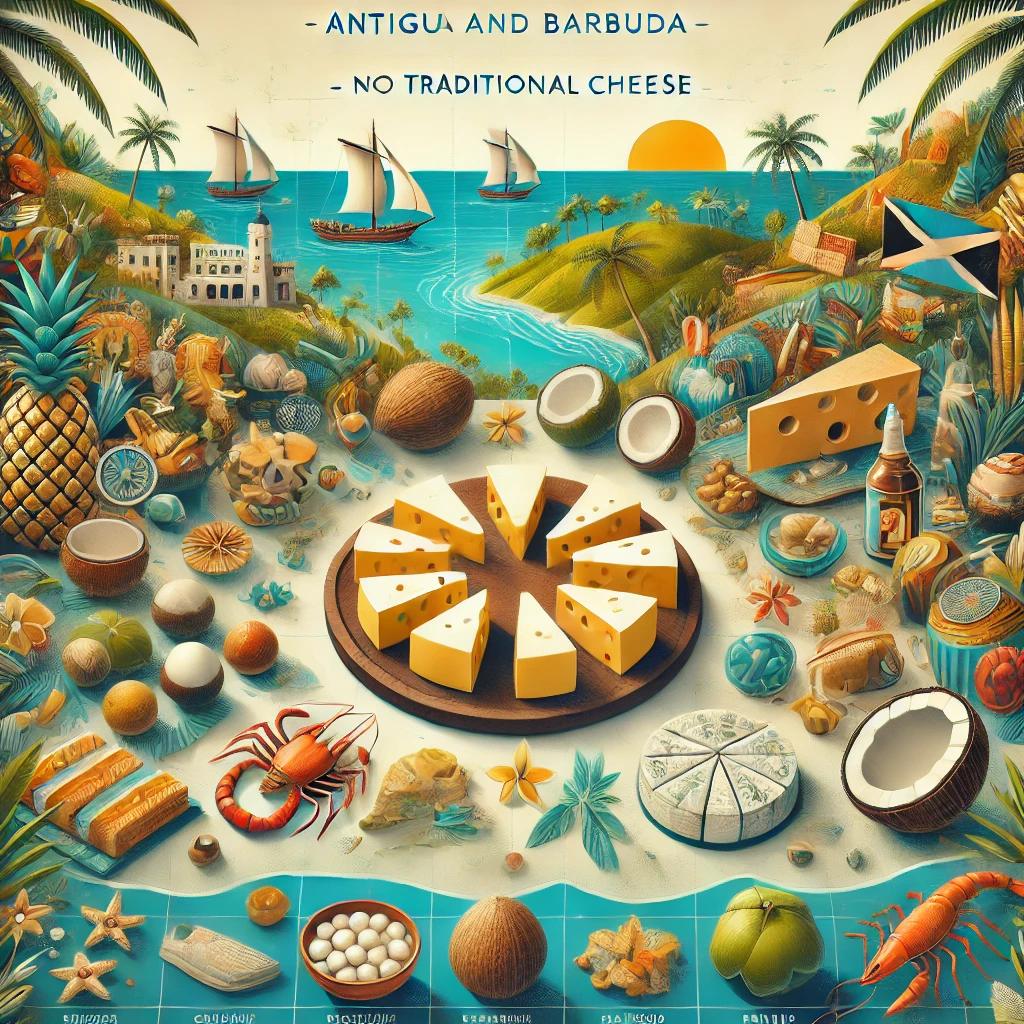
When people think of Antigua and Barbuda, they picture turquoise beaches, coral reefs, spice-scented markets, and calypso rhythms—not cheese. And there’s a reason: Antigua and Barbuda is one of the few Caribbean nations without a formally recognized traditional cheese style. Unlike Cuba’s quesos blancos, Jamaica’s processed cheddar blends, or Trinidad’s ghee-like dairy pastes, Antigua’s dairy heritage followed a different path—one shaped by trade routes, colonial imports, tropical heat, and limited cattle culture.
This absence does not reflect a lack of culinary identity but rather a unique Caribbean adaptation strategy: in a humid, salt-laden island climate without historic refrigeration, cheese was never a priority food. Instead, goats’ milk, imported dairy, and condensed milk shaped local consumption patterns far more than aging wheels or brined cheese blocks.
🇦🇬 Why Antigua & Barbuda Never Developed Traditional Cheese
1. Climate Challenge
Cheese traditionally requires:
-
cool aging spaces
-
stable fermentation temperatures
-
low humidity
Antigua offers the opposite:
-
tropical humidity
-
equatorial heat
-
storm seasons
-
salt air exposure
Aging rooms or cave storage never existed by climate or geography.
2. Livestock History
While goats existed on the islands, large-scale dairy cattle culture never developed.
Sheep & goats = yes
-
mostly for meat, occasional milk
Cows = limited
-
imported later in history
-
never a core agricultural investment
3. Colonial Food Imports
British colonial rule meant reliance on:
-
canned butter
-
condensed milk
-
evaporated milk
-
imported cheese from Britain or Canada
Island economies were built on sugar, spice, and sea trade, not dairy barns.
🥛 Dairy in Local Cuisine: What Took Cheese’s Place?
Instead of local cheese development, Antigua and Barbuda embraced milk preservation.
Popular Dairy Substitutes
| Product | Why It Was Adopted |
|---|---|
| Condensed milk | shelf-stable, no refrigeration |
| Evaporated milk | mild flavor, versatile |
| Powdered milk | long storage life |
| Coconut milk | abundant, local, culinary identity |
Coconut became the island’s true creamy ingredient, replacing dairy in sauces, desserts, porridges, and soups.
🍽 How Cuisine Thrived Without Cheese
Antiguan and Barbudan food culture never needed cheese to flourish. Instead, dishes rely on:
-
reef fish
-
salt cod
-
tropical root vegetables
-
spices
-
coconut creams
-
stew bases
Defining Dishes
| Dish | Dairy Role |
|---|---|
| Fungee (cornmeal) & Pepperpot | no dairy, broth-driven |
| Ducana & saltfish | coconut-steamed sweet dough |
| Seasoned rice | herbal + seafood flavor |
| Conkies | coconut + pumpkin wrapped in banana leaf |
| Bread pudding | condensed milk sweetness |
Instead of cheese richness, coconut milk became the silky base in:
-
sauces
-
porridges
-
baked goods
-
savory stews
🍍 Imported Cheese & Tourism Influence
As tourism expanded in the 20th and 21st centuries, cheese entered hotel and restaurant menus:
-
cheddar in omelets
-
mozzarella on pizza
-
brie in resort buffets
-
cream cheese for pastries
But these are not locally produced cheeses—they are imports for visitor expectations rather than heritage foods.
🌴 Modern Attempts at Local Dairy
With increased refrigeration and global food interest, small-scale dairy experiments have begun, including:
-
goat cheese trials
-
yogurt and kefir small production
-
artisanal fresh cheese micro-batches
Still, none are classified as:
-
historic
-
culturally rooted
-
widespread traditional cheese
They remain modern culinary curiosity, not tradition.
🍨 Flavor Identity Without Cheese
Antigua & Barbuda’s signature flavors include:
-
nutmeg
-
cinnamon
-
coconut
-
tamarind
-
grilled lobster
-
jerk spice blends
-
citrus marinades
Cheese simply wasn’t required to define richness.
What Chefs Use Instead
| Texture Purpose | Local Substitute |
|---|---|
| creaminess | coconut milk |
| umami salt taste | dried saltfish |
| tang | tamarind, lime |
| fat depth | cashews, ground nuts |
🌍 Caribbean Cheese Comparison
| Country | Cheese Tradition |
|---|---|
| Jamaica | processed cheddar imports, local “hard cheese” |
| Trinidad | ghee & paneer diaspora influences |
| Dominican Rep. | queso de hoja, queso blanco |
| Cuba | fresh cheeses similar to queso fresco |
| Barbados | dairy-light, similar to Antigua |
Antigua sits closer to Barbados & St. Kitts than to dairy-active islands like Dominican Republic.
⭐ Final Summary
Antigua and Barbuda stands out in the global cheese map—not for its abundance, but for its absence of traditional cheese. This absence highlights:
-
tropical adaptation
-
non-dairy culinary ingenuity
-
reliance on coconut, spices, and seafood
-
British supply routes over barn culture
Rather than curing milk, Antigua cured fish, spiced stews, and slow-cooked roots. It is a cuisine shaped by sea, salt, sun, and coconut—not cellars and whey.
FAQs — Antigua & Barbuda & Cheese
1. Does Antigua have any traditional cheese?
No. Cheese was never historically produced due to climate and livestock limitations.
2. What replaced cheese in local cuisine?
Coconut milk, condensed milk, and salted fish flavors.
3. Do locals eat imported cheese today?
Yes, mostly in hotels, restaurants, and modern supermarkets.
4. Are there emerging artisanal cheeses?
Small goat cheese experiments exist, but nothing culturally rooted.
5. Why didn’t dairy become part of tradition?
Humid climate, lack of aging spaces, minimal cow herds, and colonial import reliance.