
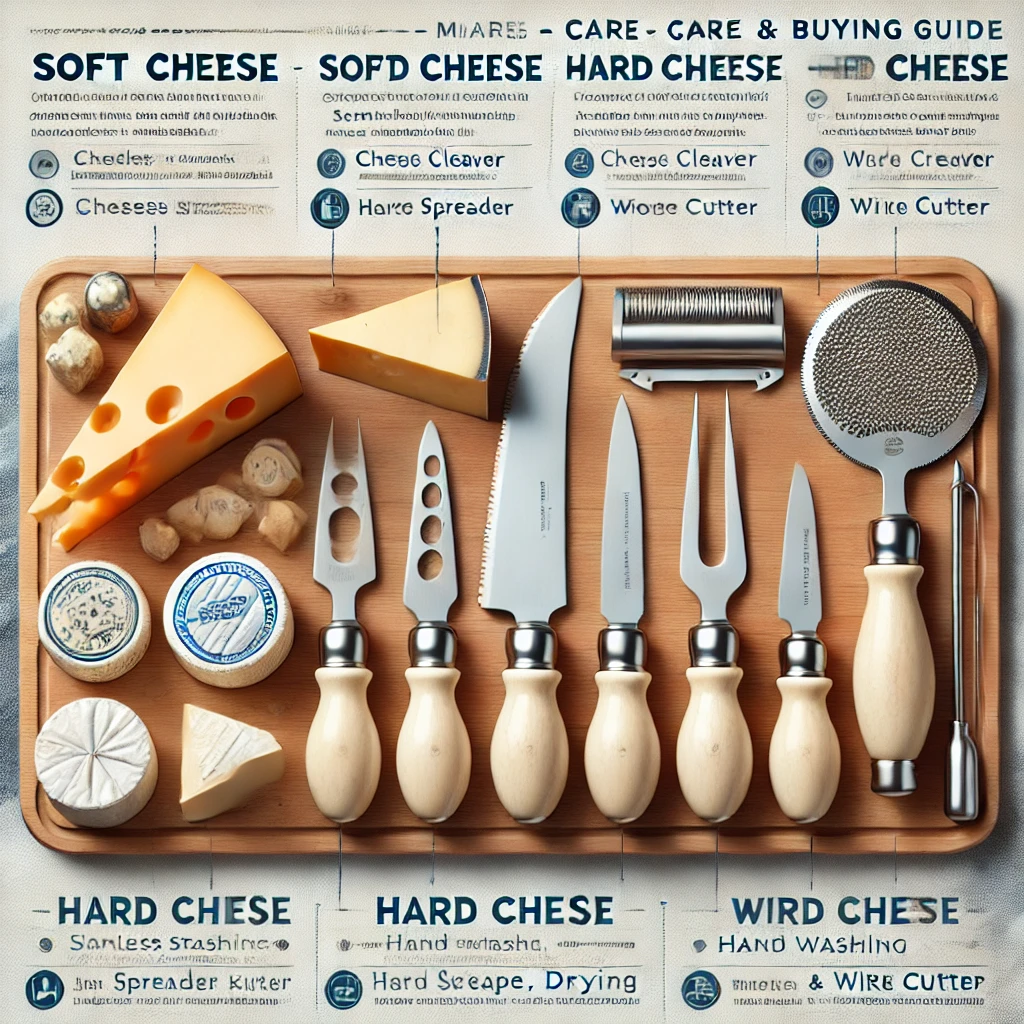
Cheese is one of the most diverse foods in the world, ranging from soft and creamy to hard and crystalline. Cutting and serving these different textures with a standard kitchen knife often leads to crushed slices, sticking blades, and uneven portions. This is where a cheese knife set becomes essential.
A cheese knife set is specifically designed to handle various cheese styles while preserving texture, appearance, and flavor. Whether you are building a cheese board for guests, running a café, or simply enjoying cheese at home, the right knives elevate both presentation and experience.
This guide explores cheese knife uses, materials, care, and buying tips, helping you choose a set that lasts and performs beautifully.
What Is a Cheese Knife Set?
A cheese knife set is a collection of specialized knives, each crafted for a specific cheese texture. Instead of one universal blade, these sets include tools designed to cut, slice, spread, or serve cheeses cleanly and efficiently.
A standard cheese knife set typically includes:
-
Soft cheese knives
-
Semi-hard cheese knives
-
Hard cheese knives
-
Spreaders or pronged knives
Each knife minimizes sticking, crumbling, or squashing—common issues when using regular knives.
Types of Cheese Knives and Their Uses
Understanding the purpose of each knife helps you use your set effectively.
Soft Cheese Knife
Soft cheeses like Brie, Camembert, and goat cheese tend to stick to blades.
Features:
-
Holes or perforations
-
Narrow blade
-
Lightweight design
Uses:
-
Soft-ripened cheeses
-
Creamy fresh cheeses
The holes reduce surface contact, preventing cheese from sticking.
Cheese Spreader
Spreaders are blunt and rounded.
Uses:
-
Cream cheese
-
Ricotta
-
Cheese dips
-
Soft spreads
They are essential for breakfast boards and appetizers.
Semi-Hard Cheese Knife
Used for cheeses like Gouda, Havarti, or Edam.
Features:
-
Straight or slightly curved blade
-
Medium thickness
Uses:
-
Sliceable cheeses
-
Sandwich cheese portions
These knives balance firmness and control.
Hard Cheese Knife (Cleaver or Spade Style)
Hard cheeses require strength rather than slicing motion.
Uses:
-
Cheddar
-
Gruyère
-
Manchego
These knives often have a pointed tip to break cheese into chunks.
Parmesan or Hard-Aged Cheese Knife
Hard-aged cheeses like Parmesan should be fractured, not sliced.
Features:
-
Short, sharp tip
-
Thick blade
Uses:
-
Parmesan
-
Pecorino
-
Aged Asiago
It creates natural breaks instead of crumbling.
Pronged Cheese Knife
This knife combines cutting and serving.
Features:
-
Forked tip
-
Narrow blade
Uses:
-
Lifting slices
-
Serving guests without touching cheese
Ideal for cheese boards and parties.
Common Cheese Knife Set Combinations
| Set Size | Typical Knives Included |
|---|---|
| 3-Piece | Soft knife, spreader, hard knife |
| 4-Piece | Soft, semi-hard, hard, spreader |
| 5-6 Piece | Full range + pronged knife |
| Premium | Includes specialty and serving tools |
Choose based on how often and widely you serve cheese.
Blade Materials: What to Look For
Stainless Steel
The most common and practical choice.
Advantages:
-
Rust resistant
-
Easy to clean
-
Durable
-
Affordable
High-quality stainless steel maintains sharpness and hygiene.
Carbon Steel
Used in premium or artisan sets.
Advantages:
-
Extremely sharp
-
Excellent cutting performance
Disadvantages:
-
Requires careful drying
-
Can rust if neglected
Best for enthusiasts who enjoy maintenance.
Ceramic Blades
Less common but stylish.
Advantages:
-
Non-reactive
-
Stain resistant
Disadvantages:
-
Brittle
-
Can chip if dropped
Not ideal for hard cheeses.
Handle Materials and Ergonomics
Wooden Handles
Popular for traditional and rustic sets.
Pros:
-
Warm, classic look
-
Comfortable grip
Cons:
-
Require hand washing
-
Sensitive to moisture
Stainless Steel Handles
Modern and professional appearance.
Pros:
-
Durable
-
Hygienic
-
Dishwasher safe (often)
Cons:
-
Can feel slippery when wet
Plastic or Resin Handles
Affordable and practical.
Pros:
-
Lightweight
-
Easy care
-
Color options
Cons:
-
Less premium feel
Design Features That Improve Performance
A good cheese knife set includes thoughtful design elements:
-
Blade holes: reduce sticking
-
Forked tips: easy serving
-
Thin blades: clean cuts
-
Balanced weight: comfortable handling
These details separate high-quality sets from basic ones.
How to Care for a Cheese Knife Set
Proper care extends the life of your knives.
Cleaning Tips
-
Wash by hand whenever possible
-
Use warm water and mild soap
-
Dry immediately after washing
Avoid soaking knives, especially those with wooden handles.
Storage Tips
-
Store in a knife block or case
-
Use blade guards if stacking
-
Keep away from moisture
Proper storage prevents dulling and corrosion.
Sharpening and Maintenance
-
Cheese knives rarely need frequent sharpening
-
Use professional sharpening for carbon steel
-
Avoid electric sharpeners
Most cheese knives are designed to stay sharp with minimal upkeep.
Cheese Knife Set vs Regular Kitchen Knives
| Feature | Cheese Knife Set | Kitchen Knife |
|---|---|---|
| Cheese sticking | Minimal | Common |
| Precision | High | Medium |
| Presentation | Excellent | Basic |
| Cheese protection | Preserves texture | Can crush |
Cheese knives enhance both function and aesthetics.
How to Choose the Best Cheese Knife Set
Consider Your Cheese Preferences
-
Soft cheese lovers need perforated knives
-
Hard cheese fans need spade or cleaver knives
Consider Usage Frequency
-
Occasional use: 3-piece set
-
Entertaining often: 5-6 piece set
Consider Gifting
Cheese knife sets make excellent gifts.
Ideal for:
-
Housewarmings
-
Weddings
-
Holidays
-
Food lovers
Choose sets with storage boxes for gifting.
Budget vs Premium Cheese Knife Sets
Budget Sets
-
Stainless steel blades
-
Plastic or light wood handles
-
Great for beginners
Premium Sets
-
High-grade steel
-
Solid wood or forged handles
-
Superior balance and durability
Choose based on long-term use rather than price alone.
Are Cheese Knife Sets Dishwasher Safe?
Some sets claim dishwasher safety, but hand washing is always recommended, especially for:
-
Wooden handles
-
Carbon steel blades
Dishwashers reduce lifespan and dull blades faster.
Why a Cheese Knife Set Is Worth Owning
A cheese knife set:
-
Improves cutting accuracy
-
Preserves cheese texture
-
Enhances presentation
-
Makes serving hygienic and elegant
For cheese lovers, it’s not a luxury—it’s a practical tool.
Conclusion
A cheese knife set is an essential addition for anyone who enjoys cheese beyond the basics. Designed to handle different textures with precision and care, these tools improve both the experience and appearance of serving cheese.
By understanding knife types, materials, care methods, and buying considerations, you can confidently choose a cheese knife set that fits your lifestyle and lasts for years. Whether for daily use or entertaining guests, the right cheese knife set turns simple cheese into a refined experience.
Frequently Asked Questions (FAQ)
What is included in a cheese knife set?
Most sets include knives for soft, semi-hard, and hard cheeses, plus a spreader or serving knife.
Can I use a regular knife for cheese?
Yes, but specialized cheese knives prevent sticking and preserve texture better.
Are cheese knives sharp?
Yes, but they are designed for controlled cuts rather than aggressive slicing.
How many knives do I really need?
A 3-piece set is sufficient for most homes; larger sets suit frequent entertainers.
How do I store cheese knives safely?
Store them in a block, case, or with blade guards to prevent damage and dulling.