Guyanese Coconut Cheese is one of the most distinctive and lesser-known culinary treasures of the Caribbean and South American coast. Despite its name, it contains no dairy milk at all. Instead, it is a traditional plant-based cheese made from coconut, reflecting Guyana’s tropical environment, agricultural abundance, and multicultural food heritage.
Long before modern vegan cheeses became popular, Guyanese communities were already crafting coconut cheese as a nutritious, preservable, and flavorful food. Today, Guyanese coconut cheese stands as both a cultural symbol and a naturally dairy-free alternative, appreciated for its rich taste and simple, traditional production.
Origins and Cultural Background
Guyana’s cuisine is shaped by Indigenous, African, Indian, and European influences, all adapted to a tropical climate where coconuts thrive along the coast. Coconut trees provided food, oil, drink, and cooking ingredients, making them essential to everyday life.
Coconut cheese emerged as a practical solution where:
-
Dairy production was limited
-
Refrigeration was unavailable
-
Plant-based foods were preferred or required
Families produced coconut cheese at home, using methods passed down through generations. It was valued not as a luxury, but as a reliable, filling staple that could be eaten fresh or stored briefly.
Why It’s Called “Coconut Cheese”
The term cheese refers not to fermentation with dairy cultures, but to:
-
The pressed, solid texture
-
The sliceable consistency
-
Its role as a protein-rich food
Like traditional cheeses, Guyanese coconut cheese is shaped, pressed, and cut, earning its name through function rather than ingredients.
Main Ingredient: Coconut
Guyanese coconut cheese is made from mature coconuts, which have firm flesh and high oil content.
Why Mature Coconuts Are Used
-
Rich natural fats
-
Strong coconut flavor
-
Better binding and texture
Freshness of the coconut directly affects taste and quality.
Traditional Production of Guyanese Coconut Cheese
The production process is simple but precise, relying on manual techniques rather than machinery.
Step-by-Step Traditional Method
-
Grating the Coconut
Mature coconuts are cracked open and finely grated by hand. -
Extracting Coconut Milk
The grated coconut is mixed with warm water and squeezed to extract thick coconut milk. -
Cooking the Milk
The coconut milk is gently heated, causing oils to separate and solids to thicken. -
Thickening and Stirring
Continuous stirring prevents burning and helps form a dense mass. -
Pressing and Shaping
The cooked mixture is pressed into molds or wrapped in cloth to remove excess moisture. -
Cooling and Setting
Once cooled, the cheese firms up and becomes sliceable.
This process creates a compact, rich, and naturally preserved food.
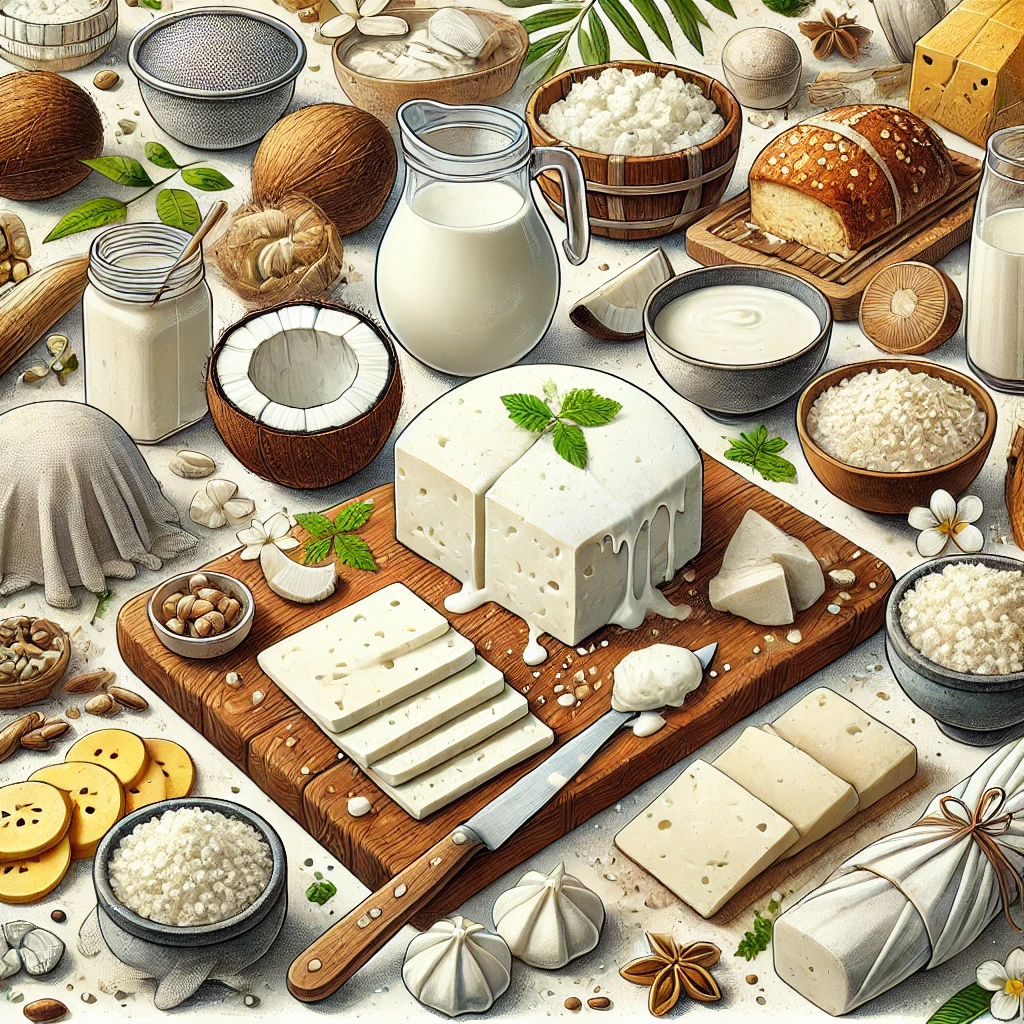
Texture and Appearance
| Feature | Description |
|---|---|
| Texture | Firm, dense, slightly crumbly |
| Color | Off-white to light beige |
| Shape | Round or rectangular blocks |
| Surface | Smooth or lightly textured |
The texture depends on pressing time and moisture removal.
Taste Profile of Guyanese Coconut Cheese
Guyanese coconut cheese has a distinctive, satisfying flavor.
Flavor Characteristics
-
Rich coconut aroma
-
Mild natural sweetness
-
Creamy, oily mouthfeel
-
Slight nutty finish
Unlike sweet coconut desserts, coconut cheese is savory-leaning, making it suitable for both sweet and savory dishes.
Variations of Coconut Cheese in Guyana
While the core method remains the same, small variations exist.
Fresh Coconut Cheese
-
Softer texture
-
Strong coconut flavor
-
Short shelf life
Firm-Pressed Coconut Cheese
-
Drier and denser
-
Longer usability
-
Easier to slice or grate
Lightly Salted Versions
-
Improved preservation
-
Balanced flavor
These variations depend on household preference rather than formal standards.
Traditional Uses in Guyanese Cuisine
Coconut cheese is deeply integrated into daily meals.
Common Traditional Uses
-
Served with bread or roti
-
Eaten alongside boiled cassava or plantains
-
Added to rice dishes
-
Used as a filling or side dish
It is especially valued during times when dairy is scarce or avoided.
Modern and Contemporary Uses
Today, Guyanese coconut cheese is gaining renewed interest.
Modern Applications
-
Vegan and dairy-free diets
-
Caribbean fusion cooking
-
Plant-based cheese boards
-
Breakfast or snack plates
Its natural ingredients align perfectly with modern clean-eating trends.
Best Food Pairings for Coconut Cheese
Savory Pairings
-
Cassava
-
Sweet potatoes
-
Flatbreads
-
Steamed vegetables
Sweet Pairings
-
Tropical fruits
-
Light syrups
-
Banana dishes
Neutral or starchy foods balance its richness.
Beverage Pairings
Coconut cheese pairs best with refreshing drinks.
Beverage Options
-
Coconut water
-
Herbal tea
-
Ginger drinks
-
Fresh water
Avoid overly acidic drinks that clash with its oil-rich texture.
Nutritional Value of Guyanese Coconut Cheese
Guyanese coconut cheese is energy-dense and nourishing.
Nutritional highlights include:
-
Healthy plant-based fats
-
Dietary fiber
-
Minerals such as iron and magnesium
-
Naturally dairy-free and lactose-free
Because of its high fat content, it is traditionally eaten in moderate portions.
Coconut Cheese vs Dairy Cheese
| Feature | Coconut Cheese | Dairy Cheese |
|---|---|---|
| Milk | Coconut | Animal milk |
| Lactose | None | Present |
| Protein | Moderate | Higher |
| Fat | Plant-based | Animal-based |
| Aging | None | Often aged |
Coconut cheese offers a completely different nutritional and cultural experience.
Buying and Storing Coconut Cheese
Buying Tips
-
Look for fresh aroma
-
Avoid sour or rancid smell
-
Choose firm but not overly dry blocks
Storage Tips
-
Refrigerate if possible
-
Store in airtight containers
-
Consume within a few days
Traditional versions are made fresh and not intended for long storage.
Cultural Importance Today
Guyanese coconut cheese represents resourcefulness, tradition, and sustainability. It shows how communities adapted available ingredients to meet nutritional needs without relying on imported foods.
As plant-based diets grow worldwide, this traditional food offers valuable lessons in natural, whole-ingredient alternatives that existed long before modern food trends.
Conclusion
Guyanese coconut cheese is a remarkable example of traditional food innovation. Made entirely from coconut, it delivers richness, nourishment, and cultural identity in a simple, handcrafted form.
Whether enjoyed traditionally with cassava or reimagined in modern vegan dishes, coconut cheese remains a powerful symbol of Guyana’s culinary heritage. Exploring it means discovering a food that is practical, flavorful, and deeply connected to place and history.
Frequently Asked Questions (FAQ)
Is Guyanese coconut cheese made with dairy milk?
No, it is completely dairy-free and made entirely from coconut.
How does coconut cheese taste?
It tastes rich and mildly sweet with a creamy coconut flavor.
Is coconut cheese vegan?
Yes, traditional Guyanese coconut cheese is naturally vegan.
How long does coconut cheese last?
It is best consumed fresh, usually within a few days.
How is coconut cheese traditionally eaten?
It is eaten with bread, cassava, rice dishes, or as a side food.