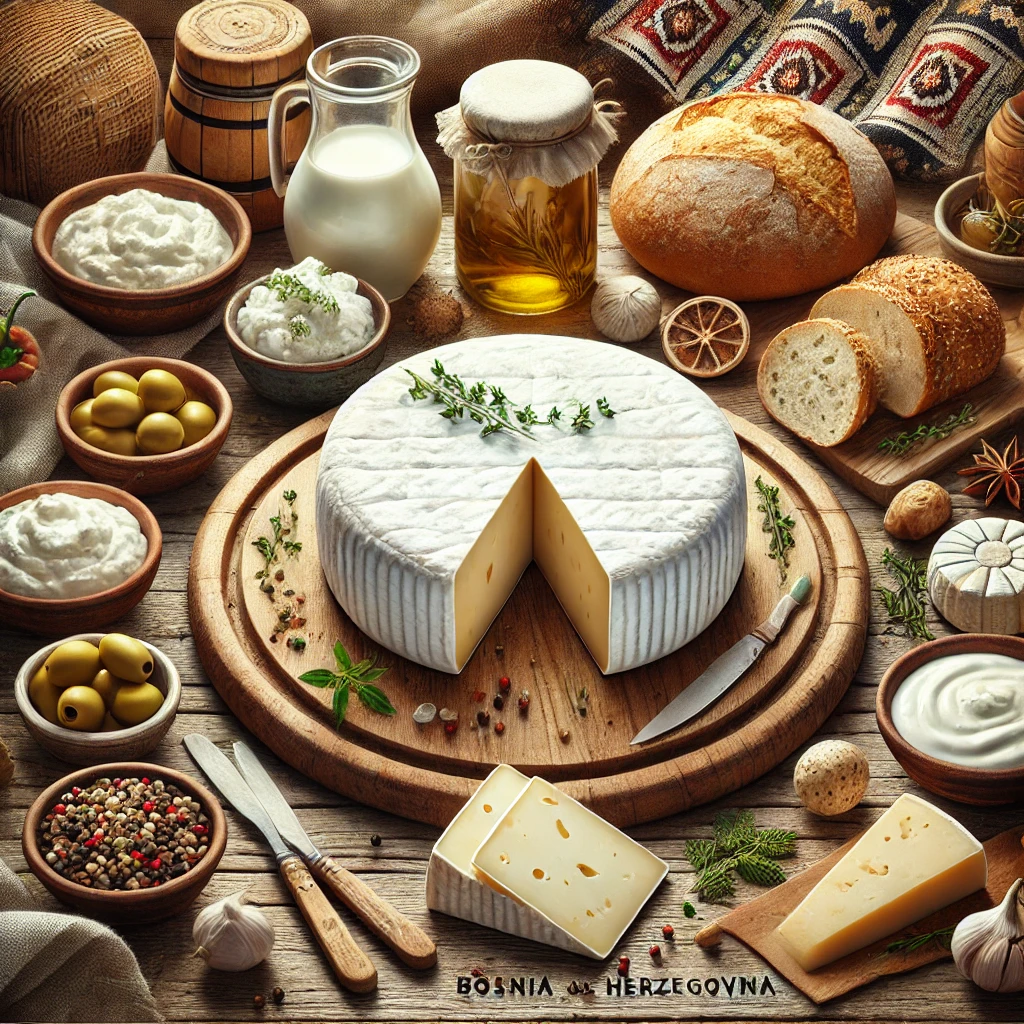
Pogača Sir is a traditional, lesser-known cheese from Bosnia and Herzegovina, deeply rooted in rural life and homemade food culture. Unlike mass-produced cheeses, Pogača Sir is closely tied to family traditions, village practices, and seasonal milk production. It is typically made in small batches and consumed fresh or lightly aged, emphasizing simplicity, nourishment, and authenticity.
The name “Pogača Sir” reflects its traditional flat, bread-like shape, resembling pogača, a common Balkan flatbread. This cheese is not about refinement or aging complexity—it is about freshness, practicality, and honest flavor, making it an important part of Bosnia and Herzegovina’s dairy heritage.
Cultural and Geographic Roots
Bosnia and Herzegovina lies at the crossroads of the Balkans, Central Europe, and the Mediterranean, resulting in a rich and diverse food culture. In mountainous and rural regions, livestock farming—especially sheep and cows—has long been essential to daily survival.
Pogača Sir developed in this environment as a cheese that was:
-
Easy to make at home
-
Suitable for immediate consumption
-
Nutritious and filling
-
Adaptable to limited resources
It represents the everyday food of shepherds, farmers, and families rather than ceremonial or export-oriented cuisine.
Why the Name “Pogača Sir”?
The word “sir” simply means cheese in Bosnian, while “pogača” refers to a flat, round bread. The cheese is traditionally shaped into a low, round or flattened form, making it easy to portion, dry slightly, or transport.
The name highlights how closely food forms in the Balkans are connected to function and familiarity rather than branding or standardization.
Milk Source and Traditional Ingredients
Pogača Sir is most commonly made from cow’s milk, though sheep’s milk or mixed milk may be used in certain regions.
Core Ingredients
-
Fresh milk
-
Natural rennet or traditional coagulant
-
Salt (used moderately)
No preservatives, additives, or artificial cultures are part of the traditional process.
How Pogača Sir Is Traditionally Made
The production of Pogača Sir follows a simple, time-tested method suited to home kitchens.
Traditional Preparation Process
-
Milk Heating
Fresh milk is gently warmed, not boiled. -
Coagulation
Rennet or a natural coagulant is added to separate curds and whey. -
Curd Cutting
The curd is broken into pieces to release excess whey. -
Draining
Curds are strained through cloth or baskets. -
Shaping
The cheese is pressed by hand into a flat, round form. -
Light Salting
Salt is added for flavor and short-term preservation.
The cheese may be eaten immediately or allowed to rest for a short period.
Texture and Appearance
| Feature | Description |
|---|---|
| Texture | Soft to semi-firm |
| Moisture | Medium |
| Color | White to pale cream |
| Shape | Flat, round |
| Rind | None or natural surface |
The texture becomes slightly firmer if left to dry for a few days.
Taste Profile of Pogača Sir
Pogača Sir is appreciated for its clean, comforting flavor.
Flavor Characteristics
-
Mild and milky
-
Light saltiness
-
Subtle tang
-
Fresh dairy finish
It is less salty than many Balkan cheeses, making it suitable for frequent consumption.
Fresh vs Lightly Rested Pogača Sir
Pogača Sir may appear in two main forms.
Fresh Pogača Sir
-
Very soft and moist
-
Mild flavor
-
Consumed within 1–2 days
Lightly Rested Pogača Sir
-
Slightly firmer
-
More pronounced taste
-
Easier to slice
Both versions are traditional and depend on household preference.
Pogača Sir vs Other Balkan Cheeses
| Cheese | Origin | Texture | Saltiness |
|---|---|---|---|
| Pogača Sir | Bosnia & Herzegovina | Soft | Mild |
| Travnički Sir | Bosnia | Semi-firm | High |
| Feta-style cheeses | Balkans | Crumbly | Medium |
| Kajmak | Region-wide | Creamy | Mild |
Pogača Sir stands out for its simplicity and freshness.
Traditional Uses in Bosnian Cuisine
Pogača Sir is deeply integrated into daily meals.
Common Traditional Uses
-
Served with homemade bread or pogača
-
Eaten at breakfast with tea or coffee
-
Paired with fresh vegetables
-
Added to simple pies and pastries
It is rarely eaten alone; instead, it complements other foods.
Pogača Sir in Rural Daily Life
In rural Bosnia and Herzegovina, cheese-making is often part of a self-sufficient lifestyle. Pogača Sir is made:
-
When milk is abundant
-
For family consumption
-
To avoid waste
Its production reflects a philosophy of using what is available, when it is available.
Modern and Contemporary Uses
As interest grows in traditional Balkan foods, Pogača Sir is finding new applications.
Modern Uses
-
Salad cheese
-
Filling for savory pastries
-
Cheese boards featuring regional products
-
Rustic sandwiches
Its mild flavor makes it adaptable to modern recipes.
Best Food Pairings for Pogača Sir
Traditional Pairings
-
Flatbread or corn bread
-
Cucumbers and tomatoes
-
Green onions
Light Enhancements
-
Olive oil drizzle
-
Fresh herbs
-
Mild honey
These pairings highlight its fresh character without overpowering it.
Beverage Pairings
Pogača Sir pairs best with simple, everyday drinks.
Beverage Options
-
Black tea
-
Yogurt drinks
-
Fresh water
-
Light white wine
Strong alcoholic beverages are rarely paired traditionally.
Nutritional Value of Pogača Sir
Pogača Sir is a wholesome, everyday cheese.
Nutritional highlights include:
-
High-quality protein
-
Calcium for bone health
-
Moderate fat content
-
Minimal processing
Its gentle profile makes it suitable for all ages.
Buying and Storing Pogača Sir
Buying Tips
-
Look for fresh production dates
-
Choose cheese with a clean aroma
-
Avoid excess sourness
Storage Tips
-
Refrigerate promptly
-
Store in airtight containers
-
Consume within a few days
This cheese is not meant for long aging.
Cultural Importance Today
Pogača Sir remains important because it:
-
Represents home cooking
-
Preserves rural knowledge
-
Reflects Bosnian hospitality
For many people, its taste is linked to childhood and family meals.
Why Pogača Sir Deserves More Attention
While not internationally famous, Pogača Sir offers:
-
Authentic regional identity
-
Minimal ingredients
-
Sustainable production methods
In an age of industrial cheese, it reminds us of the value of local, handmade food.
Pogača Sir in the Future of Traditional Foods
As global interest grows in:
-
Artisanal cheeses
-
Regional specialties
-
Traditional diets
Cheeses like Pogača Sir have strong potential to gain recognition without losing authenticity.
Conclusion
Pogača Sir from Bosnia and Herzegovina is a humble yet meaningful cheese that reflects the country’s rural traditions and practical food culture. Soft, mild, and freshly made, it serves as nourishment, comfort, and cultural memory.
Whether enjoyed with bread at breakfast or used in modern dishes, Pogača Sir stands as a reminder that the most valuable foods are often the simplest. Exploring this cheese is not just about taste—it is about understanding how tradition, land, and everyday life shape what we eat.
Frequently Asked Questions (FAQ)
What is Pogača Sir made from?
It is made from fresh cow’s milk, sometimes sheep’s milk, with light salting.
Is Pogača Sir aged?
No, it is usually eaten fresh or after a short resting period.
How does Pogača Sir taste?
It tastes mild, milky, slightly salty, and fresh.
How is Pogača Sir traditionally eaten?
It is eaten with bread, vegetables, and simple meals.
How long does Pogača Sir last?
It is best consumed within a few days when refrigerated.