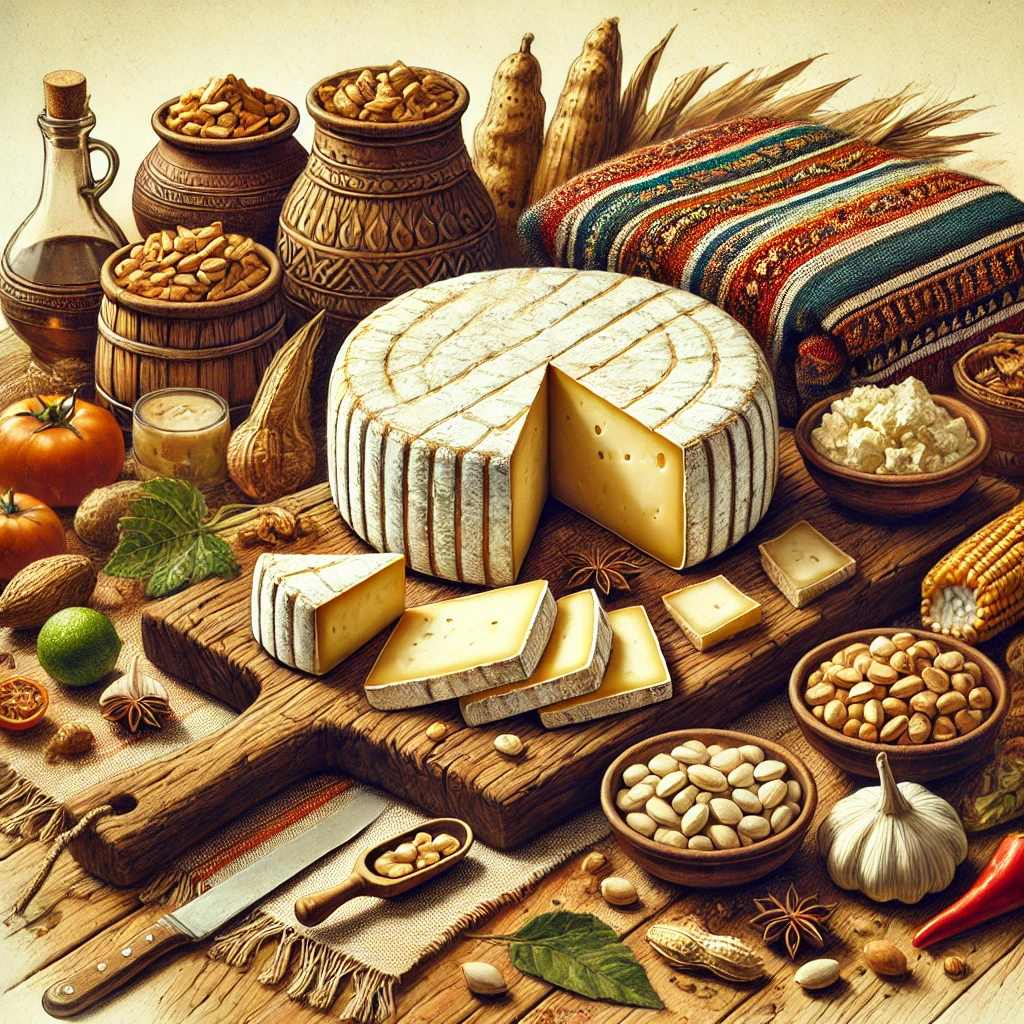
Angola is known for its vibrant food culture—rooted in African tradition, shaped by Portuguese influence, and enriched by regional agriculture. Yet one culinary treasure remains less widely recognized outside the country: Queijo Curado, Angola’s aged cheese tradition. While cheese is not as deeply embedded in African cuisine as in Europe, Angola has developed a unique approach to dairy transformation, resulting in a product that is rich, rustic, and full of local character.
Queijo Curado is typically made from cow’s milk, though in rural regions goat milk is used as well. Its flavor ranges from mildly tangy to deeply savory, depending on aging time. Firm, aromatic, and crafted through small-scale artisanal methods, it stands as a remarkable example of how Angolan foodways adapt global dairy techniques to local tastes and climate conditions.
This guide explores the origins, taste, production, culinary uses, pairings, and cultural importance of Queijo Curado in Angola.
🧀 What Is Queijo Curado?
“Queijo Curado” translates from Portuguese as “cured cheese”, referring to cheese that has been aged, allowing moisture to evaporate and flavors to intensify. In Angola, this style reflects both Portuguese cheesemaking heritage and rural African dairy practices.
Key Characteristics
| Feature | Description |
|---|---|
| Category | semi-hard to hard aged cheese |
| Milk Type | cow or goat |
| Texture | firm, sometimes crumbly, lightly elastic |
| Flavor | tangy, savory, salted, occasionally earthy |
| Aging | 1–6 months (sometimes longer) |
| Colour | pale yellow to deep golden |
Angolan Queijo Curado typically has a stronger flavor than fresh cheeses, making it ideal for cooking and snacking alike.
🌍 Origins & Cultural Context
Cheesemaking was introduced to Angola during the Portuguese colonial era, but local farmers adapted the craft using:
-
native cattle breeds
-
traditional fermenting methods
-
hot, dry climate conditions
-
artisanal drying rooms or shaded wooden shelves
Rather than copying European techniques exactly, Angolan producers created a cheese that suited local conditions—salted enough to withstand heat, firm enough for storage, and flavorful enough to complement Angolan food staples such as funge, moamba, and grilled fish.
Rural areas in provinces like Huíla, Cuanza Sul, Namibe, and Benguela have become known for their household-scale Queijo Curado production.
🥛 How Queijo Curado Is Made
Though recipes differ slightly between regions, most artisanal Angolan Queijo Curado follows a simple yet time-intensive process.
1. Milk Heating & Curdling
Fresh cow or goat milk is gently heated, then natural rennet or acidic curdling agents are added.
2. Curd Cutting & Draining
Curds are cut into smaller pieces, allowing whey to separate naturally.
3. Pressing
Curds are placed in molds and pressed to remove moisture.
The firmness at this stage determines whether the cheese will be semi-hard or hard.
4. Salting
The cheese is either:
-
rubbed with coarse salt, or
-
soaked briefly in brine
Salt acts as both a preservative and a flavor enhancer.
5. Aging (Curado Phase)
Cheeses are placed in warm, dry rooms or shaded ventilated areas to mature for:
-
1–2 months (mild, semi-hard cheese)
-
3–6 months (firm, intense cheese)
Some producers even brush the aging rind with oil or pepper paste for extra character.
🧂 Taste & Aroma Profile
Queijo Curado delivers a bold sensory experience.
Flavor Notes
-
savory with a slight tang
-
nutty and earthy undertones
-
developing sharpness with age
-
subtle smokiness in some rural varieties (due to open-air drying)
Texture Notes
-
semi-hard when young
-
crumbly or firm when fully cured
-
smooth mouthfeel with occasional graininess
Compared to European cured cheeses, Angolan Queijo Curado is less sharp than Parmesan, less salty than Pecorino, but more rustic and earthy than Manchego.
🍽 Culinary Uses in Angolan Cuisine
Queijo Curado integrates beautifully into both traditional and modern dishes.
Traditional Uses
| Dish | How Cheese Is Used |
|---|---|
| Funge (cassava or corn) | grated or sliced on top |
| Moamba de Galinha | melted into sauce for richness |
| Caldeirada (fish stew) | added for depth and tang |
| Grilled meats | served as side snack |
Everyday Modern Uses
-
sliced in sandwiches
-
melted over grilled vegetables
-
grated into pasta, rice, or couscous
-
paired with bread and local honey
-
served with tropical fruits like mango or papaya
As a Snack
Many Angolans enjoy Queijo Curado simply with:
-
bread rolls (pão caseiro)
-
olives
-
roasted peanuts
The cheese’s robust flavor makes it satisfying without cooking.
🥂 Best Pairings
Food Pairings
-
smoky grilled fish
-
cured meats
-
spicy stews
-
roasted cassava or plantain
-
fruit preserves or honey
Beverage Pairings
| Drink | Why It Works |
|---|---|
| Angolan beer (Cuca, N’Gola) | refreshing contrast |
| Red wine (Cabernet or local blends) | balances salt & fat |
| Palm wine | traditional, lightly acidic |
| Herbal teas | mild palate cleanser |
The cheese’s versatility makes it suitable for both rustic meals and elegant entertaining.
🧊 Storage & Shelf Life
Because Queijo Curado is aged, it stores better than soft cheeses—but still requires care in warm climates.
Storage Guidelines
-
wrap in wax or parchment paper
-
store in the refrigerator
-
avoid airtight plastic (causes sweating)
Shelf Life
| State | Duration |
|---|---|
| whole wheel | 3–6 months |
| cut slices | 2–4 weeks |
| grated | 1–2 weeks |
Allow cheese to warm slightly before serving to unlock full flavor.
🌎 Queijo Curado Compared to Other Aged Cheeses
| Cheese | Region | Similarity | Difference |
|---|---|---|---|
| Manchego | Spain | firm & aged | Angolan version tangier |
| Pecorino | Italy | salty & savory | Angolan version milder |
| Queijo de Coalho Curado | Brazil | rustic texture | Brazilian is springier |
| Cheddar (aged) | UK | firm & nutty | Angolan has more earthy notes |
Queijo Curado’s profile stands out as uniquely African-European hybrid, shaped by geography.
⭐ Cultural Importance
Queijo Curado signifies:
-
rural agricultural heritage
-
family-based cheesemaking traditions
-
sustainable use of local dairy resources
-
cultural exchange between Portugal and Angola
It is gaining attention among food enthusiasts who appreciate artisanal, small-batch cheeses with authentic regional character.
⭐ Conclusion
Queijo Curado is one of Angola’s most distinctive dairy treasures—firm, flavorful, and deeply tied to the land and people who produce it. From farmstead aging rooms to modern kitchens, it remains a versatile ingredient and an authentic expression of Angolan craft.
Whether enjoyed with bread and honey, melted into hearty stews, or sliced beside tropical fruits, Queijo Curado offers a taste of Angola’s rural soul.
FAQs – Queijo Curado (Angola)
1. Is Queijo Curado similar to European cured cheeses?
It shares traits with Manchego or Pecorino but has a more rustic, earthy flavor.
2. What milk is used?
Mostly cow’s milk, though goat milk is used in rural areas.
3. How long is it aged?
From 1 to 6 months, developing stronger flavor with time.
4. Can I cook with Queijo Curado?
Yes—it’s excellent in stews, grilled dishes, and grated over funge.
5. Is Queijo Curado widely exported?
Not yet. Most production is artisanal and sold locally.