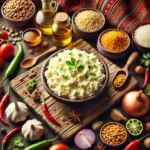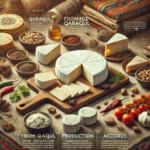

Angola is known for its rhythmic coastlines, deep Kimbundu food heritage, and cattle history stretching across savannah, plateau, and desert edges. Although cow-based dairy dominates markets, Queijo de Ovelha (sheep’s milk cheese) remains a lesser-documented but culturally meaningful product in Angola’s pastoral zones, particularly in areas where sheep herding persists as a livelihood and culinary practice.
Compared to Portugal’s sheep cheese traditions—with which Angola shares long-standing historical connections—Angolan Queijo de Ovelha is simpler, fresher, and locally adapted to climate, favoring swift processing over long aging.
🧀 What Is Queijo de Ovelha in Angola?
Queijo de Ovelha refers to sheep’s milk cheese made within Angolan rural and semi-rural settings, produced mostly for regional consumption. It is not an industrial product nor a mass export cheese, but rather:
-
artisan-made
-
village-sold
-
small-batch produced
-
climate-adapted
-
locally seasoned
Key Characteristics
| Feature | Description |
|---|---|
| Milk | 100% sheep or blend with goat |
| Texture | semi-soft, occasionally semi-firm |
| Color | ivory to pale white |
| Flavor | mild at first, developing light tang |
| Aroma | clean, milky, faint grass notes |
| Salt Level | moderate |
| Aging | fresh to lightly aged (3–21 days) |
Unlike European sheep cheeses that often mature for months, Angolan variations rarely age long due to heat, humidity, and refrigeration constraints.
🐑 Sheep Herding & Dairy Context in Angola
Although cattle dominate the national dairy narrative, sheep herding remains active in:
-
Huíla
-
Namibe
-
Benguela interior
-
Huambo plateaus
-
Cunene pastoral zones
These regions support arid and semi-arid grazing, which inherently shapes the milk:
-
herbal bitterness from savannah shrubs
-
salt-grass influence near coast
-
light floral tones in plateau meadows
Sheep’s milk is richer in fat and solids than cow’s milk, yielding creamier, more flavorful curd ideal for cheese.
🌍 Historical Ties: Portugal & Pasture Traditions
During colonial contact, Portuguese dairy culture—especially sheep cheese like Serra da Estrela, Azeitão, and Queijo de Nisa—interacted with Angolan pastoral customs.
But Angola did not replicate the same long-cave aging because:
-
humidity + heat limited storage
-
cooling systems were not widespread historically
-
cheese was made for quick consumption
This created a distinct Angolan version: fresh, lightly salted, and swift to market.
🥣 How Queijo de Ovelha Is Made
Steps (Traditional Method)
-
Morning sheep milk collection
fresh, warm, unprocessed -
Gentle heating
not boiled, just warmed -
Rennet (or plant coagulant) addition
-
Curd formation
-
Draining on cloth / woven baskets
-
Light pressing
-
Salt application
-
Short maturation period
Why Minimal Aging?
Because Angola’s warm climate encourages:
-
rapid fermentation
-
moisture retention risks
-
bacterial unpredictability
Thus, artisan cheesemakers adapt by keeping the product fresh and stable.
🧂 Flavor Profile: What Makes It Unique?
Queijo de Ovelha from Angola offers a clean, pastoral, lightly tangy taste.
Flavor Notes
-
sweet dairy beginning
-
slight grassy aftertaste
-
mild sheep aroma (not pungent like Roquefort)
-
nutty hints with brief aging
Texture Notes
-
springy and moist when fresh
-
firmer and slightly crumbly when semi-aged
If aged beyond 2–3 weeks (rare), it gains:
-
deeper tang
-
sharper barnyard notes
-
salt concentration
🍽 Culinary Uses in Angolan Cuisine
While not a staple nationwide, Queijo de Ovelha integrates smoothly into both traditional and fusion dishes.
Traditional Serving
| Dish | Use |
|---|---|
| funje de milho | cheese crumbled as topping |
| mandioca cozida | side pairing |
| kissangua meals | cooling salty accent |
| moamba-light servings | dairy counterbalance |
Modern Culinary Uses
-
gourmet cheese boards in Luanda restaurants
-
melted on artisanal sandwiches
-
grilled on skewers with herbs
-
layered into cassava bread bites
Popular Pairings
-
olive oil drizzle
-
roasted garlic paste
-
peri-peri seasoning
-
honey with chili flakes
🌎 Comparison With Other Sheep Cheeses
| Cheese | Country | Similarity | Difference |
|---|---|---|---|
| Queijo de Ovelha | Angola | fresh, sheep milk | less aged, milder |
| Serra da Estrela | Portugal | sheep base | creamy, long-aged |
| Pecorino | Italy | sheep milk | sharper, saltier, aged |
| Roquefort | France | sheep milk | blue-veined, intense |
| Halloumi (sheep/goat) | Cyprus | firm sheep goat mix | grillable, brined |
Angola’s style stands out for its youth and softness, not rind strength or mold complexity.
🧊 Storage & Shelf Life
Because it is lightly aged, proper storage is essential.
Storage Tips
-
store refrigerated
-
wrap in breathable cheese paper or cloth
-
avoid plastic (condensation = souring)
Duration
| Type | Shelf Life |
|---|---|
| fresh | 4–6 days |
| lightly aged | 10–14 days |
Anything beyond 21 days risks flavor imbalance in tropical conditions.
🥂 Best Pairings
Beverages
-
palm wine (sweet–tart equilibrium)
-
Angolan lager
-
light South African white wine
-
hibiscus (kinkéliba infusion)
Fruits
-
mango slices
-
papaya wedges
-
fresh dates
-
roasted pineapple
The natural sweetness complements sheep milk intensity.
🌿 Cultural Significance
Queijo de Ovelha is not merely a dairy product—it reflects:
-
rural food resilience
-
pastoral heritage
-
sustainable small-herding economy
-
identity through simplicity
As Angola strengthens domestic dairy chains and cool storage access improves, this cheese may expand beyond village markets into national gastronomy.
⭐ Final Summary
Queijo de Ovelha from Angola is a distinct, climate-adapted sheep milk cheese—fresh, minimally aged, soft, moderately salted, and deeply tied to pastoral livelihoods. Where Europe ages for complexity, Angola celebrates immediacy, authenticity, and terrain-based dairy presence.
This cheese is:
-
rustic yet refined
-
soft yet flavorful
-
rural yet increasingly urban-appreciated
As Angolan food culture evolves, Queijo de Ovelha stands ready to claim recognition on the wider African and global cheese map.
FAQs — Queijo de Ovelha (Angola)
1. Is this cheese aged?
Very lightly. Usually 3–21 days due to climate constraints.
2. What makes it different from European sheep cheeses?
Short aging, milder flavor, and warmer-climate adaptation.
3. What milk is typically used?
Mostly sheep, occasionally blended with goat.
4. How is it served traditionally?
With funje, cassava, palm wine, or mild stews.
5. Does it melt?
It softens but does not stretch like mozzarella or halloumi.