
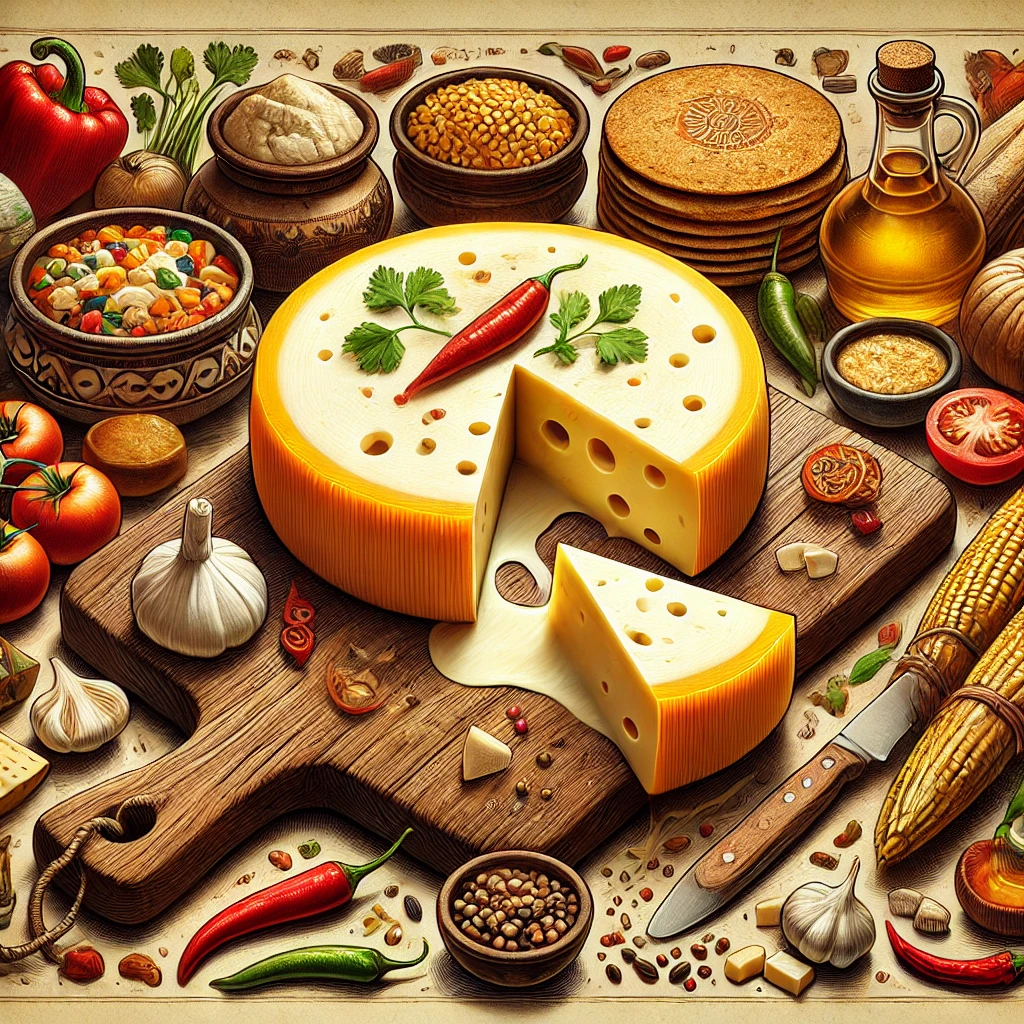
When it comes to Mexican cheese culture, Queso Chihuahua stands on a pedestal of its own. Known for its exceptional meltability, mild creamy flavor, and versatility in both home cooking and restaurant kitchens, this cheese has become a starring ingredient far beyond its northern birthplace. Originating in the state of Chihuahua, and historically tied to the Mennonite dairy communities, Queso Chihuahua is Mexico’s answer to a perfect melting cheese—smooth, buttery, stretchy, and richly satisfying.
If Mexico has Cotija for crumbling and Oaxaca for pulling, Chihuahua is undoubtedly its melting monarch. From queso fundido to enchiladas, quesadillas to chiles rellenos, this cheese transforms everyday dishes into silky, golden layers of savory comfort.
🧀 What Is Queso Chihuahua?
Queso Chihuahua (also called queso menonita in homage to Mennonite cheesemakers) is a semi-soft, aged cow’s milk cheese known for its melt quality and balanced dairy flavor.
Key Characteristics
| Attribute | Description |
|---|---|
| Texture | semi-soft, smooth, sliceable |
| Flavor | buttery, mild, lightly tangy |
| Aroma | milky, clean, slightly aged |
| Aging | typically 2–6 months |
| Color | pale cream to soft yellow |
| Salt Level | moderate |
Unlike sharper aged cheeses, Chihuahua doesn’t overpower—it supports and enhances dishes, making it the darling of Mexican cooking.
🇲🇽 A Cheese Born from Cultural Blending
Chihuahua carries a unique dairy legacy. Mennonite settlers arriving in northern Mexico during the late 19th and early 20th centuries brought with them:
-
European cheesemaking techniques
-
controlled aging environments
-
cow’s milk dairy practices
The result was an entirely new cheese culture—Mexican in identity, European in skill.
Today, the town of Cuauhtémoc remains a major production hub, with wheels aging in natural cellars surrounded by semi-desert grasslands.
🥛 How Queso Chihuahua Is Made
Although industrial production has expanded its reach, traditional methods remain respected.
Classic Production Steps
-
Fresh cow’s milk is heated and cultured.
-
Rennet sets the curd to form a soft pudding-like mass.
-
Curds are cut, drained, and pressed lightly.
-
Salting is applied to protect and flavor.
-
Aging occurs in cool cellars for controlled weeks to months.
Appearance & Body
-
typically sold in wheels (like alpine cheeses)
-
smooth ivory interior, small mechanical openings
-
no rind or a very thin natural rind depending on producer
Chihuahua’s body resembles European semi-soft classics but retains a distinctly Mexican freshness.
🔥 Why Queso Chihuahua Melts So Perfectly
Meltability is Chihuahua’s superpower.
What Makes It Ideal for Melting?
-
balanced moisture
-
moderate aging
-
high-quality milk fat
-
elastic curd structure
Melt Style
| Melt Quality | Description |
|---|---|
| Stretchiness | moderate, not as stringy as Oaxaca |
| Creaminess | high, coats evenly |
| Browning | golden, blistered edges |
| Flavor Strength | mild, buttery backdrop |
It melts evenly without oil separation—a gift in dishes that require smoothness and flavor cohesion.
🍽 Traditional & Modern Culinary Uses
Classic Mexican Dishes
-
Queso Fundido
-
Chiles Rellenos
-
Quesadillas Northern-style
-
Enchiladas Suizas
-
Empanadas de Queso
Contemporary Fusion
| Dish | Why It Works |
|---|---|
| Gourmet burgers | buttery melt replaces cheddar |
| Mac & cheese | silky coat with mild tang |
| Tex-Mex tacos | creamy dairy against spices |
| Baked nachos | no greasy separation |
Chihuahua is neutral enough to complement, not compete—with salsas, chorizo, peppers, and roasted meats.
🌶 Flavor & Texture Profile
Flavor Notes
-
gentle tang from aging
-
fresh cream sweetness
-
buttery roundness
-
light pasture aromas
Texture Notes
-
semi-soft but sliceable
-
melts into velvet ribbon texture
-
no crumble, no graininess
It is both child-friendly and gourmet kitchen ready.
🌍 How It Compares to Other Melting Cheeses
| Cheese | Similarity | Difference |
|---|---|---|
| Oaxaca | stretchy melt | Chihuahua is creamier, less stringy |
| Monterey Jack | mild melt | Chihuahua is richer, more buttery |
| Muenster | smooth melt | Chihuahua has more tang & heritage |
| Havarti | mild richness | Chihuahua browns better |
| Gruyère | melt finesse | Chihuahua is milder, salt-balanced |
Among these, Chihuahua is arguably the best all-around melter for Latin dishes.
🍷 Beverage Pairing Guide
Mexican cuisine usually pairs with non-wine beverages, but global pairings elevate its profile.
Traditional Pairings
-
Mexican lager
-
agua fresca (tamarind, hibiscus)
-
horchata
-
light roasted coffee
Modern Pairings
| Drink | Why It Works |
|---|---|
| Sauvignon Blanc | cuts buttery texture |
| Pale ale | balances richness |
| Sparkling cider | fruit meets dairy cream |
| Mezcal (light smoke) | complements roasted dishes |
🌱 Nutrition Overview
Per 100g (approx.)
| Nutrient | Value |
|---|---|
| Calories | moderate-high |
| Protein | strong source |
| Fat | medium to high |
| Sodium | moderate |
| Calcium | excellent |
Balanced fat + strong protein make Chihuahua both flavorful and functional.
🧊 Storage & Handling Tips
-
wrap in cheese paper or breathable wrap
-
store at 3–5°C
-
avoid airtight plastic (can suffocate and sour)
-
grate or slice just before melting for best results
Proper storage preserves melt integrity and tangy-sweet aroma.
⭐ Final Summary
Queso Chihuahua is Mexico’s culinary gift to melting cheese lovers:
-
rooted in Mennonite craftsmanship
-
beloved in national dishes
-
versatile across global cuisine
Creamier than Jack, less elastic than Oaxaca, and more buttery than Havarti, Chihuahua strikes a perfect middle ground. It offers smoothness without excess oil, tang without sharpness, and richness without heaviness.
From fundido to fusion pizza, Chihuahua doesn’t just melt—it transforms meals into comfort-driven experiences.
FAQs — Queso Chihuahua
1. Why is it also called queso menonita?
Because Mennonite communities were the earliest known large-scale producers in Chihuahua.
2. Does it melt easily?
Yes—its stretch, oil balance, and smooth melt make it ideal for Mexican hot dishes.
3. Is Queso Chihuahua salty?
Moderately so—just enough for flavor without brine-level saltiness.
4. Can it replace mozzarella?
Absolutely, especially in Mexican recipes needing richer melt quality.
5. How should it be stored?
In breathable cheese wrap, refrigerated, and served freshly sliced or grated.