Argentina is a nation that celebrates beef, wine, and dairy with equal passion. While provoleta, reggianito, and mozzarella often dominate cheese discussions, Queso Tybo stands quietly but firmly as a beloved household staple. Mild, creamy, buttery, and slice-friendly, Tybo is Argentina’s everyday cheese—served at breakfast, layered into sandwiches, and even baked into golden empanadas.
Rooted in both European dairy heritage and Argentine country cooking, Queso Tybo represents the nation’s softer, more comforting side of gastronomy.
🇦🇷 What Is Queso Tybo?
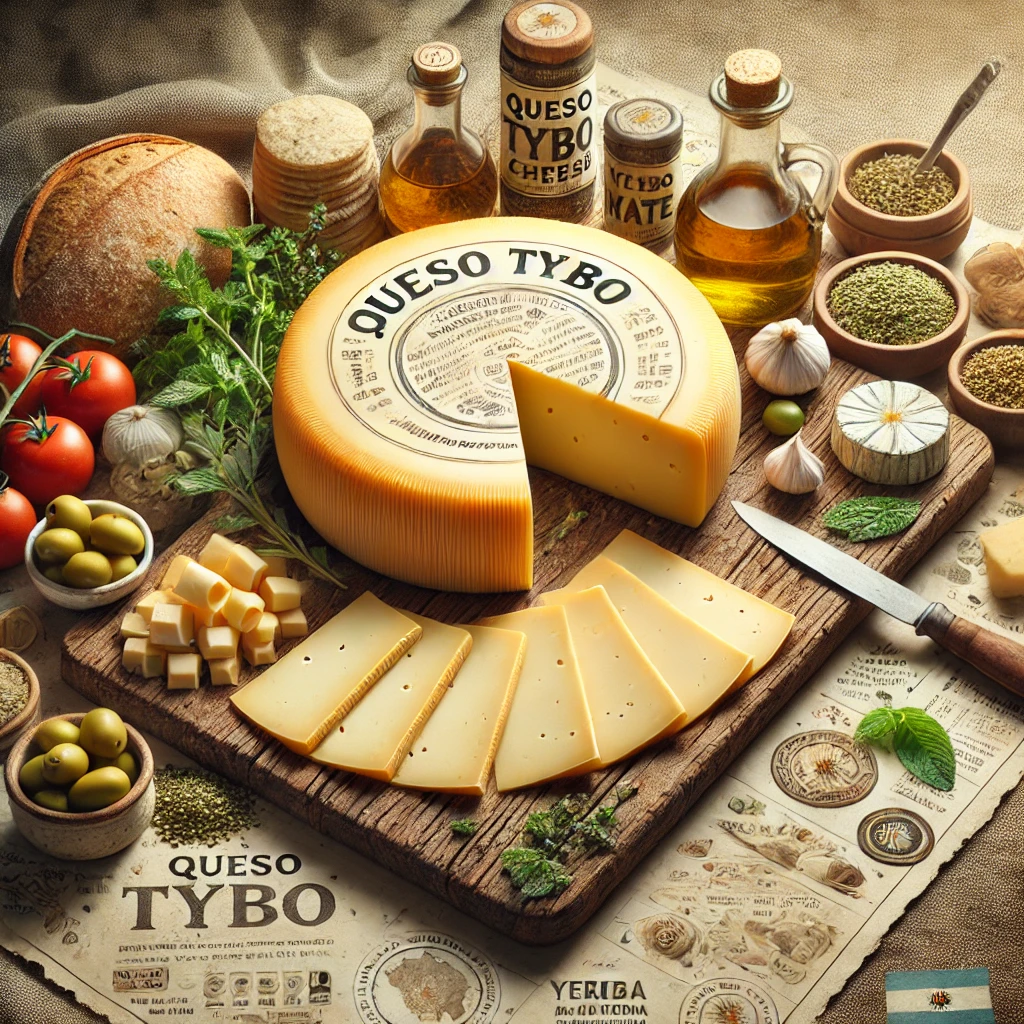
Queso Tybo is a semi-soft, smooth, pale yellow cheese made primarily from cow’s milk. It originated during the waves of European immigration, particularly Danish settlers, and over time became a domestic classic similar to Havarti but with a distinct Argentine character.
Key Characteristics
| Feature | Description |
|---|---|
| Texture | Semi-soft, elastic, sliceable |
| Flavour | Mild, buttery, slightly sweet |
| Colour | Pale cream to soft yellow |
| Milk Source | Cow’s milk |
| Salt Level | Low to moderate |
| Aging | Short-aged (20–45 days) |
It is neither sharp nor acidic, making it an approachable cheese for all ages and all palates.
🧀 How Queso Tybo Is Made
Traditional Tybo follows a gentle dairy process:
1️⃣ Fresh Cow’s Milk
Collected from grass-fed pampas cattle, known for producing high-fat, creamy milk.
2️⃣ Curd Formation
Rennet and bacterial cultures are added slowly to develop curds:
-
curds remain tender
-
whey is drained gradually to retain moisture
3️⃣ Molding & Pressing
Curds are lightly pressed and shaped into smooth blocks or wheels.
4️⃣ Short Ripening
Tybo is allowed to mature for a few weeks, building aroma without losing softness.
5️⃣ Brining
Light salt solutions maintain flavour and extend shelf life.
This yields a creamy, mild cheese designed for slicing rather than crumbling.
🍽️ Queso Tybo in Argentine Cuisine
Tybo is one of the most versatile cheeses in Argentina’s food culture.
🥪 Everyday Table Cheese
Served fresh at:
-
breakfast with tostadas
-
afternoon merienda (tea/coffee time)
-
children’s school sandwiches
🌯 Empanadas & Fillings
Used in:
-
empanadas de jamón y queso (ham & cheese)
-
medialunas rellenas
-
tartas de queso
Tybo melts without becoming oily or watery, making it ideal for crisp pastries.
🍕 Milanesa & Grill Use
-
Melted over milanesa napolitana
-
Layered in hot sandwiches with chimichurri
-
Grilled gently in home asado spreads
Unlike provoleta, Tybo isn’t a grilling cheese, but it softens beautifully over heat.
🥗 Cheese Boards
Often paired with:
-
salami criollo
-
serrano ham
-
olives
-
criolla sauce
It provides a neutral dairy base to balance bold meats and acidic condiments.
🌍 Tybo’s European Roots
Historically, Tybo is connected to Danish Tÿbo cheese, introduced by Scandinavian immigrants in the early 20th century.
Shared Traits:
-
elastic structure
-
buttery aroma
-
light fermentation
Over time, Argentina adapted the recipe to local dairy conditions, creating a cheese milder and creamier than its European parent.
🥛 Taste & Texture Profile
Tybo’s popularity lies in its understated flavour.
Flavour:
-
mild
-
buttery
-
slightly sweet
-
dairy-clean finish
Texture:
-
elastic but not rubbery
-
smooth slices
-
good melting consistency
It is less salty than provolone, less tangy than blue cheese, and softer than reggianito—ideal for balanced, neutral dairy notes.
🍷 Beverage Pairings
Argentine Pairings
-
Torrontés white wine (aromatic, floral)
-
Malbec rosé
-
Sparkling brut for freshness
Others
-
light lager beer
-
iced yerba mate (tereré)
-
apple cider
Tybo’s calm dairy flavour pairs well with crisp acidity and herbal aromatics.
🌱 Nutritional Profile
Per 100g (approximate):
| Nutrient | Value |
|---|---|
| Calories | 280–320 |
| Protein | 20–23g |
| Fat | 22–26g |
| Calcium | High |
| Sodium | Moderate |
Short aging means Tybo remains rich in vitamins and bioavailable calcium.
⭐ Final Summary
Queso Tybo might not shout for attention, but it quietly defines Argentine dairy life. It’s the cheese that:
-
melts into empanadas
-
fills children’s sandwiches
-
sits on breakfast plates beside medialunas and dulce de leche
-
softens atop milanesas and grilled breads
Its friendly profile makes it a universal favourite—deeply Argentine, delicately Danish in ancestry, and endlessly versatile.
Simple, soft, and comforting, Queso Tybo is Argentina’s everyday cheese hero.
FAQs — Queso Tybo
1. Is Queso Tybo similar to mozzarella?
Somewhat—but Tybo is saltier, less elastic, and creamier.
2. What is Tybo best used for?
Sandwiches, empanadas, milanesa toppings, and cheese boards.
3. Does Tybo melt well?
Yes, it melts smoothly without becoming oily or separating.
4. Is Tybo an aged cheese?
It receives short aging (about 3–6 weeks), producing a mild taste.
5. What milk is used in Queso Tybo?
Cow milk, sourced primarily from pampas-fed dairy herds.