
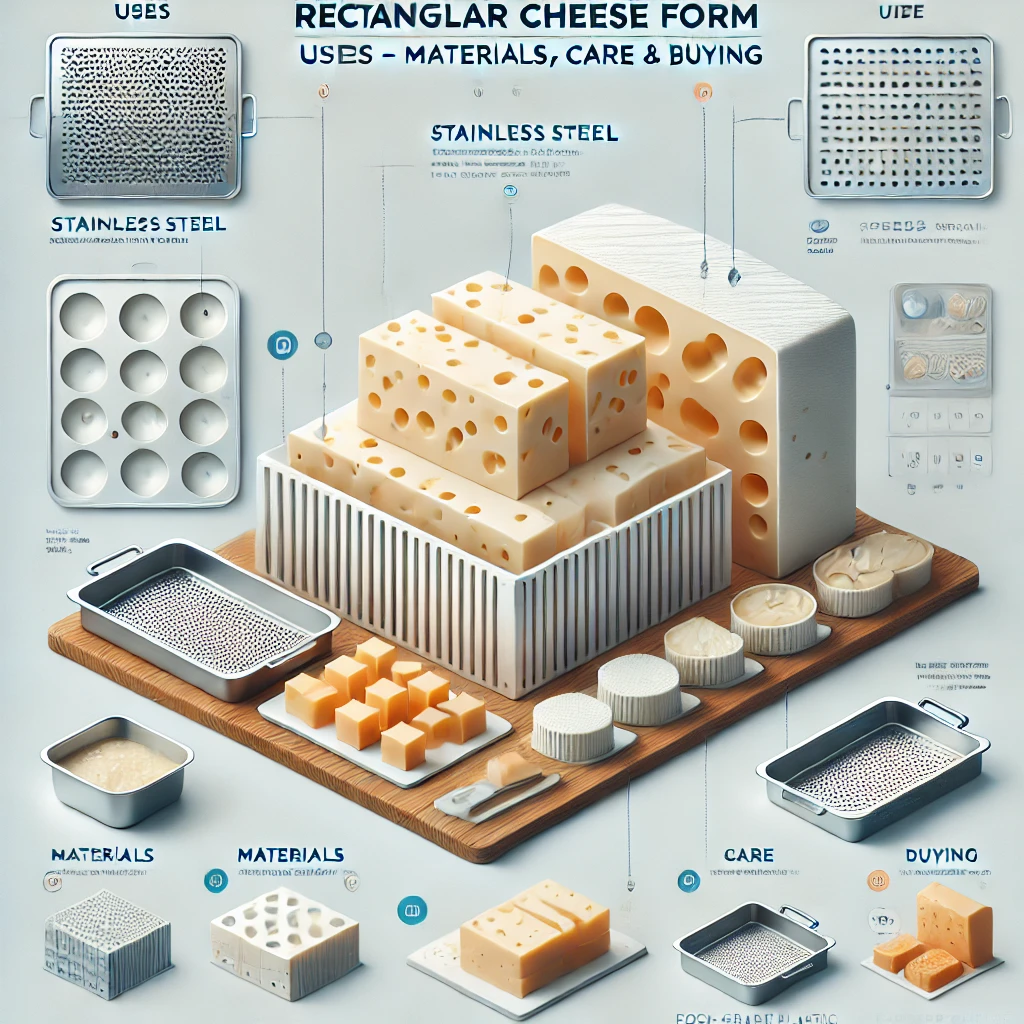
Cheesemaking is both an art and a science, and the tools used play a major role in the final result. Among these tools, the rectangular cheese form (also called a rectangular cheese mold) is especially valued for its practicality, efficiency, and versatility. While round molds dominate traditional imagery, rectangular forms are widely used in modern artisan cheesemaking, commercial dairies, and home setups.
Rectangular cheese forms are designed to shape curds evenly, improve pressing efficiency, and create cheeses that are easy to store, slice, and package. This complete guide explores uses, materials, care, and buying considerations so you can confidently choose the right rectangular cheese form for your needs.
What Is a Rectangular Cheese Form?
A rectangular cheese form is a rigid mold used to shape cheese curds during draining and pressing. Unlike round molds, it produces block-shaped cheeses, which are ideal for slicing, stacking, aging, and commercial packaging.
These forms typically include:
-
Perforated sides for whey drainage
-
A matching follower (pressing plate)
-
Compatibility with manual or weighted presses
They are commonly used for semi-hard, hard, and some fresh cheeses.
Common Uses of Rectangular Cheese Forms
1. Efficient Cheesemaking
Rectangular molds allow curds to settle evenly, creating consistent density across the cheese. This improves texture and aging results.
2. Commercial Production
Block-shaped cheeses are easier to cut into uniform portions, vacuum seal, and ship. This makes rectangular forms popular in small dairies and large producers alike.
3. Home Cheesemaking
Home cheesemakers appreciate rectangular forms because they fit neatly into refrigerators, presses, and storage containers.
4. Specialty Cheese Styles
Rectangular forms are often used for:
-
Cheddar-style cheeses
-
Colby and Jack-style cheeses
-
Fresh pressed cheeses
-
Washed-curd and semi-hard varieties
Advantages of Rectangular Cheese Forms
Space Efficiency
Rectangular cheeses stack easily, maximizing storage space during aging.
Uniform Slicing
Straight edges allow for clean, even slices—ideal for retail and home use.
Better Pressing Control
Pressure is distributed evenly across flat surfaces, reducing cracks and air pockets.
Modern Presentation
Rectangular cheeses have a clean, contemporary appearance that appeals to today’s markets.
Materials Used in Rectangular Cheese Forms
Food-Grade Plastic
Most common and recommended
Pros:
-
Lightweight
-
Durable
-
Affordable
-
Easy to clean
Cons:
-
Can scratch over time
Ideal for beginners and professionals alike.
Stainless Steel
Professional-grade option
Pros:
-
Extremely durable
-
Fully non-reactive
-
Long lifespan
Cons:
-
Expensive
-
Heavier
Best for commercial dairies and serious cheesemakers.
Silicone (Less Common)
Pros:
-
Flexible
-
Easy release
Cons:
-
Limited support for pressing
-
Not ideal for hard cheeses
Better suited for soft or fresh cheeses.
Size and Capacity Options
Rectangular cheese forms come in various sizes, from small home molds to large industrial forms.
Common Capacities
-
Small: 500 g – 1 kg (home use)
-
Medium: 1–3 kg (artisan production)
-
Large: 3 kg+ (commercial use)
Always choose a form slightly larger than your expected cheese weight to allow proper drainage.
Drainage Design: Why It Matters
Good drainage is critical in cheesemaking.
Side Perforations
Allow whey to escape evenly during pressing.
Base Drainage
Some molds include slotted or perforated bases for faster whey release.
Liner Compatibility
Most rectangular forms work best with cheesecloth or reusable liners to prevent curds from sticking.
How to Use a Rectangular Cheese Form
-
Line the mold with cheesecloth
-
Fill with curds evenly
-
Fold cloth neatly over the top
-
Place follower on curds
-
Apply gradual pressure
-
Flip periodically for even shaping
Patience and even pressure are key to achieving a smooth, crack-free cheese.
Proper Care and Maintenance
Cleaning
-
Wash immediately after use
-
Use warm water and mild detergent
-
Avoid abrasive scrubbers
Sanitizing
-
Use food-safe sanitizing solutions when needed
-
Rinse thoroughly
Drying
-
Air dry completely before storage
-
Avoid stacking while wet
Storage
-
Store in a clean, dry place
-
Keep away from strong odors
Good care extends the life of your cheese form and prevents contamination.
Common Mistakes to Avoid
-
❌ Overfilling the mold
-
❌ Applying too much pressure too quickly
-
❌ Skipping the liner
-
❌ Poor cleaning between batches
Avoiding these mistakes improves cheese quality and tool longevity.
Rectangular vs Round Cheese Forms
| Feature | Rectangular Form | Round Form |
|---|---|---|
| Storage | Excellent | Moderate |
| Slicing | Very easy | Moderate |
| Traditional look | Modern | Classic |
| Pressing efficiency | High | High |
| Commercial use | Very common | Common |
Rectangular forms are often preferred for practicality, while round forms appeal to tradition.
Who Should Use Rectangular Cheese Forms?
-
Home cheesemakers
-
Artisan producers
-
Commercial dairies
-
Culinary schools
-
Cheese experimentation labs
Anyone making pressed cheese regularly benefits from rectangular forms.
Buying Guide: How to Choose the Right Rectangular Cheese Form
1. Cheese Type
Hard and semi-hard cheeses require rigid molds with good drainage.
2. Production Scale
Choose capacity based on batch size and future growth.
3. Material Preference
Plastic for affordability, stainless steel for longevity.
4. Press Compatibility
Ensure the mold fits your cheese press dimensions.
5. Ease of Cleaning
Smooth interiors and rounded corners simplify maintenance.
Price Range and Value
-
Plastic molds: Affordable, great value
-
Stainless steel molds: Higher upfront cost, long-term investment
Buying quality once often saves money over time.
Sustainability Considerations
Durable cheese forms reduce waste by lasting many years. Reusable liners and proper maintenance further improve sustainability in cheesemaking.
Why Rectangular Cheese Forms Are a Smart Choice
Rectangular cheese forms combine efficiency, consistency, and modern practicality. They simplify pressing, storage, slicing, and presentation—making them one of the most versatile tools in cheesemaking.
Whether you’re crafting cheese at home or producing for sale, this mold shape supports both creativity and reliability.
Conclusion
A rectangular cheese form is more than a mold—it’s a foundational cheesemaking tool. By understanding its uses, materials, care, and buying considerations, you can elevate both the quality and efficiency of your cheese production.
From home kitchens to professional dairies, rectangular cheese forms continue to prove their value through consistency, practicality, and timeless utility.
FAQ: Rectangular Cheese Form Guide
What is a rectangular cheese form used for?
It is used to shape and press cheese into block form during cheesemaking.
Are rectangular cheese forms better than round ones?
They are more efficient for storage and slicing, though both have valid uses.
What material is best for a cheese form?
Food-grade plastic is best for most users; stainless steel is ideal for professionals.
Do I need a liner with a rectangular cheese form?
Yes, cheesecloth or liners help prevent sticking and ensure clean removal.
How long does a cheese form last?
With proper care, a high-quality cheese form can last many years.