Among the culinary treasures of Azerbaijan, süzmə pendir stands as one of the purest expressions of dairy craft. Meaning “strained cheese,” süzmə pendir is a creamy, tangy, thick cheese prepared by slowly draining whey from cultured milk. What results is a dense yet velvety cheese that is rich in protein, cooling in summer heat, comforting in winter spreads, and deeply connected to Azerbaijani breakfast tables, regional hospitality, and village craftsmanship.
In a cuisine shaped by fertile valleys, Caspian breezes, and pastoral herding traditions, süzmə pendir remains a cornerstone of daily eating—refreshingly simple, full-bodied, and proudly rural.
🌿 What Exactly Is Süzmə Pendir?
Süzmə pendir is a fresh, strained white cheese made primarily from:
-
Cow milk (common standard)
-
Goat milk (tangier, countryside version)
-
Sheep milk (rich, fatty, mountainous areas)
Key Characteristics
| Feature | Description |
|---|---|
| Texture | Thick, creamy, spreadable |
| Flavour | Mildly tart, salty, tangy |
| Colour | Bright white, silky surface |
| Salt Level | Medium (varies by region) |
| Aging | 1–10 days, sometimes lightly brined |
| Aroma | Clean, dairy-fresh, subtle |
Unlike aged cheeses with developed rinds or molds, süzmə pendir celebrates freshness, purity, and restrained acidity.
🧀 How Süzmə Pendir Is Made
1. Fermented Yogurt Base
Milk is gently cultured into thick yogurt. This stage determines flavour depth and natural acidity.
2. Slow Straining
The yogurt mixture is placed in:
-
fine cheesecloth
-
muslin bags
-
sometimes traditional clay filters
Hours—or even a full day—of gravity-driven drainage remove excess whey.
3. Salting & Resting
Salt is kneaded gently into the curd. In countryside homes, this is done:
-
by hand
-
with fresh herbs (optional)
-
using mineral Caspian salt
4. Optional Brining
Some regions lightly submerge süzmə pendir in brine for firmer texture and tangier notes.
This process creates a cheese that is dense like labneh, creamy like spreadable feta, and tangy like Greek yoghurt—but uniquely Azerbaijani in essence.
🇦🇿 Regional Variations Across Azerbaijan
Quba & Qusar
-
Thick, ultra-strained
-
Often stored in clay jars
-
Served during tea sessions with fresh greens
Nakhchivan
-
Saltier, firmer, lightly aged
-
Grainier texture ideal for crumbling
Sheki & Zaqatala
-
Mild, village-fresh
-
Paired with honey and walnuts at breakfast
Baku Coastal Style
-
Creamier and smoother
-
Used in urban cafés and restaurant spreads
These regional distinctions reflect different climates, humidity levels, milk breeds, and salt traditions.
🍽️ How Süzmə Pendir Is Eaten in Azerbaijan
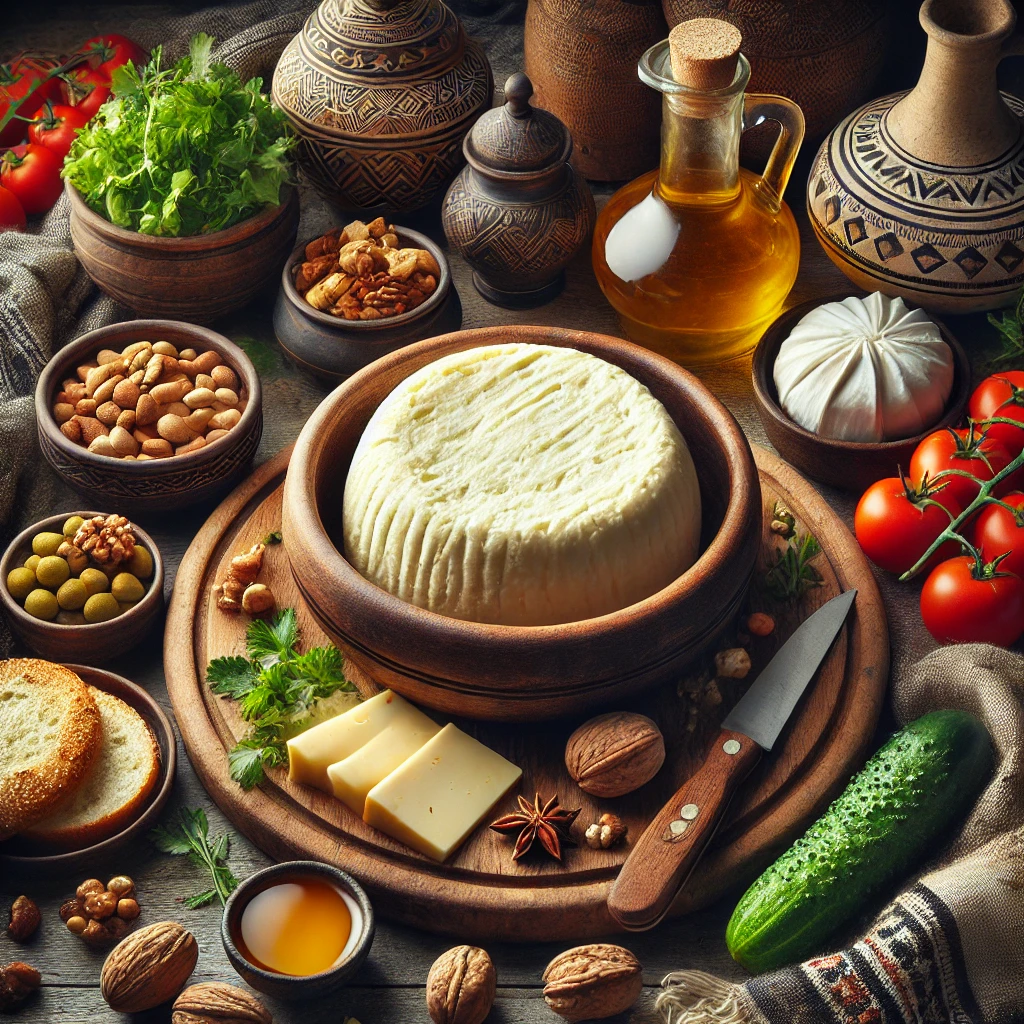
A traditional Azerbaijani breakfast—or səhər yeməyi—is incomplete without süzmə pendir.
Classic Pairings
-
Fresh tomatoes & cucumbers
-
Herbs (dill, tarragon, mint, basil)
-
Churek (flatbread)
-
Tandir bread
-
Black tea (çay) with lemon
Mezze & Spread Culture
Served on dining tables beside:
-
pickled vegetables
-
rose jam
-
honeycomb
-
walnut paste
Holiday & Village Tables
Appears during:
-
Novruz feasts
-
Ramadan iftar breakfasts
-
Summer countryside gatherings
Wherever it appears, süzmə pendir brings creamy simplicity and social warmth.
🌱 Herbs & Spices That Enhance Süzmə Pendir
Many families add fresh aromatic accents:
-
Dill
-
Thyme
-
Oregano
-
Mint
-
Sumac sprinkle
-
Nigella seeds
In tea houses across Lahıc and Ismayilli, süzmə pendir is served with fresh mountain herbs and warm tandir bread—a sensory snapshot of rural life.
🍯 Sweet & Savoury Fusion
Süzmə pendir adapts to contrasting tones beautifully.
Savoury
-
Olive oil drizzle
-
Black olives
-
Grilled eggplant dips
Sweet
-
Honey
-
Apricot jam
-
Mulberry syrup
-
Grape molasses (doshab)
This balance reflects Azerbaijani cuisine’s core philosophy: freshness + simplicity + herb-driven aroma.
🥛 Nutritional Value
Per 100g (approximate):
| Nutrient | Value |
|---|---|
| Calories | 130–170 |
| Protein | 10–12g |
| Fat | 8–12g |
| Sodium | Moderate |
| Probiotics | High |
Straining concentrates nutrients, making süzmə pendir:
-
gut-friendly
-
high in protein
-
low in lactose
-
rich in natural probiotics
🌍 Süzmə Pendir Beyond Azerbaijan
Although deeply local, süzmə pendir now appears in:
-
Turkish breakfast menus (similar to labne but tangier)
-
Persian dairy tables in Ardabil & Tabriz
-
Georgian countryside markets
-
Russian and Ukrainian urban cafés
Its neutral profile gives it global appeal in mezze and brunch culture.
🧀 Süzmə Pendir vs Labneh vs Feta
| Cheese | Texture | Salt | Flavour |
|---|---|---|---|
| Süzmə Pendir | Thick, creamy | Medium | Fresh, tangy, airy |
| Labneh | Silky soft | Light | Yogurt-forward, mild |
| Feta | Crumbly | Sharp & high salt | Briny, acidic |
Süzmə pendir sits comfortably in the middle—both spreadable and structured, fresh without being watery.
⭐ Final Summary
Süzmə pendir is the taste of Azerbaijani hospitality: simple, wholesome, tangy, and beautifully spreadable. Made from strained yogurt and perfected by generations of dairy artisans, it remains a national favourite and a growing global gem.
Key Takeaways:
-
Fresh, strained cheese with no aging required
-
Tangy, milky, and smooth with balanced salt
-
Central to Azerbaijani breakfast tables and tea culture
-
Nutritious, probiotic-rich, and versatile
-
Celebrated across rural regions from Sheki to Nakhchivan
In every spoonful, one tastes the mountain breezes, village dairy craft, and warm bread of Azerbaijan.
FAQs — Süzmə Pendir
1. What milk is used for süzmə pendir?
Mostly cow’s milk, but goat and sheep variants appear in countryside regions.
2. Is süzmə pendir the same as labneh?
Similar but denser, tangier, and more salted than labneh.
3. How is it traditionally eaten?
With bread, herbs, tea, olives, tomatoes, and honey at Azerbaijani breakfast tables.
4. Does it contain probiotics?
Yes, it’s strained yogurt-based, making it rich in beneficial cultures.
5. Can süzmə pendir be used in cooking?
Absolutely—spread on breads, added to pastries, mixed with herbs, or used in mezze platters.