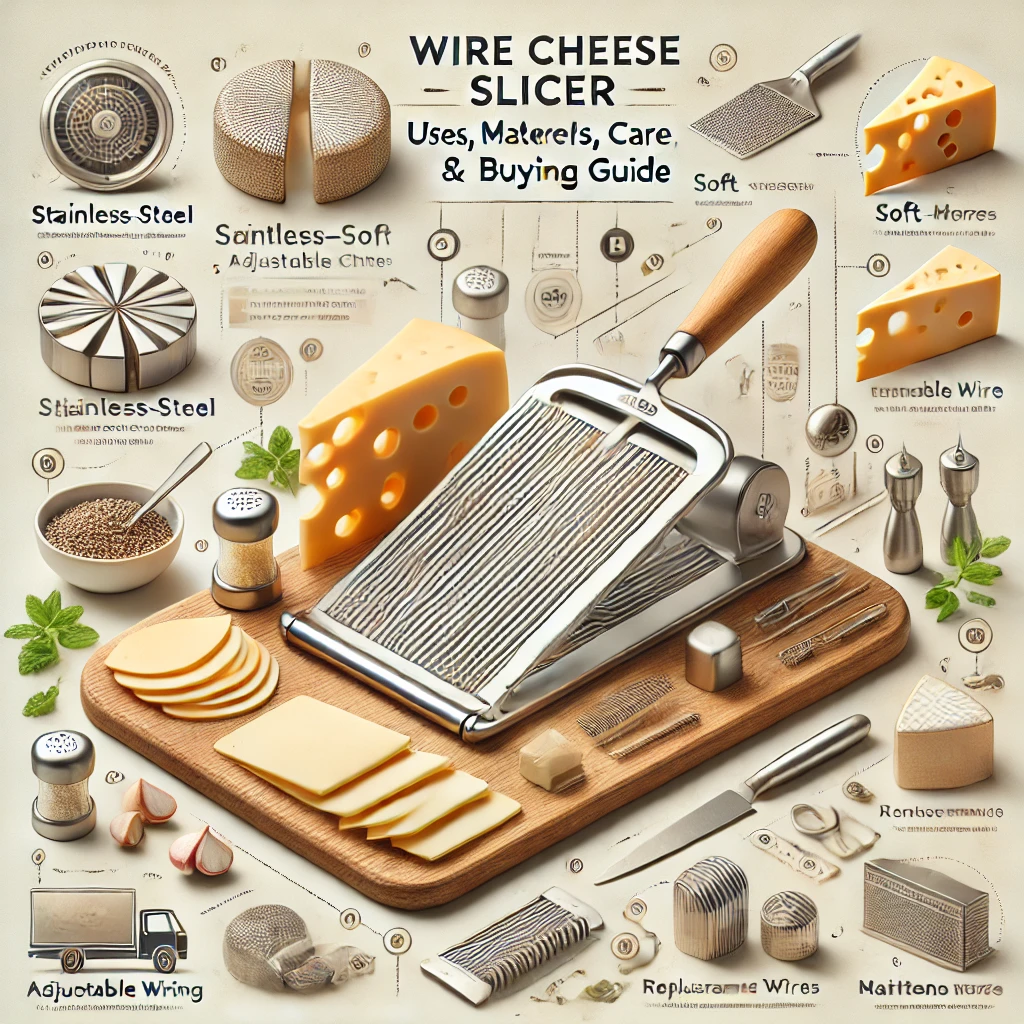
Whether you are arranging a charcuterie display, cutting uniform cheese slabs for sandwiches, or slicing delicate soft-rind varieties, a wire cheese slicer offers unmatched precision. Unlike traditional knives that can drag, crumble, or distort texture, a wire slicer glides smoothly through cheese and preserves shape, aroma, and structure.
In professional kitchens, tasting rooms, and home cheese boards, the wire slicer has become a quiet essential—simple yet exact. This guide explores how it works, which materials matter, maintenance tips, and what to look for when buying the right model.
🧀 What Is a Wire Cheese Slicer?
A wire cheese slicer is a handheld or board-mounted tool designed to slice cheese using a thin stainless steel or titanium wire instead of a blade. It cuts cleanly without compression, which preserves:
-
cheese texture
-
uniform thickness
-
moisture retention
-
rind shape
Because the wire applies minimal pressure, it is ideal for soft and semi-soft cheeses that would otherwise smudge or tear.
🍽 What Cheeses Work Best with Wire Slicers?
Wire slicing works beautifully for cheeses that require smooth edges and neat presentation.
Best Cheese Types
| Cheese Style | Examples |
|---|---|
| Semi-soft | Havarti, Fontina, Gouda (young), Jarlsberg |
| Soft-rind | Brie, Camembert, Chaource |
| Fresh cheeses | Queso Fresco, Farmer’s cheese, Paneer |
| Mild blocks | Mild cheddar, Edam, Monterey Jack |
| Spreadable styles (chilled) | Cream cheese bricks, Bel Paese |
Not Ideal For
-
aged Parmesan wheels (requires grater or knife)
-
brittle, crumbly blue cheese (slow crumble recommended, not slice)
-
aged cheddar crystals (wire may break)
🔧 Types of Wire Cheese Slicers
1. Handheld Wire Slicer
-
adjustable tension in many models
-
comfortable grip
-
perfect for cheese boards, everyday use
2. Board + Wire Slicer
-
built-in cutting board
-
lever arm with attached slicing wire
-
ideal for uniform cuts for parties & tastings
3. Adjustable Wire Slicer
-
changes cut thickness
-
ideal for sandwich slices vs cracker cuts
-
precision suited to caterers and restaurant use
4. Roller Wire Slicer
-
rolling guide controls cheese thickness
-
smooth slice without surface drag
-
durable and ergonomic
🪵 Common Materials: Which Is Best?
Board Materials
| Material | Benefits | Notes |
|—|—|
| Marble | stays cool, ideal for soft cheese | heavier, can chip if dropped |
| Bamboo | lightweight, eco-friendly | needs oiling to avoid drying |
| Stainless Steel | hygienic, sleek | premium price |
| Acacia Wood | stylish, durable | needs periodic conditioning |
Wire Materials
| Wire | Benefits |
|---|---|
| Stainless Steel | rust-resistant, sharp longevity |
| Titanium-Coated Wire | extra durable, smoother slicing |
| Carbon Steel | sharpest cut, requires drying/oiling |
🧼 Care & Maintenance
A wire cheese slicer may seem simple, but proper care ensures years of smooth slicing.
Cleaning Steps
-
Wash by hand (avoid dishwashers unless manufacturer approves).
-
Wipe dry immediately to prevent wire corrosion.
-
If using wood boards, oil occasionally with food-safe mineral oil.
Wire Replacement
Wires will eventually stretch or dull. Replace when:
-
drag increases
-
slices become uneven
-
cheese tears instead of gliding through
Avoid:
-
soaking wooden boards in water
-
slicing frozen cheese (wire may snap)
-
cutting nut-filled or crust-hard cheeses with a fine wire
🍽 Wire Slicer vs Knife: Why It Matters
| Feature | Wire Slicer | Knife |
|—|—|
| Texture Preservation | excellent | may distort |
| Uniform Thickness | easy | inconsistent |
| Ideal Styles | soft/semi-soft | hard/aged |
| Presentation | clean edges | may crumble |
If cheese plates are part of your entertaining routine, a wire slicer is essential for visual refinement.
🛍 How to Choose the Right Wire Cheese Slicer
Key Buying Factors
| Feature | Why It Matters |
|---|---|
| Wire adjustability | controls slice thickness |
| Material durability | prevents rust, breakage |
| Handle comfort | steady slicing motion |
| Replacement wire availability | long-term reliability |
| Board sturdiness | ensures precision cuts |
Best For Home Use
-
handheld adjustable slicers
-
bamboo or marble boards with wire arm
Best For Entertaining & Events
-
board-based slicers with tension adjustment
-
heavier marble base for party platters
Best For Professionals
-
titanium wire variants
-
stainless steel frames
🧾 When to Replace Your Slicing Wire
Signs include:
-
fraying or metal filaments
-
tightening difficulty
-
frequent snapping
-
visible rust spots
Most modern boards come with spare wires or universal adjustment screws.
🍷 Serving Tips: When Presentation Counts
Wire slicing is especially valuable when assembling:
-
restaurant cheese flights
-
catering spreads
-
charcuterie boards
-
wine tasting plates
-
buffet cheese trays
Cheese edges look:
-
smooth
-
uniform
-
visually appealing
Add accompaniments:
-
grapes
-
olives
-
dried figs
-
rosemary sprigs
-
honeycomb
⭐ Final Summary
A wire cheese slicer is a small but powerful kitchen tool designed to cut cheese with precision and elegance. With options ranging from bamboo boards to marble slabs and stainless steel rollers, it caters to both casual entertainers and culinary professionals. Proper care—mainly drying, cleaning, and wire replacement—ensures longevity.
Whether preparing brunch platters, tasting boards, or simple sandwiches, this tool elevates cheese service from ordinary to artful.
FAQs — Wire Cheese Slicer
1. Can a wire slicer cut hard cheese?
It can slice semi-hard, but extremely hard cheeses like Parmesan can strain or break the wire.
2. How often should the wire be replaced?
Every few months depending on usage, or when tension weakens.
3. Is marble better than wood?
Marble stays cool for soft cheese; wood is lighter and easier to maintain.
4. Can the slicer go in the dishwasher?
Generally not recommended—hand washing preserves the wire and board materials.
5. What cheese types work best?
Soft to semi-soft cheeses like Brie, Havarti, Gouda, Mozzarella, and fresh blocks.