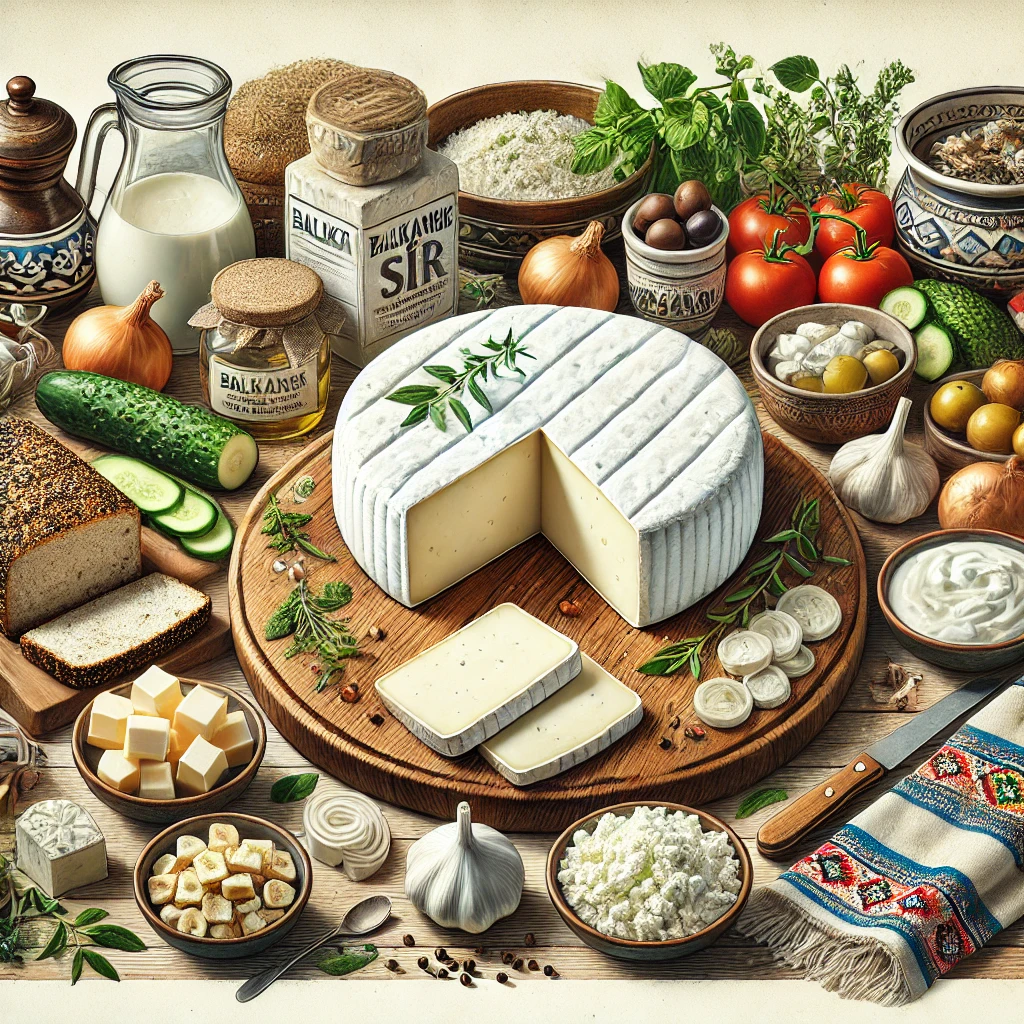
Balkánský sýr is one of the most recognizable cheeses in Czech kitchens. Known for its salty taste, crumbly texture, and brine-preserved freshness, this cheese is a staple ingredient in everyday meals across Czechia. Although its name translates to “Balkan cheese,” Balkánský sýr has become a distinctly Czech product, adapted to local tastes, production standards, and culinary habits.
Often compared to feta, Balkánský sýr is not an imported cheese but a Czech-made brined cheese inspired by Southeastern European traditions. Over decades, it has earned a permanent place in Czech cuisine as an affordable, versatile, and flavorful dairy product.
Origins and History of Balkánský Sýr
The story of Balkánský sýr begins in the 20th century, when Central Europe experienced increased culinary exchange with Balkan and Mediterranean regions. Czech dairy producers were inspired by brined white cheeses popular in Greece, Bulgaria, and the former Yugoslavia.
Instead of copying these cheeses exactly, Czech producers adapted the concept:
-
Using locally sourced milk
-
Adjusting salt levels to Czech preferences
-
Producing it on a larger industrial scale
As a result, Balkánský sýr evolved into a Czech interpretation of Balkan-style cheese, becoming widely available in supermarkets and households nationwide.
Why Balkánský Sýr Is So Popular in Czechia
Balkánský sýr gained popularity because it fits perfectly into modern Czech cooking.
Key reasons for its success include:
-
Long shelf life due to brine preservation
-
Strong but approachable salty flavor
-
Crumbly texture ideal for salads and cooking
-
Affordable price and wide availability
Today, it is one of the most commonly purchased cheeses in Czechia.
Milk Source and Ingredients
Balkánský sýr is traditionally made from cow’s milk, which differs from many original Balkan cheeses made from sheep or goat milk.
Core Ingredients
-
Pasteurized cow’s milk
-
Starter cultures
-
Rennet
-
Salt
-
Brine solution
The use of cow’s milk gives the cheese a milder, creamier base, while the brine provides its signature saltiness.
How Balkánský Sýr Is Made
The production process combines traditional brined-cheese methods with modern dairy technology.
Step-by-Step Production Process
-
Milk Preparation
Cow’s milk is pasteurized and standardized. -
Curd Formation
Cultures and rennet are added to coagulate the milk. -
Cutting and Draining
Curds are cut into cubes to release whey. -
Molding
Curds are placed into molds and lightly pressed. -
Salting and Brining
The cheese is submerged in a salt brine, which preserves it and develops flavor. -
Packaging
Balkánský sýr is sold submerged in brine or tightly sealed to retain moisture.
Unlike aged cheeses, it is ready to eat relatively quickly.
Texture and Appearance
| Feature | Description |
|---|---|
| Texture | Semi-firm, crumbly |
| Moisture | Medium |
| Color | Bright white |
| Shape | Blocks or cubes |
| Rind | None |
When cut, it breaks cleanly and crumbles easily, making it ideal for salads.
Taste Profile of Balkánský Sýr
Balkánský sýr is defined by its salty, fresh, and slightly tangy flavor.
Flavor Characteristics
-
Pronounced saltiness
-
Mild milky base
-
Light acidity
-
Clean, refreshing finish
It is less sharp than aged cheeses and less creamy than feta, striking a balance that suits many dishes.
Balkánský Sýr vs Feta Cheese
Although often compared, Balkánský sýr and feta are not the same.
| Feature | Balkánský Sýr | Feta |
|---|---|---|
| Origin | Czechia | Greece |
| Milk | Cow | Sheep/goat |
| Saltiness | High | High |
| Texture | Crumbly, firm | Creamier |
| Aging | Minimal | Often longer |
Balkánský sýr is a Czech-style brined cheese, not a protected Greek product.
Traditional Uses in Czech Cuisine
Balkánský sýr is deeply integrated into everyday Czech cooking.
Common Traditional Uses
-
Crumbled over tomato and cucumber salads
-
Added to pasta dishes
-
Served with roasted vegetables
-
Used in cold plates and sandwiches
Its saltiness often replaces added salt in recipes.
Balkánský Sýr in Salads
One of its most popular uses is in salads.
Typical Salad Pairings
-
Tomatoes
-
Cucumbers
-
Bell peppers
-
Red onions
-
Olive oil
These simple ingredients balance the cheese’s saltiness and highlight its freshness.
Modern and Contemporary Uses
Modern Czech and European kitchens use Balkánský sýr creatively.
Contemporary Applications
-
Baked vegetable casseroles
-
Stuffed peppers or zucchini
-
Flatbreads and wraps
-
Grain bowls
-
Mediterranean-style dishes
It performs well both cold and lightly heated.
Best Food Pairings for Balkánský Sýr
Vegetable Pairings
-
Tomatoes
-
Zucchini
-
Eggplant
-
Spinach
Grain Pairings
-
Pasta
-
Couscous
-
Bulgur
-
Bread
Flavor Enhancers
-
Olive oil
-
Lemon juice
-
Herbs like oregano or basil
Fresh and acidic elements balance its saltiness.
Beverage Pairings
Balkánský sýr pairs best with refreshing drinks.
Beverage Options
-
Dry white wine
-
Light beer
-
Sparkling water
-
Lemon-infused water
Avoid overly sweet beverages, which clash with its salty profile.
Nutritional Value of Balkánský Sýr
Balkánský sýr is nutritious but should be eaten in moderation due to salt content.
Nutritional highlights include:
-
High-quality protein
-
Calcium for bone health
-
Moderate fat content
-
Relatively high sodium
It is filling, so small portions are usually sufficient.
Buying Quality Balkánský Sýr
What to Look For
-
Bright white color
-
Clean, fresh aroma
-
Firm but crumbly texture
-
Stored in brine or well-sealed packaging
Avoid cheese that smells sour or overly watery.
Storage and Serving Tips
Storage
-
Keep refrigerated
-
Store in original brine if possible
-
Use an airtight container
Serving
-
Rinse briefly to reduce salt if needed
-
Serve chilled or at room temperature
-
Crumble just before use
Proper storage preserves freshness and flavor.
Cultural Importance of Balkánský Sýr in Czechia
Balkánský sýr represents modern Czech food culture—practical, adaptable, and internationally inspired. It reflects how Czech cuisine embraces external influences while making them its own.
For many households, Balkánský sýr is a weekly staple, appearing in quick lunches, family dinners, and summer salads.
Why Balkánský Sýr Still Matters Today
In today’s fast-paced cooking culture, Balkánský sýr remains popular because it is:
-
Easy to use
-
Affordable
-
Flavorful without complexity
-
Versatile across cuisines
It proves that everyday cheeses can still deliver strong identity and taste.
Conclusion
Balkánský sýr, the salty cheese of Czechia, is a perfect example of culinary adaptation done right. Inspired by Balkan brined cheeses yet shaped by Czech tastes and traditions, it has become an essential part of modern Czech cooking.
Whether crumbled over a fresh salad, baked into vegetables, or enjoyed simply with bread and olive oil, Balkánský sýr offers bold flavor, practicality, and cultural relevance. For anyone exploring Central European cheeses, it is a must-try classic.
Frequently Asked Questions (FAQ)
What is Balkánský sýr made from?
It is made from pasteurized cow’s milk and preserved in brine.
Is Balkánský sýr the same as feta?
No, it is inspired by feta but is a Czech-produced brined cheese with different milk and texture.
How does Balkánský sýr taste?
It tastes salty, fresh, mildly tangy, and milky.
Can Balkánský sýr be cooked?
Yes, it works well in baked dishes, salads, and warm meals.
How should Balkánský sýr be stored?
Keep it refrigerated, preferably in brine or an airtight container.